1600 · Linköping, Sweden
The Linköping Bloodbath, execution of five nobles after the War against Sigismund by order of Duke Charles.
September 23, 1595
The Swedish army, led by Charles IX, defeated King Sigismund III of Poland in the Battle of Stångebro during the Polish-Swedish War (1600–1611), solidifying Charles IX's control over Sweden.
Linköping, Sweden | Swedish Army
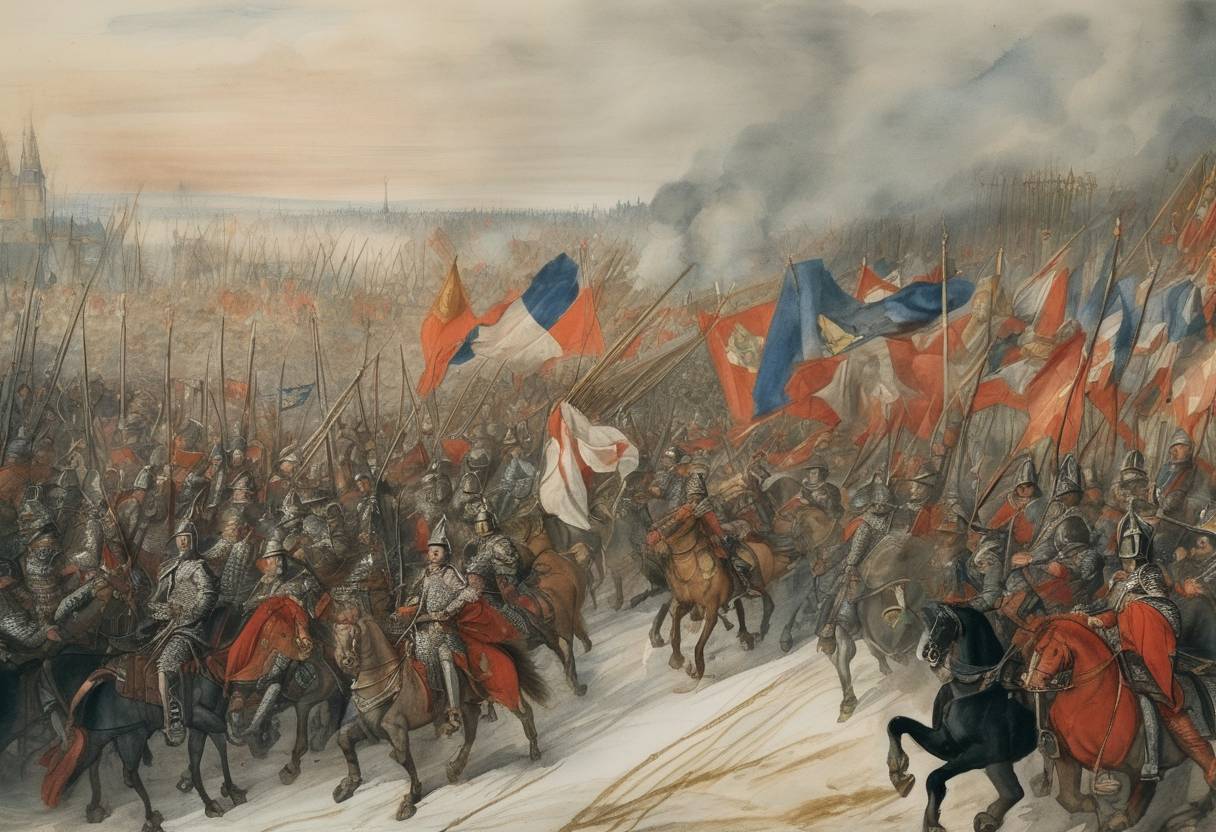
The Battle of Stångebro, fought on September 23, 1595, was a pivotal conflict during the Polish-Swedish War (1600–1611), and a significant moment in Sweden’s internal struggles. This confrontation marked a crucial victory for Charles IX of Sweden against King Sigismund III of Poland, which had profound implications for the political landscape of Scandinavia.
The roots of the Battle of Stångebro extend into the dynastic disputes within the Swedish monarchy. After the death of King John III of Sweden, his son, Sigismund III Vasa, inherited the Swedish throne in 1592. However, Sigismund’s position as the king of both Sweden and Poland-Lithuania created tension, especially given his Catholic faith in predominantly Protestant Sweden. Opposition emerged, led by his uncle, Charles, Duke of Södermanland, who later became King Charles IX.
The battle took place near Linköping, Sweden, at a site that derived its name from its proximity to the Stone Bridge (Stångebro) over the river Stångån. Sigismund III attempted to consolidate his rule over Sweden by aligning with local Catholic forces and supporters of the Polish crown. However, Charles IX, capitalizing on nationalist and Protestant sentiments, mustered significant support.
On September 23, 1595, Charles’s forces decisively engaged Sigismund’s army. The battle resulted in a comprehensive defeat for Sigismund, largely due to the strategic initiatives executed by Charles IX and his commanders. Many of Sigismund’s soldiers were captured or defected to Charles’s side.
The victory at Stångebro effectively ended Sigismund’s efforts to govern Sweden from abroad, as it solidified Charles IX’s hold on the Swedish throne. Sigismund was formally deposed by the Riksdag, Sweden’s legislative assembly, in 1599, and Charles was crowned king in 1604.
This internal consolidation of power set the stage for Sweden’s subsequent rise as a notable power in Europe. The events following the battle contributed to the long-standing rivalry between Sweden and the Polish-Lithuanian Commonwealth, which unfolded over subsequent years through intermittent conflicts known collectively as the Polish-Swedish Wars.
The Battle of Stångebro is not only a highlight of Charles IX’s reign but also a critical juncture in Swedish history, marking the consolidation of Protestant dominance in Sweden. This change had lasting effects on the political and religious identity of the nation and foreshadowed Sweden’s expansionist policies in the 17th century. The battle is commemorated in Swedish history for its decisive role in shaping the nation’s future.
Source: en.wikipedia.org