Inauguration of Ulysses S. Grant as the 18th President of the United States
1869 · Washington, D.C., United States
Ulysses S. Grant was inaugurated as the 18th President of the United States.
December 25, 1868
President Andrew Johnson issued a final unconditional pardon to all Confederate soldiers.
Washington, D.C., United States | United States Government
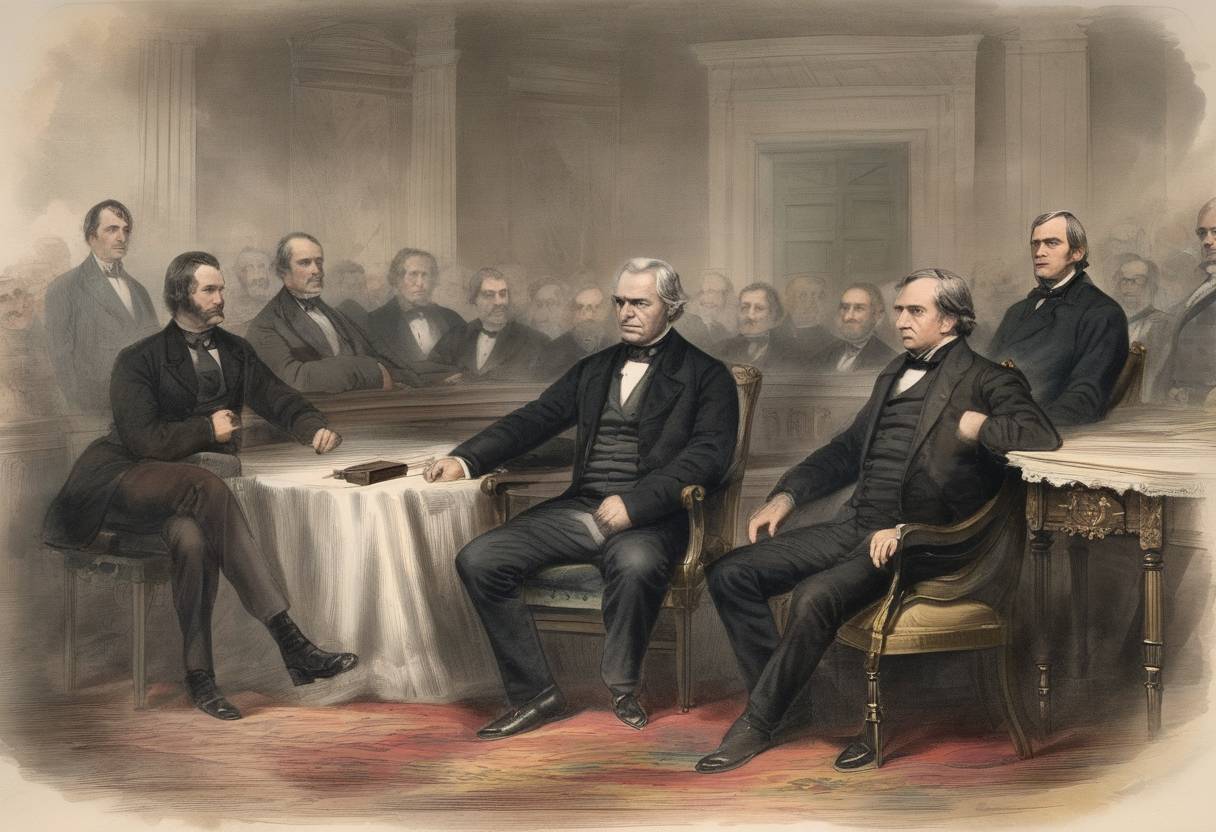
On December 25, 1868, President Andrew Johnson issued a final unconditional pardon to all individuals who had participated in the rebellion against the United States during the American Civil War. This executive clemency marked a crucial step in the broader process of national reconciliation following the bloody conflict that raged from 1861 to 1865.
The Civil War had concluded in 1865 with the surrender of Confederate forces, leaving the nation deeply divided and in need of healing. In the post-war era, known as Reconstruction, efforts were made to address the reintegration of the Southern states into the Union and the legal and social status of the former Confederate soldiers and leaders.
Andrew Johnson, who ascended to the presidency after the assassination of Abraham Lincoln in April 1865, pursued a policy of leniency toward the former Confederate states, aligning with his belief that Reconstruction should be swift and without unnecessary punitive measures. Johnson had previously issued several amnesties to reduce tensions and facilitate reunification, but these were limited in scope or contingent upon oaths of allegiance.
The issuance of the Christmas Pardon in 1868 was comprehensive and unconditional, thus formally restoring the rights of citizenship to all who had engaged in the Civil War against the Union. This decision was part of Johnson’s final actions as president, as he was set to leave office in March 1869.
The pardon effectively meant that former Confederates were no longer to be considered in rebellion and could participate in civic life, including voting and holding public office. This clemency was a vital component of Johnson’s approach to binding the nation’s wounds and encouraging a sense of unity, albeit controversial, as it allowed many former Confederate leaders to regain political power rapidly.
The move was met with mixed reactions. Some applauded it as a necessary step toward healing the nation, while others criticized it for its leniency and the absence of accountability for those who had seceded from the Union. Notably, Radical Republicans, who favored a more stringent Reconstruction, disapproved due to their belief in more severe penalties and stronger protections for the newly emancipated African Americans.
In retrospect, Johnson’s Christmas Pardon can be seen as a significant, albeit contentious, act in the broader tapestry of Reconstruction, reflecting the complex and often divisive nature of post-war America as it strove to restore its national fabric and construct a new societal order.
Source: www.history.com