The U.S. Post Office Issues Its First Commemorative Stamp - January 2, 1893
1893 · Washington D.C., United States
The U.S. Post Office issues its first commemorative stamp.
October 1, 1896
Free rural delivery (RFD) of mail began in the United States, marking a significant change in rural mail services.
Charles Town, United States | United States Postal Service
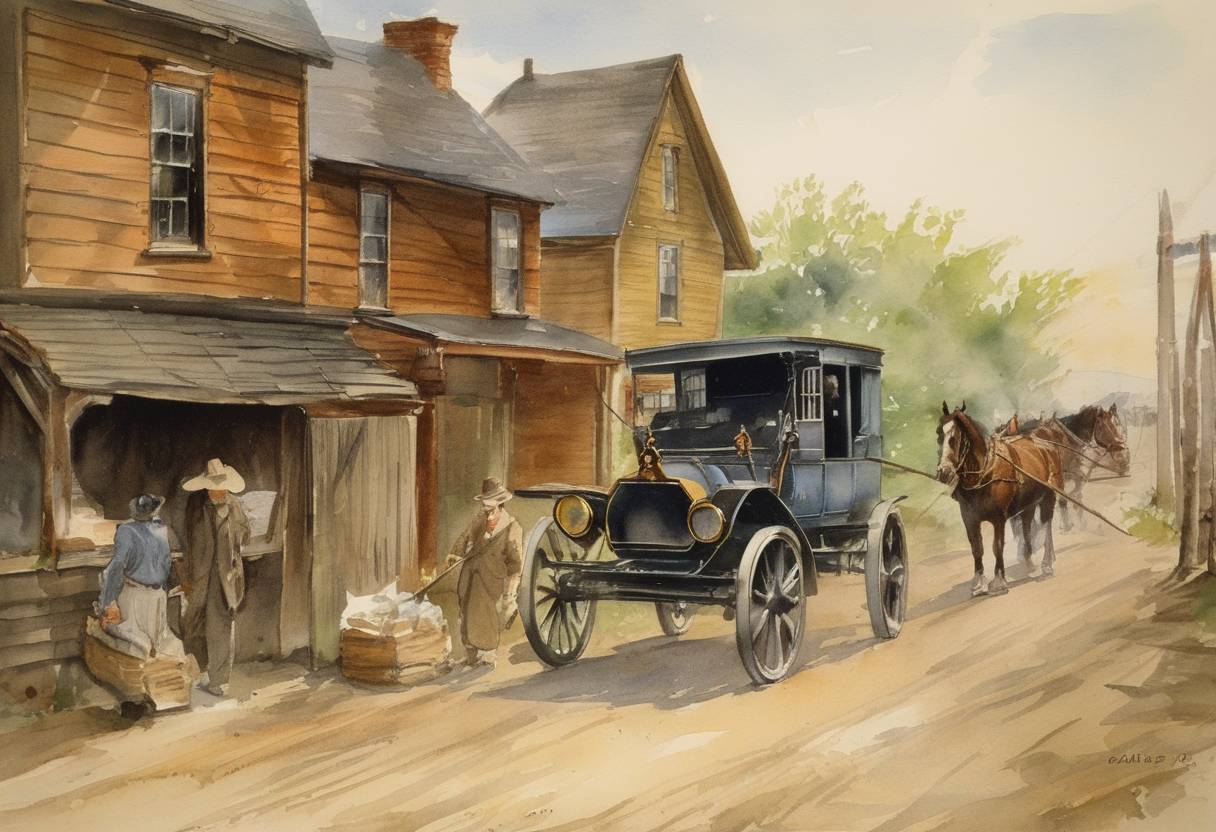
On October 1, 1896, the United States Post Office Department initiated the first free rural delivery (RFD) service. This marked a transformative change in the way mail was distributed to rural communities across America, significantly enhancing communication and connectivity in less populated areas.
Before the inception of RFD, residents in rural areas had limited access to postal services. They often had to travel considerable distances to a post office in a nearby town to collect their mail, a process that was both inconvenient and time-consuming, particularly for those living on remote farms or isolated areas. This discrepancy in mail delivery services highlighted the growing need for equitable access akin to that available in urban centers.
RFD was initially tested in West Virginia, beginning in Jefferson and Berkeley counties. The inaugural service routes covered a dozen towns, with specially equipped postal carriers delivering mail directly to rural homes for the first time. These trials proved successful, demonstrating that mail delivery could be extended to rural areas effectively without imposing additional costs on the recipients.
Key figures such as Postmaster General John Wanamaker and Congressman Thomas E. Watson championed the cause of RFD, emphasizing the program’s potential to connect rural America with the broader national and global community. Watson, representing the interests of agrarian communities, lobbied for the service as a vital support to farming economies and a means to reduce rural isolation.
Following successful trials, the RFD service rapidly expanded. By the turn of the century, thousands of routes had been established, covering substantial portions of the United States. The implementation of RFD facilitated better access to goods, services, and information for rural populations, spurring numerous economic and social benefits.
The advent of RFD encouraged the growth of the mail-order industry, allowing companies like Sears, Roebuck and Company to thrive by enabling them to reach a wider customer base. It also fostered a sense of inclusion and engagement among rural citizens, who could now receive newspapers and magazines promptly, keeping them informed about national and international events.
The implementation of free rural delivery was a pivotal moment in American history, influencing social and economic patterns throughout the twentieth century. It contributed to the democratization of information and allowed for a more connected and cohesive nation, laying foundational elements for the United States’ emergence as a more integrated society. The success and expansion of RFD underscore the importance and efficacy of equitable public services in bridging the gaps between different segments of society.
Source: about.usps.com