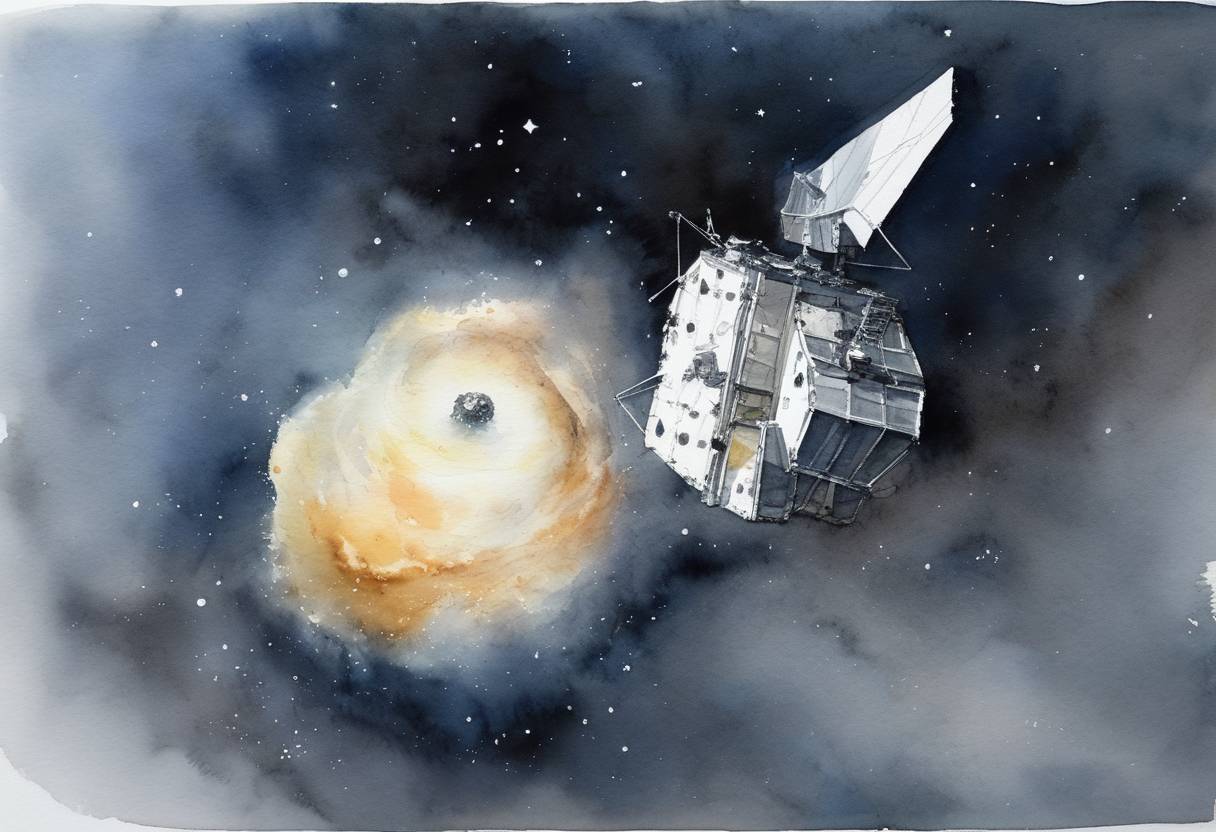
Rosetta Spacecraft and Comet 67P Magnetic Oscillations
On September 13, 2016, the European Space Agency’s (ESA) Rosetta spacecraft made a significant discovery regarding Comet 67P/Churyumov-Gerasimenko, identifying mysterious magnetic oscillations emanating from the comet. This discovery added a fascinating dimension to the mission, which aimed to study the comet’s nucleus and environment.
Background
The Rosetta mission, launched by ESA in March 2004, was designed to perform a detailed study of the comet, which orbits the Sun every 6.45 years. Rosetta arrived at the comet in August 2014, becoming the first spacecraft to rendezvous with a comet and the first to attempt to deliver a lander, Philae, onto its surface.
Discovery of Magnetic Oscillations
The oscillations detected by Rosetta were within the magnetic field around Comet 67P. These magnetic field oscillations, often referred to as a “singing comet,” were unexpected. Instruments on board Rosetta, specifically the Rosetta Plasma Consortium’s (RPC) magnetometer, picked up these unusual signals. The frequency of these oscillations, occurring at an audio spectrum near 40–50 millihertz, was far below human hearing range.
Significance
The elucidation of these magnetic oscillations has several implications:
- Understanding Cometary Environments: The oscillations help scientists unravel the nature of the interactions between the comet and the solar wind, offering insights into the plasma environment surrounding the comet.
- Complex Processes: Such phenomena indicate complex processes occurring at the microscopic level as charged particles from the solar wind interact with the gas and dust emitted by the comet.
- Scientific Inquiry: The findings prompted new investigations into how these magnetic waves are generated and what they reveal about the broader dynamic systems within our solar system.
Aftermath
Further study of the data collected by Rosetta continued to shed light on the properties and behaviors of not only Comet 67P but also the wider family of comets within our solar system. The Rosetta mission concluded its operations with a controlled impact on the comet’s surface on September 30, 2016, but the data continues to be analyzed and provides invaluable information to astronomers and physicists.
Rosetta’s discovery of magnetic oscillations remains a testament to the mission’s groundbreaking and diverse contributions to our understanding of cometary science.