The New York City Blackout of July 13, 1977
1977 · New York City, United States
A major blackout hit New York City, leading to widespread looting and arson during a period of economic and social turmoil.
December 7, 1835
The Great Fire of New York began, causing destruction of much of downtown Manhattan.
New York City, United States | New York City Fire Department
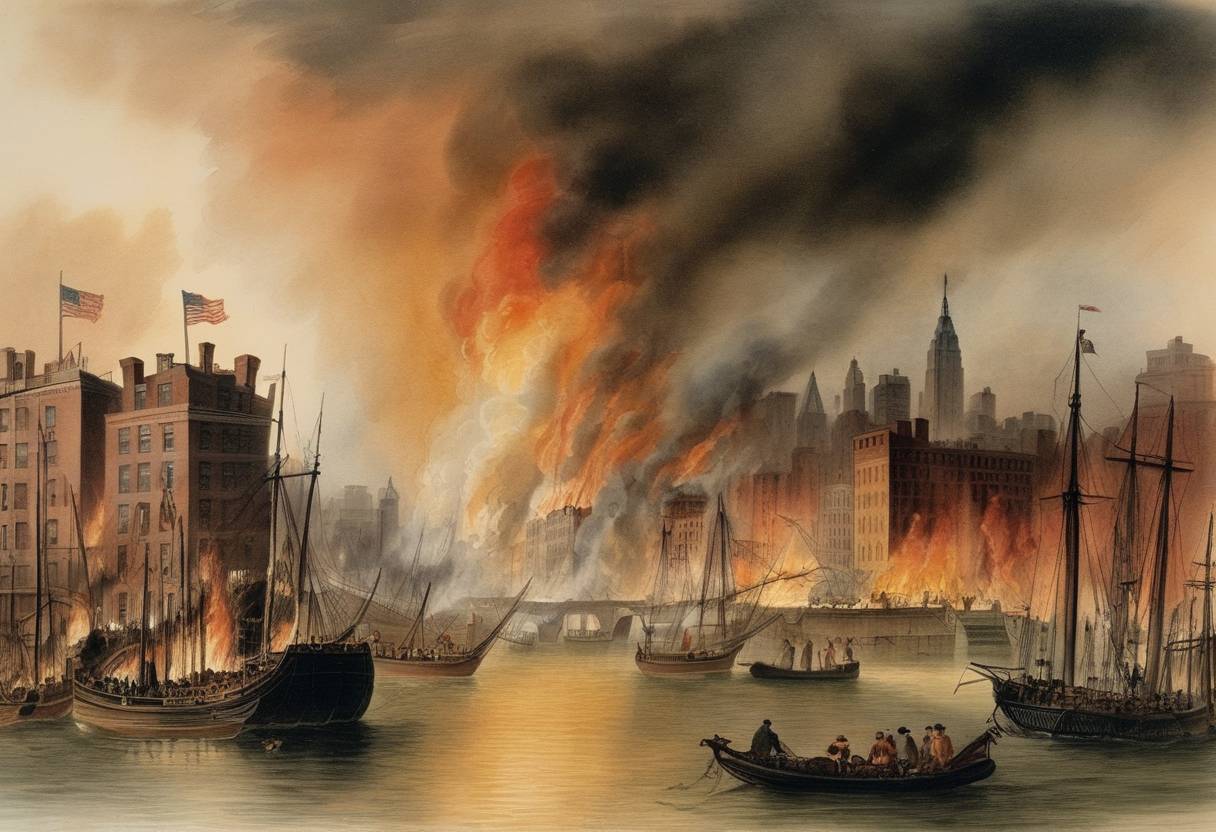
On December 7, 1835, the Great Fire of New York began, leading to the significant destruction of much of downtown Manhattan. This catastrophic event started during one of the coldest nights in the city’s history, which presented unique challenges in combating the fire.
In the early 19th century, New York City was rapidly growing, with an increasing population relying on wooden buildings for residential and commercial purposes. This construction style, coupled with narrow streets, provided an environment vulnerable to fires.
On the evening of December 7, 1835, the fire ignited from a five-story warehouse at 25 Merchant Street (later renamed Beaver Street), in the heart of Manhattan. The cause was later attributed to a faulty coal stove.
Fueled by strong gale winds and driven by bitterly cold temperatures that froze hydrants, the fire spread quickly across the densely packed neighborhoods. Approximately 17 city blocks were consumed by the inferno, resulting in the destruction of more than 600 buildings. It is estimated that $20 million in property damage occurred, an immense sum for the time.
The extreme cold was a significant barrier to firefighting efforts, as freezing temperatures rendered much of the firefighting equipment ineffective. The firemen struggled with ice-covered hoses and frozen water sources. At its peak, the light from the blaze was visible from distant points such as Philadelphia.
Following the fire, a massive rebuilding effort began. The city adopted more stringent building codes, mandating the use of non-combustible materials. This led to the predominant use of brick and stone in new constructions, marking a pivotal change in urban planning and architecture.
The Great Fire of 1835 played a crucial role in reshaping New York City. It highlighted the need for improved public infrastructure and disaster preparedness, influencing urban development policies that would have lasting effects on how modern cities are constructed and managed today.
This tragic event underscored the vulnerability of expanding cities and spurred advancements in firefighting techniques and urban design principles that prioritized safety and resilience.
Source: www.britannica.com