The Assassination of Senator Robert F. Kennedy
1968 · Los Angeles, United States
Senator Robert F. Kennedy died from gunshot wounds inflicted the previous day, after being shot by Sirhan Sirhan in Los Angeles.
September 24, 1964
The Warren Commission Report, addressing the assassination of President John F. Kennedy, was presented to President Lyndon B. Johnson.
Washington, D.C., United States | Warren Commission
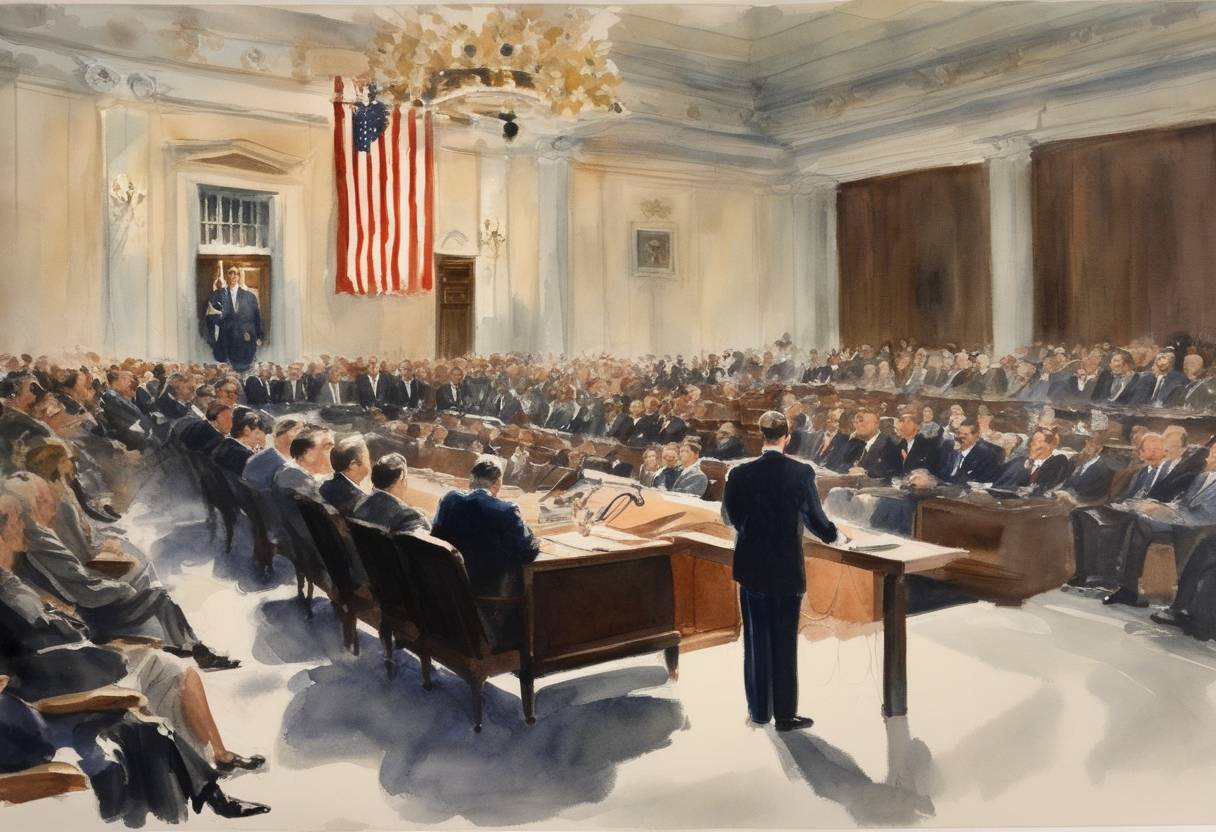
On September 24, 1964, the Warren Commission Report, officially titled the “Report of the President’s Commission on the Assassination of President John F. Kennedy,” was presented to President Lyndon B. Johnson. This monumental document concluded the comprehensive investigation into the assassination of President Kennedy, which occurred on November 22, 1963.
President Kennedy was assassinated in Dallas, Texas, leading to widespread shock and the urgent need for a coherent and authoritative investigation into the circumstances of his death. To address this, President Johnson established the Warren Commission on November 29, 1963. The commission was named after its chairman, Chief Justice Earl Warren, and was tasked with investigating the assassination.
The Warren Commission comprised seven members:
The report spanned 888 pages and included several critical findings:
The release of the Warren Commission Report was met with mixed reactions. While it aimed to provide a definitive account and reassure the public, it sparked controversy and skepticism, leading to numerous alternative theories about the events of that day. The detailed investigation was seen as both thorough and flawed by various critics and researchers, influencing public discourse and subsequent investigations for decades.
In summary, the Warren Commission Report remains a pivotal document in American history, reflecting the immediate aftermath of a tragic event and the complex nature of governmental investigation processes. Its conclusions continue to inspire both affirmation and debate to this day.
Source: www.archives.gov