RMS Queen Mary 2 Maiden Voyage
2004 · Southampton, United Kingdom
The RMS Queen Mary 2, the largest ocean liner ever built at the time, is officially launched by shipowner Cunard Line and begins its maiden voyage.
September 26, 1934
The RMS Queen Mary is launched by the Cunard Line at the John Brown & Company shipyards in Clydebank, Scotland.
Clydebank, Scotland | Cunard Line
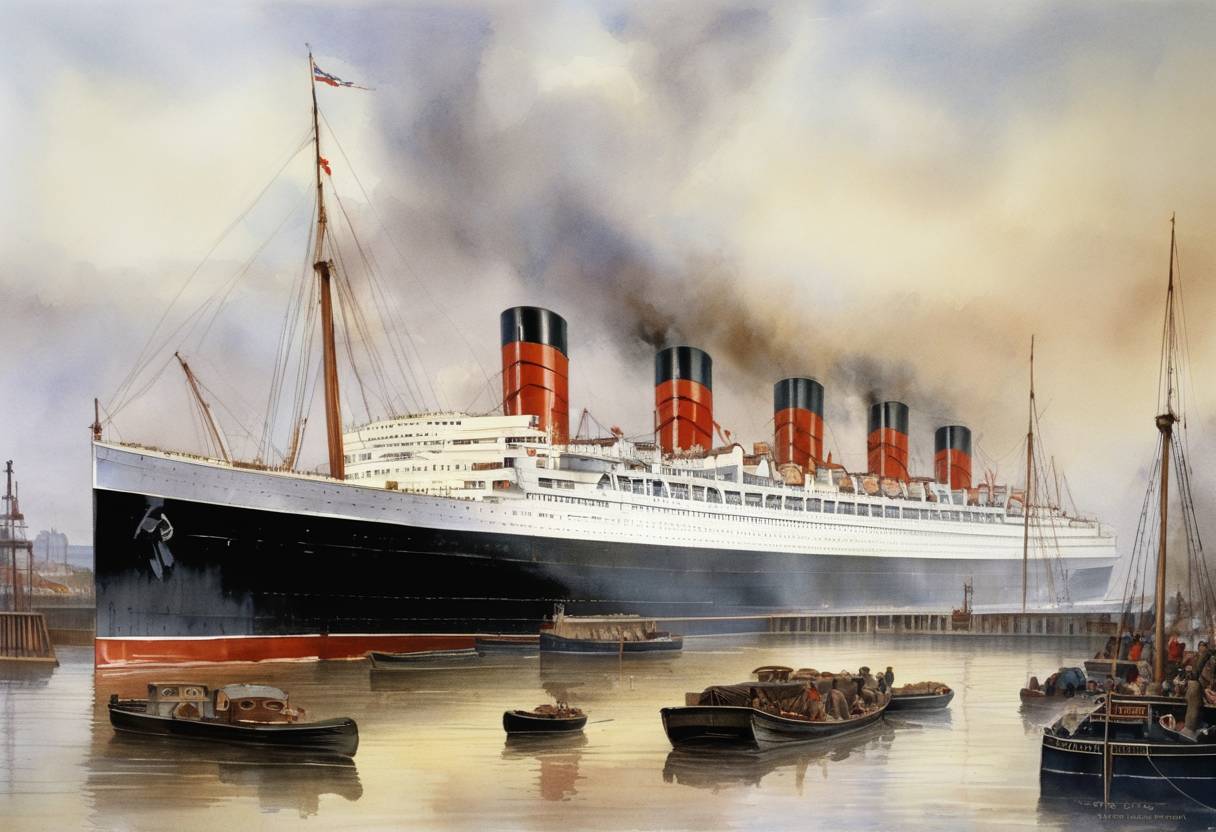
The RMS Queen Mary was launched during an era of intense competition among transatlantic ocean liners. The ship was a part of the Cunard Line, which was striving to outpace its rivals in luxury, size, and speed. The Great Depression had delayed her construction, which initially began in December 1930 under the hull number 534. The economic downturn led to a suspension of work on the ship until an arrangement between the British government and Cunard resulted in a merger with the White Star Line and secured funding to complete the construction.
The launch of the RMS Queen Mary was a significant event attended by over 200,000 spectators, including prominent figures and dignitaries. Queen Mary, the wife of King George V, performed the christening ceremony, giving the ship her royal name. This launch symbolized hope and resilience during a period of economic hardship, as well as the renewal of the British shipbuilding industry.
Upon its completion and during its operational years, the RMS Queen Mary became an icon of engineering and luxury. She symbolized the pinnacle of shipbuilding and transatlantic travel during the early to mid-20th century. The ship served not only as a passenger liner but also played a crucial role during World War II, being converted into a troopship known as the “Grey Ghost.”
Today, the RMS Queen Mary remains a significant historical monument, permanently moored in Long Beach, California, where she serves as a museum and hotel, preserving the legacy of transatlantic ocean liners.
Source: www.queenmary.com