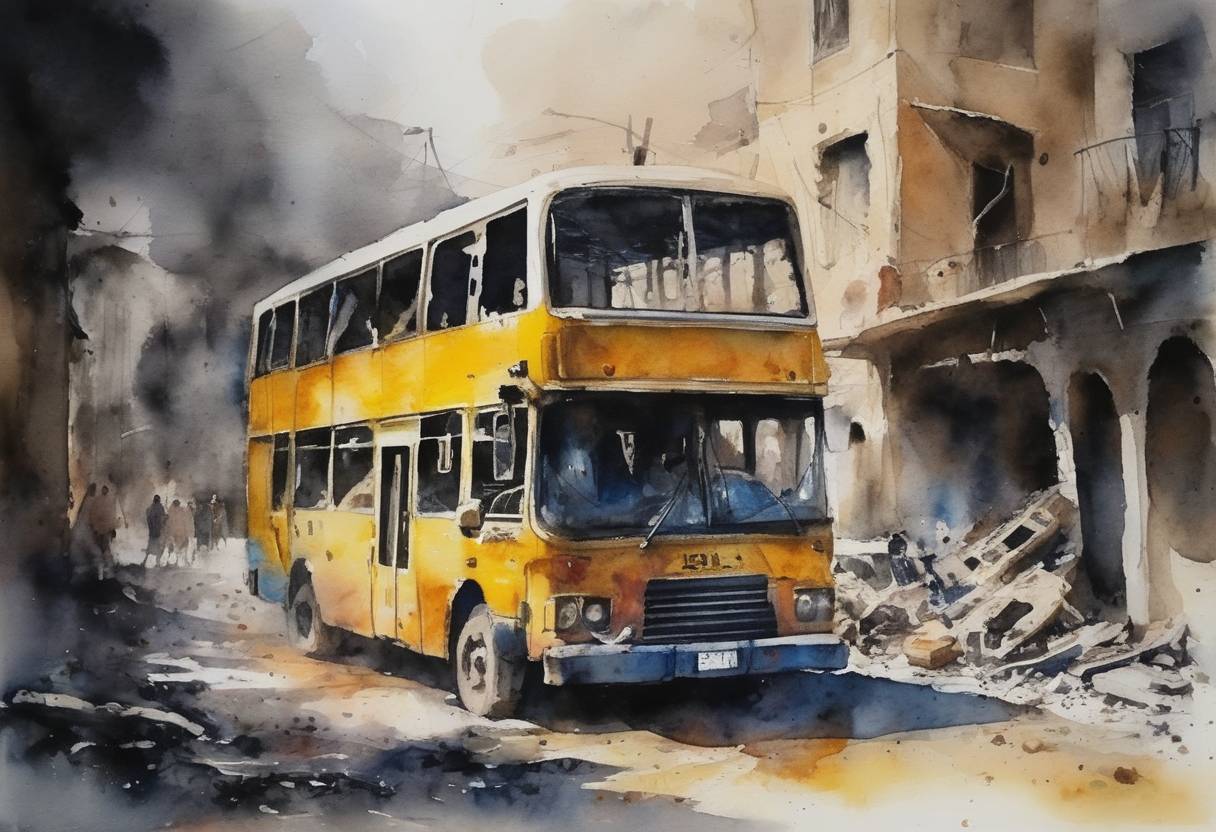
The Damascus Bus Bombing of December 20, 2016
On December 20, 2016, a tragic bombing incident occurred in the Syrian capital of Damascus, targeting two buses. This attack resulted in at least six confirmed deaths and left multiple individuals wounded. The explosion represents one of many violent episodes during the prolonged Syrian Civil War, which has seen the involvement of numerous international and local actors, complicating the nation’s path toward peace.
Context
By late 2016, Syria had been embroiled in a civil war for over five years, a conflict originating from uprisings against the government of President Bashar al-Assad during the Arab Spring in 2011. The war has been characterized by a complex web of confrontations among government forces, opposition groups, ISIS, and international coalitions. The period leading up to the bombing saw increased violence and strategic battles, especially concerning areas like Aleppo, which was a central focus during this time.
Details of the Incident
The bombing took place in the Kafr Sousa area of Damascus, a neighborhood that houses several strategic and governmental facilities. The attack was reportedly carried out using explosive devices planted inside or near the buses, leading to their simultaneous detonation when passengers were on board. The timing and location suggest that the attack might have been carefully planned to maximize disruption and harm.
Aftermath and Reactions
In the immediate aftermath of the bombing, emergency responders and local authorities rushed to the scene to provide aid to the injured and secure the area to prevent further attacks. The Syrian government, along with various international observers, condemned the violence. The attack highlighted the persistent security challenges in Damascus, often perceived as more stable compared to other Syrian battlefronts.
Broader Implications
The December 20 bombing was emblematic of the continued insecurity in Syria, reflecting the ongoing threats faced by civilians amidst the national conflict. It underscored the challenges for achieving stability even in territories nominally under government control. The incident contributed to the international discourse on the need for a comprehensive solution to Syria’s civil war, emphasizing reinforcement of peace efforts and humanitarian responses.
As historical recounts often reflect, the war in Syria remains one of the most devastating conflicts of the early 21st century, with events like the Damascus bus bombing highlighting the continued peril faced by civilians. The international community has been urged to redouble efforts for peace and reconciliation in the country, though a complete resolution remained elusive as of 2016.