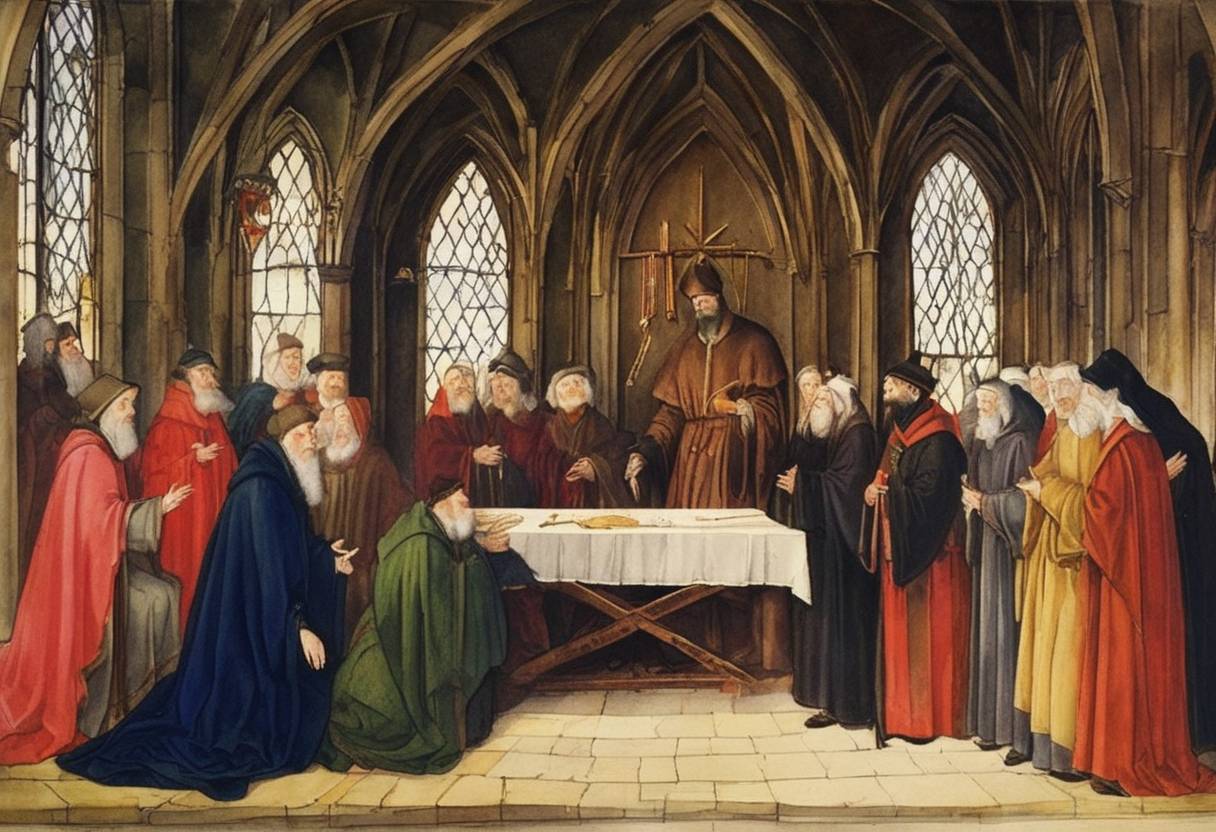
The Death of John Wycliffe: December 31, 1384
John Wycliffe, a seminal figure in the pre-Reformation era, passed away on December 31, 1384, in Lutterworth, England. Often referred to as the ‘Morning Star of the Reformation,’ Wycliffe’s work profoundly influenced religious thought, challenging the ecclesiastical structures of his time.
Background and Influence
Theological Critique: Wycliffe was a formidable critic of the Catholic Church’s wealth and power. His writings argued that the Church had strayed from its spiritual mission, condemning what he saw as the moral and material corruption among the clergy.
Translation of the Bible: One of Wycliffe’s most enduring legacies was his commitment to making the scriptures accessible to the lay populace. He spearheaded efforts to translate the Bible from Latin into Middle English, democratizing religious knowledge and enabling individuals to engage with the scripture directly.
Key Events Leading to His Death
Theological Debates: Following his criticism of church doctrines, Wycliffe engaged in numerous theological debates, questioning the foundations of ecclesiastical authority and advocating a return to biblical scripture.
Escalating Tensions: These views earned him the enmity of several influential church leaders, leading to multiple censure attempts. In 1377, Pope Gregory XI issued a papal bull condemning Wycliffe’s teachings. Despite these challenges, he maintained a significant following, particularly among the Lollards, a group that propagated his teachings.
Death and Later Legacy
Final Years: In the years leading to his death, Wycliffe’s health declined, yet his intellectual output remained significant. His teachings continued to circulate posthumously, influencing reformist ideas across Europe, notably impacting figures such as Jan Hus.
Posthumous Condemnation: Although Wycliffe died of a stroke on December 31, 1384, his ideas lived on, enduring scrutiny from church authorities. The Council of Constance in 1415 declared Wycliffe a heretic, ordering his remains to be exhumed and burned in 1428, a testament to the enduring contentiousness of his reformist views.
Historical Significance
John Wycliffe’s work laid foundational ideas for the Protestant Reformation, which emerged in the 16th century. His advocacy for scripture in the vernacular and his challenges to church authority resonated with reformers who followed, marking him as a pivotal figure in the transition towards religious and intellectual transformations in Europe.