The 2020 Republican National Convention
2020 · Charlotte, United States
The Republican National Convention began in Charlotte, North Carolina, where Donald Trump was formally nominated for a second term as President of the United States.
July 18, 2016
The Republican National Convention began in Cleveland, Ohio, where Donald Trump was formally nominated as the Republican candidate for President of the United States. This event marked a significant moment in the 2016 U.S. presidential election.
Cleveland, United States | Republican Party
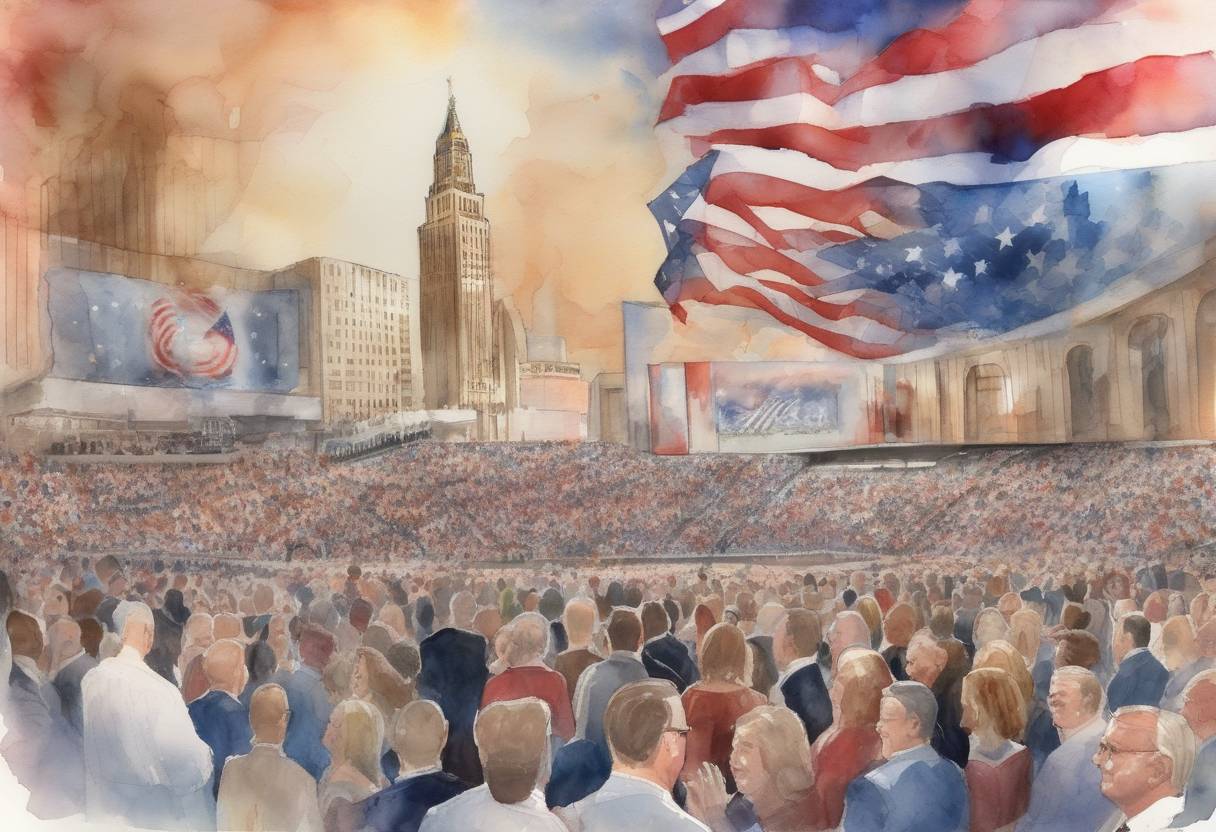
The Republican National Convention (RNC) of 2016 commenced on July 18 in Cleveland, Ohio, marking a pivotal moment in the United States presidential election of that year. This event was significant as it was where Donald Trump was formally nominated as the Republican candidate for President of the United States.
Leading up to the convention, Donald Trump, a businessman and television personality with no prior political experience, had emerged as a dominant figure in the Republican primaries. His campaign was characterized by a populist approach, focusing on issues such as immigration reform, trade, and national security, which resonated with a substantial segment of the American electorate.
Trump’s candidacy was notable for its departure from traditional Republican platforms, often challenging the party’s establishment. Despite initial skepticism and resistance from within the party, Trump secured enough delegates to clinch the nomination, defeating a crowded field of seasoned politicians.
Opening Day (July 18, 2016): The convention opened with the theme “Make America Safe Again,” emphasizing national security and law enforcement. Key speakers included former New York City Mayor Rudy Giuliani and Melania Trump, who delivered a speech that garnered significant media attention.
Nomination (July 19, 2016): On the second day, Donald Trump was officially nominated as the Republican candidate for president. The theme for the day was “Make America Work Again,” focusing on economic issues. Notable speakers included Senate Majority Leader Mitch McConnell and Speaker of the House Paul Ryan.
Vice Presidential Nomination: Indiana Governor Mike Pence was nominated as Trump’s running mate. Pence’s selection was seen as a strategic move to unify the party, given his conservative credentials and experience in government.
Final Day (July 21, 2016): The convention concluded with Trump’s acceptance speech, where he outlined his vision for America and reiterated his campaign slogan, “Make America Great Again.” His speech focused on themes of law and order, economic revitalization, and a strong national defense.
The 2016 RNC was a defining moment in American politics, solidifying Trump’s position as the Republican standard-bearer. The convention highlighted the deep divisions within the party, as well as the broader political landscape of the United States.
Trump’s nomination marked a shift in the Republican Party’s trajectory, with his campaign strategies and rhetoric influencing future political discourse. The convention set the stage for the general election campaign against Democratic nominee Hillary Clinton, ultimately leading to Trump’s victory in the November election.
The events in Cleveland underscored the transformative nature of the 2016 election, reshaping the Republican Party and American politics for years to come.
Source: www.npr.org