Discovery of the Hawaiian Islands by James Cook
1778 · Hawaii, United States
James Cook became the first known European to discover the Hawaiian Islands, which he named the "Sandwich Islands."
January 17, 1773
Captain James Cook becomes the first known European to cross the Antarctic Circle.
Antarctic Circle, Antarctica | British Royal Navy
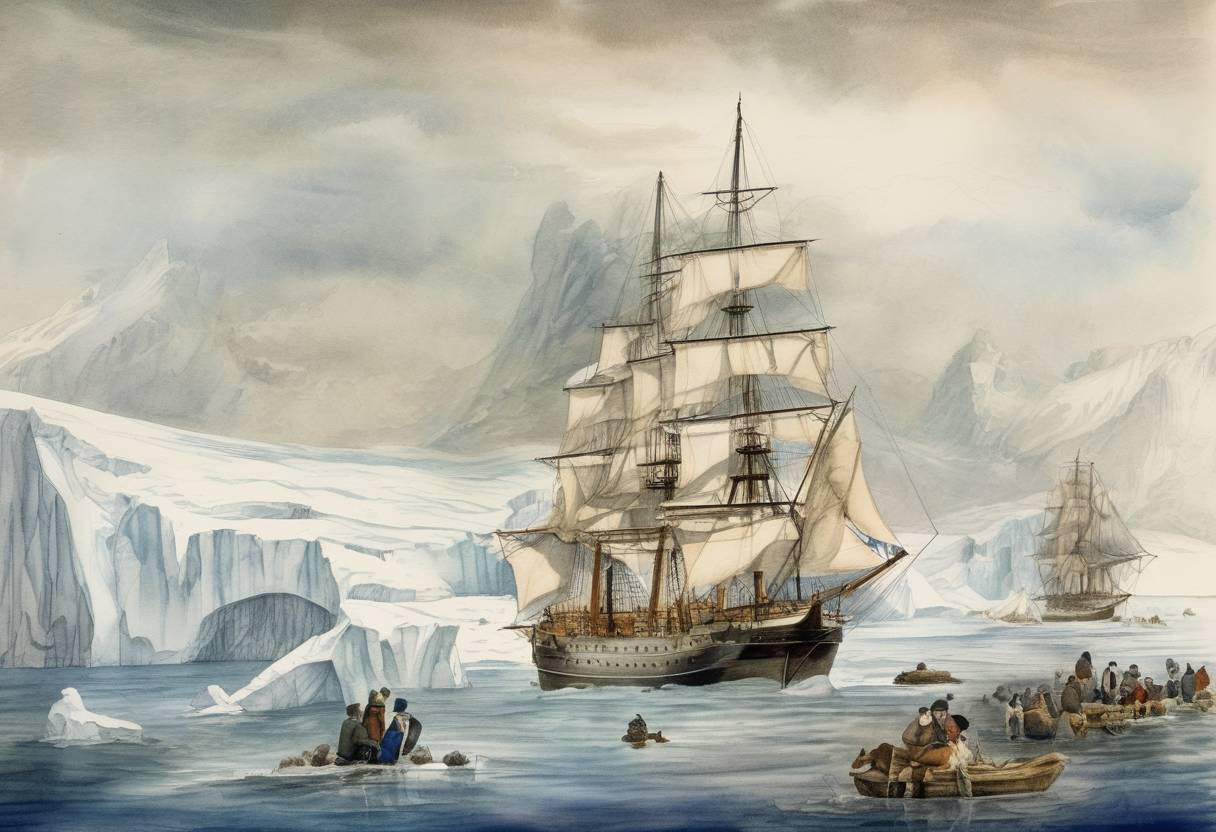
On January 17, 1773, Captain James Cook, a renowned British explorer and navigator, became the first known European to cross the Antarctic Circle. This significant event occurred during Cook’s second voyage of exploration, which was commissioned by the British Admiralty to search for the hypothesized Terra Australis, a large continent believed to exist in the southern hemisphere.
James Cook: Born in 1728 in Yorkshire, England, Cook joined the British Royal Navy in 1755. He gained recognition for his skills in cartography and navigation, which led to his appointment as commander of several exploratory voyages.
Second Voyage (1772-1775): Cook’s second voyage aimed to explore the southern oceans and confirm or refute the existence of Terra Australis. He commanded the HMS Resolution, accompanied by the HMS Adventure under Captain Tobias Furneaux.
Crossing the Antarctic Circle: On January 17, 1773, Cook’s expedition crossed the Antarctic Circle at approximately 66°33′39″ S latitude. This marked the first recorded crossing of this line by a European explorer.
Challenges: The journey was fraught with challenges, including harsh weather conditions, icebergs, and the risk of ship damage. Despite these obstacles, Cook’s exceptional navigation skills ensured the safety and success of the expedition.
Scientific Contributions: Cook’s voyages significantly contributed to the scientific understanding of the southern hemisphere. His detailed maps and observations improved navigation and expanded European knowledge of the world’s geography.
Debunking Myths: Cook’s exploration provided evidence against the existence of a large southern continent, reshaping contemporary geographical theories.
Legacy: Cook’s crossing of the Antarctic Circle paved the way for future explorations and scientific studies in the Antarctic region. His meticulous records and maps remained invaluable to explorers and scientists for generations.
Continued Exploration: Cook continued his voyage, further exploring the South Pacific and returning to England in 1775. His findings were published and widely disseminated, enhancing his reputation as one of history’s greatest explorers.
Impact on Exploration: Cook’s achievements inspired subsequent explorers to venture into the polar regions, ultimately leading to the discovery of Antarctica in the 19th century.
Captain James Cook’s crossing of the Antarctic Circle stands as a testament to human curiosity and the relentless pursuit of knowledge, marking a pivotal moment in the history of exploration.
Source: en.wikipedia.org