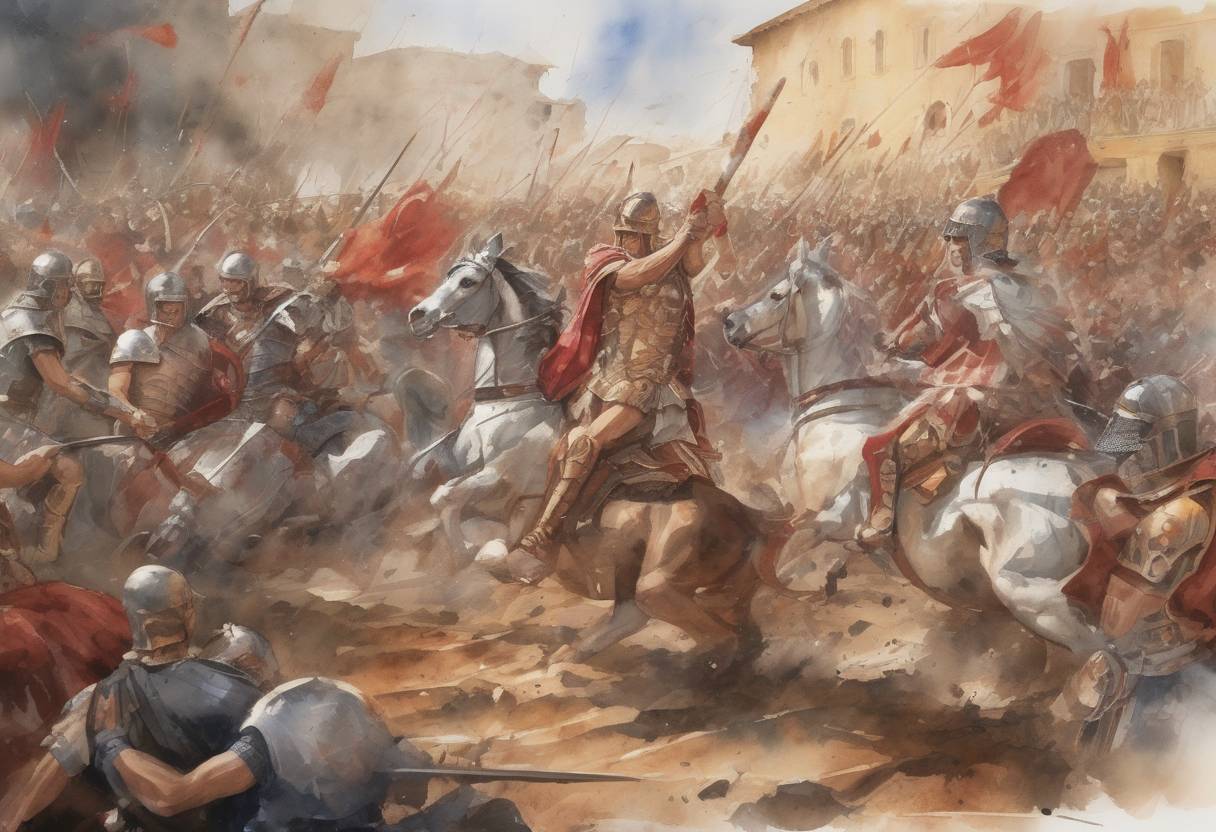
The Battle of Lugdunum: February 8, 216
The Battle of Lugdunum, which took place on February 8, 216, was a significant event in the Roman Empire’s history, marking the consolidation of power by Emperor Caracalla. This battle was a culmination of the internal strife following the death of their father, Emperor Septimius Severus, and the subsequent power struggle between Caracalla and his brother Geta.
Background
- Septimius Severus’ Reign: Septimius Severus, who ruled from 193 to 211, established the Severan dynasty. Upon his death, he left the empire to his two sons, Caracalla and Geta, hoping they would co-rule.
- Sibling Rivalry: The co-emperors, however, were deeply antagonistic towards each other. Their rivalry was marked by mutual distrust and political maneuvering, which destabilized the empire’s governance.
The Battle
- Location: The battle took place near Lugdunum, which is modern-day Lyon, France. This region was a significant Roman settlement and a strategic location in Gaul.
- Forces Involved: Caracalla’s forces were pitted against those loyal to Geta. The exact numbers and composition of the forces remain unclear, but it is known that Caracalla had the support of key military leaders and a substantial portion of the Roman legions.
- Outcome: Caracalla emerged victorious, decisively defeating Geta’s supporters. This victory effectively ended the power struggle between the brothers.
Aftermath
- Consolidation of Power: Following the battle, Caracalla solidified his control over the Roman Empire. He took drastic measures to eliminate any remaining opposition, including the execution of Geta’s supporters and a purge of perceived enemies.
- Caracalla’s Rule: Caracalla’s reign (211-217) was marked by both military campaigns and internal reforms. Notably, he issued the Constitutio Antoniniana in 212, granting Roman citizenship to all free men within the empire, a move aimed at increasing tax revenues and solidifying loyalty.
- Legacy: Caracalla’s consolidation of power through the Battle of Lugdunum exemplifies the often violent and tumultuous nature of Roman imperial succession. His rule, however, was short-lived, as he was assassinated in 217, leading to further instability.
Historical Significance
The Battle of Lugdunum is a poignant example of the internal conflicts that plagued the Roman Empire during the Severan dynasty. It highlights the challenges of co-rule and the lengths to which individuals would go to secure absolute power. Caracalla’s subsequent actions and policies had lasting impacts on the Roman state, influencing its administrative and social structures.
This event underscores the broader theme of political intrigue and military might that characterized much of Roman imperial history, setting the stage for future power struggles and the eventual decline of the Roman Empire.