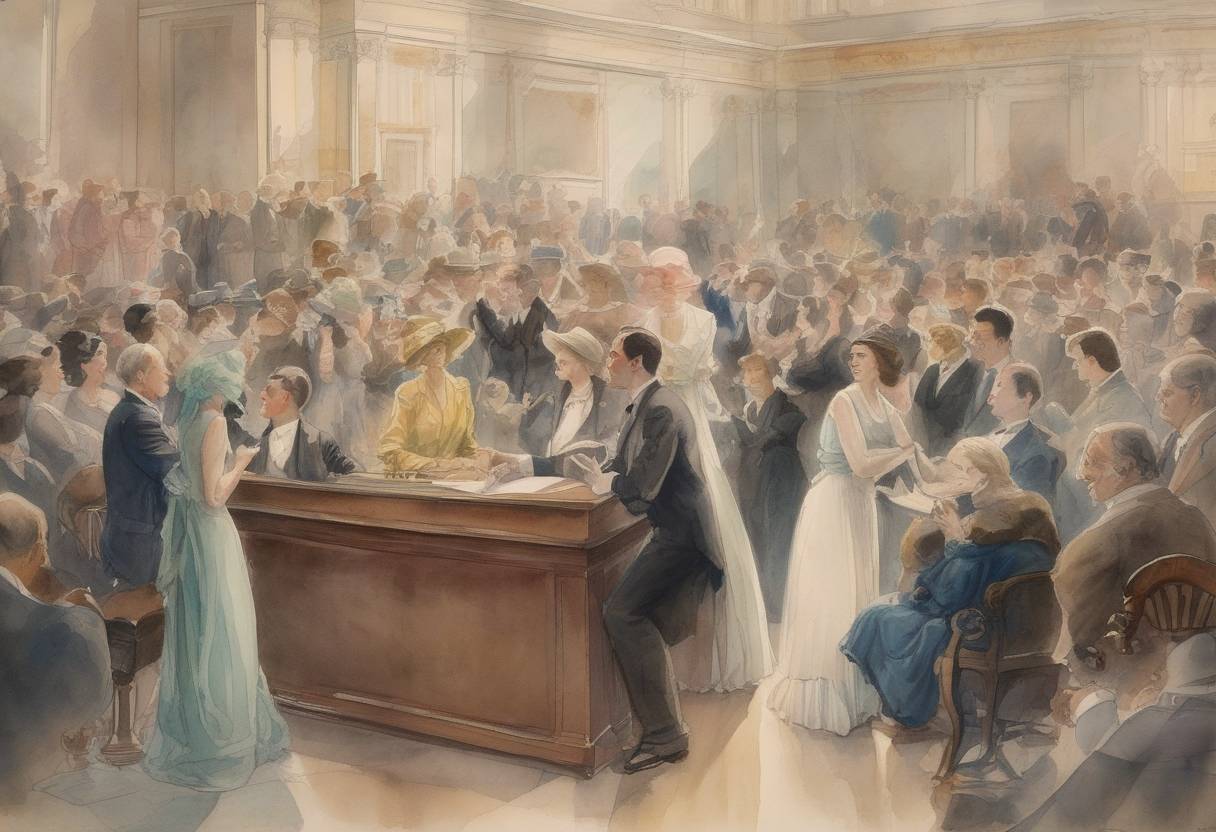
The Ratification of the 19th Amendment: August 18, 1920
On August 18, 1920, a pivotal moment in United States history occurred with the ratification of the 19th Amendment to the Constitution, granting women the right to vote. This landmark event was the culmination of a decades-long struggle for women’s suffrage, a movement that sought to secure equal voting rights for women across the nation.
Historical Context
The fight for women’s suffrage in the United States began in earnest in the mid-19th century. The Seneca Falls Convention of 1848 is often cited as the starting point of the organized women’s rights movement in the U.S. Leaders like Elizabeth Cady Stanton and Susan B. Anthony emerged as prominent figures advocating for women’s voting rights. Despite facing significant opposition, these suffragists tirelessly campaigned for change through speeches, writings, and organized protests.
Key Events Leading to Ratification
- 1869: The National Woman Suffrage Association (NWSA) and the American Woman Suffrage Association (AWSA) were formed, both working towards the goal of women’s suffrage, albeit through different strategies.
- 1890: The NWSA and AWSA merged to form the National American Woman Suffrage Association (NAWSA), which played a crucial role in the suffrage movement.
- 1913: Alice Paul and Lucy Burns organized the Woman Suffrage Procession in Washington, D.C., a significant demonstration that highlighted the demand for voting rights.
- 1919: After years of advocacy and incremental successes at the state level, the U.S. Congress passed the 19th Amendment on June 4, 1919, sending it to the states for ratification.
The Ratification Process
The 19th Amendment required ratification by three-fourths of the states to become law. Tennessee became the crucial 36th state to ratify the amendment on August 18, 1920, following a dramatic vote in its state legislature. The deciding vote was famously cast by Harry T. Burn, a young legislator who, influenced by a letter from his mother urging him to support suffrage, changed his vote to “yes.”
Text of the 19th Amendment
The 19th Amendment is succinct, stating:
“The right of citizens of the United States to vote shall not be denied or abridged by the United States or by any State on account of sex.”
Aftermath and Significance
The ratification of the 19th Amendment marked a significant victory for the women’s suffrage movement and a transformative moment in American democracy. It enfranchised millions of women, fundamentally altering the electorate and paving the way for future advancements in women’s rights.
The amendment’s passage also inspired further activism and advocacy for gender equality, influencing subsequent legislation and movements aimed at achieving broader civil rights.
Conclusion
The ratification of the 19th Amendment on August 18, 1920, was a monumental achievement in the pursuit of equality and justice. It stands as a testament to the relentless efforts of suffragists who fought for decades to secure voting rights for women, reshaping the political landscape of the United States and advancing the cause of democracy.