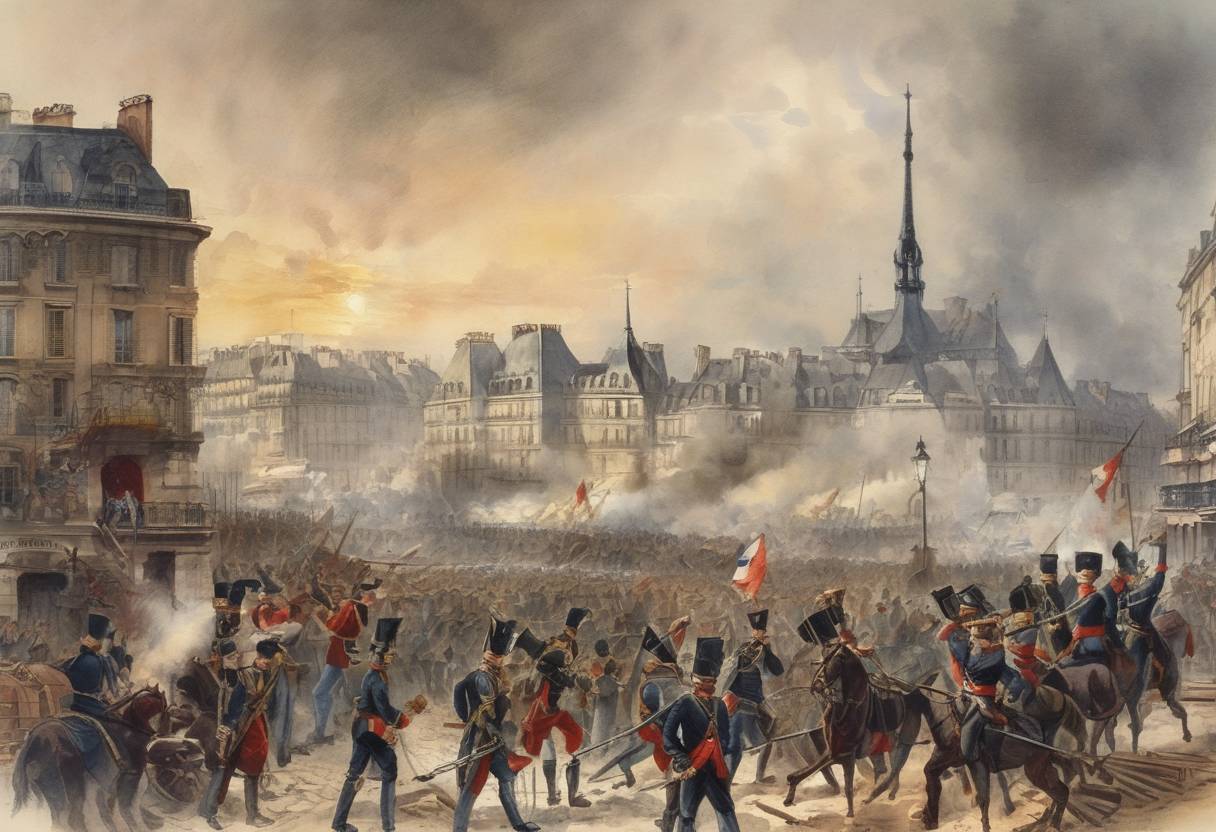
The End of the Siege of Paris: A Decisive Victory for Prussia
On January 28, 1871, the Siege of Paris concluded, marking a pivotal moment in the Franco-Prussian War and a decisive victory for Prussia. This event not only signaled the end of the war but also had profound implications for the future of both France and Germany.
Context and Lead-Up to the Siege
The Franco-Prussian War began on July 19, 1870, primarily due to tensions between the Second French Empire, led by Napoleon III, and the Kingdom of Prussia, under the leadership of Chancellor Otto von Bismarck. The conflict was fueled by Prussian ambitions to unify the German states under its leadership and French fears of encirclement by a powerful German state.
The war quickly turned in favor of Prussia and its German allies. The French suffered a series of defeats, most notably at the Battle of Sedan on September 1, 1870, where Napoleon III was captured. This defeat led to the collapse of the Second French Empire and the establishment of the French Third Republic.
The Siege of Paris
Following the fall of Sedan, Prussian forces, commanded by General Helmuth von Moltke, advanced towards Paris. The siege began on September 19, 1870, as the Prussian army encircled the city, cutting off supplies and communication.
Paris, under the leadership of the Government of National Defense, prepared for a prolonged siege. The city was fortified, and its citizens, driven by a spirit of resistance, endured severe hardships, including food shortages and harsh winter conditions. Despite several attempts by French forces to break the siege, including the Battle of Buzenval, the Prussian grip on the city remained firm.
The Conclusion of the Siege
By January 1871, the situation in Paris had become dire. Starvation and disease were rampant, and the city’s defenses were weakening. On January 28, 1871, the French government, recognizing the futility of further resistance, agreed to an armistice with Prussia.
The terms of the armistice were harsh. France was required to pay a substantial indemnity and cede the territories of Alsace and Lorraine to the newly proclaimed German Empire. The armistice also paved the way for the formal end of the war with the Treaty of Frankfurt, signed on May 10, 1871.
Aftermath and Historical Significance
The end of the Siege of Paris and the Franco-Prussian War had significant consequences:
German Unification: The victory solidified the unification of the German states under Prussian leadership. On January 18, 1871, just days before the siege ended, King Wilhelm I of Prussia was proclaimed the German Emperor at the Palace of Versailles, marking the birth of the German Empire.
French Political Changes: The defeat led to political upheaval in France, contributing to the rise of the Paris Commune in March 1871, a radical socialist and revolutionary government that briefly ruled Paris.
Long-term Franco-German Tensions: The annexation of Alsace and Lorraine sowed seeds of resentment in France, contributing to the animosity that would later play a role in the lead-up to World War I.
The Siege of Paris remains a significant event in European history, illustrating the shifting power dynamics of the 19th century and setting the stage for future conflicts.