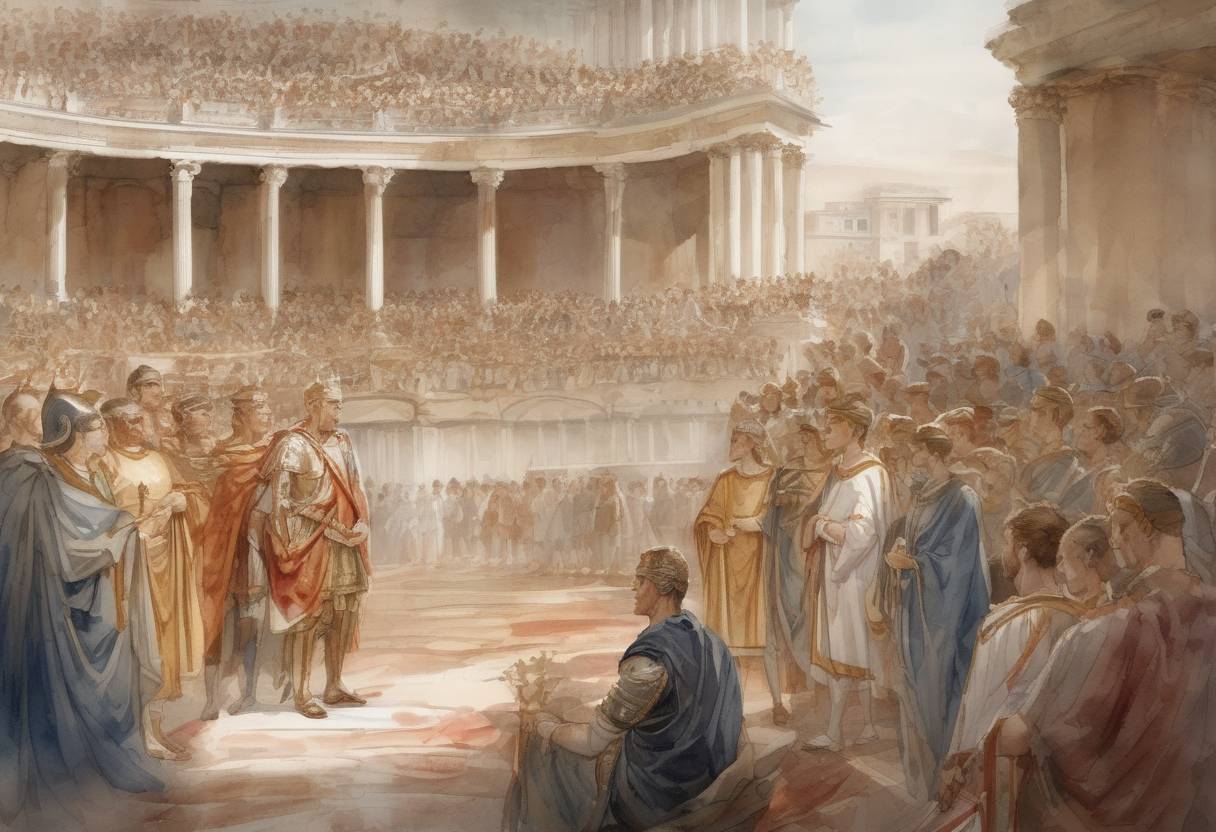
The Proclamation of Honorius as Co-Emperor
On January 23, 393, Roman Emperor Theodosius I proclaimed his eight-year-old son, Honorius, as co-emperor of the Western Roman Empire. This significant event took place during a period of considerable political and military challenges for the Roman Empire, which was divided into Eastern and Western regions.
Context Leading Up to the Event
Theodosius I’s Reign: Theodosius I, also known as Theodosius the Great, was the last emperor to rule over both the Eastern and Western halves of the Roman Empire. His reign began in 379 AD, and he is noted for making Christianity the official state religion of the Roman Empire and for his efforts to maintain unity within the empire.
Division of the Empire: By the late 4th century, the Roman Empire was effectively divided into two administrative regions: the Eastern Roman Empire, governed from Constantinople, and the Western Roman Empire, governed from various cities, including Milan and later Ravenna. This division was primarily for administrative efficiency and to better manage the vast territories of the empire.
Political Instability: The Western Roman Empire faced significant internal and external pressures, including invasions by various barbarian groups and internal power struggles. Theodosius sought to stabilize the region by appointing a co-emperor.
The Proclamation of Honorius
Honorius’s Appointment: On January 23, 393, Theodosius I elevated his young son Honorius to the rank of Augustus, making him co-emperor of the Western Roman Empire. This move was both a strategic decision to ensure dynastic continuity and a response to the ongoing political instability in the West.
Youth and Regency: Given Honorius’s young age, the actual governance of the Western Empire was managed by regents and military leaders. One of the most notable figures during this period was Stilicho, a high-ranking general who effectively controlled the Western Roman Empire’s military and political affairs.
Aftermath and Historical Significance
Stilicho’s Role: As regent, Stilicho played a crucial role in defending the Western Roman Empire against various threats, including the Visigoths led by Alaric. His leadership was pivotal during the early years of Honorius’s reign.
Honorius’s Reign: Honorius’s reign, which lasted until 423 AD, was marked by significant challenges, including the sack of Rome by the Visigoths in 410 AD. His rule is often characterized by the continued decline of the Western Roman Empire.
Legacy: The appointment of Honorius as co-emperor highlights the complexities of Roman imperial politics and the challenges of maintaining control over a vast and diverse empire. It also underscores the importance of military leadership and regency during periods of imperial transition.
In summary, the proclamation of Honorius as co-emperor was a strategic move by Theodosius I to secure the Western Roman Empire’s future amidst growing instability. This event set the stage for the subsequent developments that would shape the late Roman Empire’s history.