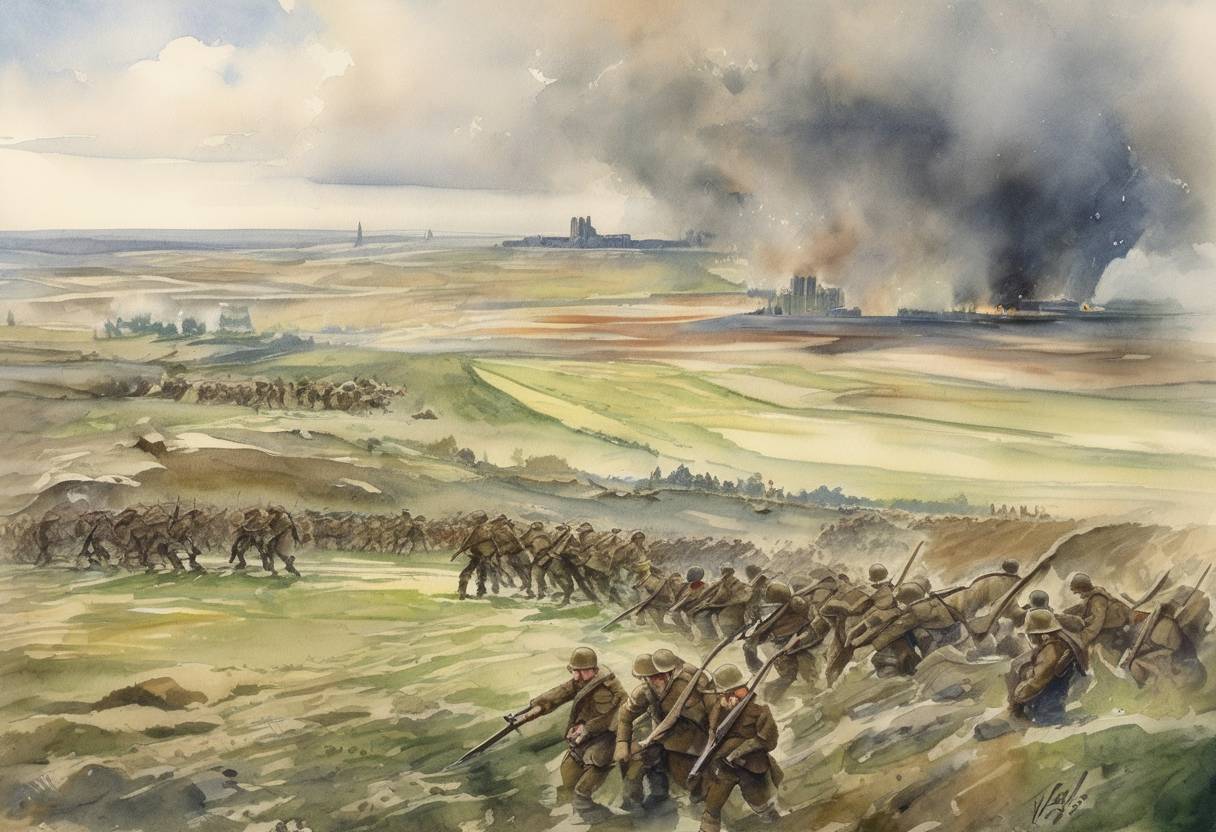
The Battle of Vimy Ridge: April 9, 1917
The Battle of Vimy Ridge, a pivotal engagement during World War I, commenced on April 9, 1917. This battle marked a significant victory for the Allied forces, particularly the Canadian Corps, which played a crucial role in the operation. Here is a detailed account of the events and significance of this battle:
Context and Background
- Location: Vimy Ridge is located in the Nord-Pas-de-Calais region of France. It was a strategically important high ground held by the German Sixth Army since 1914.
- Strategic Importance: The ridge provided a commanding view of the surrounding area, making it a valuable military position for artillery observation and defense.
- Allied Objectives: The capture of Vimy Ridge was part of the larger Battle of Arras, aimed at breaking through the German lines and diverting German attention from the French offensive at the Aisne.
The Canadian Corps
- Composition: The Canadian Corps, under the command of Lieutenant-General Sir Julian Byng, consisted of four divisions, with soldiers from across Canada.
- Preparation: The Canadians meticulously prepared for the assault, employing innovative tactics such as extensive use of artillery barrages, known as the “creeping barrage,” and detailed rehearsals of the attack.
The Battle
- Date: The assault began at 5:30 AM on April 9, 1917, Easter Monday.
- Tactics: The Canadians advanced behind a rolling artillery barrage, which moved forward in stages, providing cover and disrupting German defenses.
- Outcome: By April 12, the Canadian Corps had successfully captured the ridge, achieving a significant breakthrough. This victory was notable for its planning and execution, with relatively fewer casualties compared to previous attempts by British and French forces.
Significance and Aftermath
- Canadian Nationalism: The victory at Vimy Ridge became a symbol of national pride and unity for Canada, marking a defining moment in the country’s military history.
- Military Innovation: The battle demonstrated the effectiveness of coordinated infantry and artillery tactics, influencing future military operations.
- Strategic Impact: Although the overall strategic impact on the Western Front was limited, the capture of Vimy Ridge boosted Allied morale and demonstrated the potential of well-coordinated assaults.
Legacy
- Vimy Memorial: The Canadian National Vimy Memorial, located on the site of the battle, stands as a tribute to all Canadians who served during World War I, particularly those who lost their lives in France.
- Commemoration: The battle is commemorated annually in Canada, reflecting its enduring significance in Canadian history and identity.
The Battle of Vimy Ridge remains a landmark event in World War I history, illustrating the bravery and effectiveness of the Canadian Corps and marking a turning point in Canada’s emergence as a nation on the world stage.