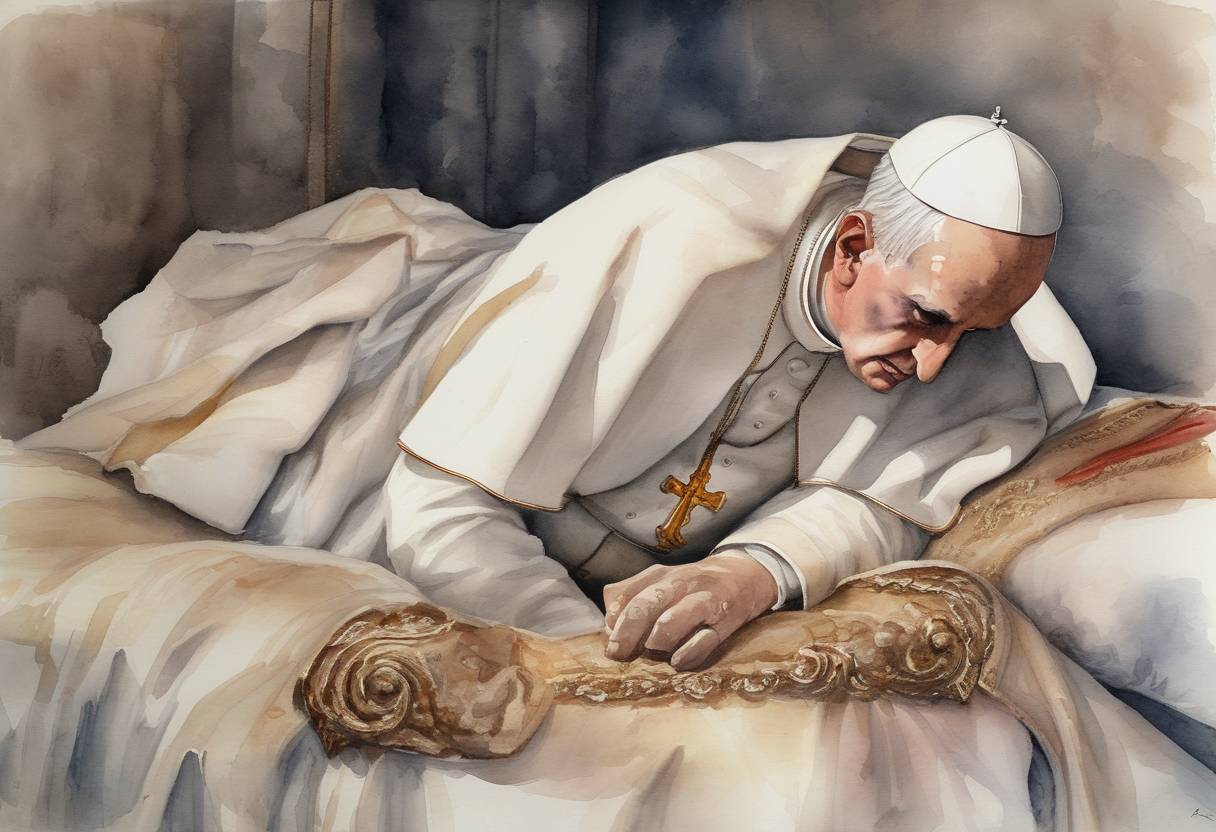
The Mysterious Death of Pope John XII
On May 14, 964, Pope John XII died under circumstances that remain shrouded in mystery, with some accounts suggesting he may have been murdered. His papacy, which began in 955, was one of the most controversial in the history of the Catholic Church, marked by scandal, political intrigue, and accusations of moral corruption.
Background
Pope John XII, born Octavianus, was the son of Alberic II of Spoleto, a powerful Roman noble. He ascended to the papacy at a young age, around 18, largely due to his family’s influence. His election was part of a broader trend during this period where the papacy was heavily influenced by Roman aristocratic families, often leading to the appointment of young and inexperienced popes.
Scandals and Controversies
John XII’s papacy was notorious for its scandals. Historical sources, particularly the accounts of Liutprand of Cremona, describe him as leading a life of debauchery and neglecting his papal duties. He was accused of various immoral acts, including simony, adultery, and even turning the Lateran Palace into a brothel. These allegations, while possibly exaggerated by his political enemies, contributed to his tarnished reputation.
Political Turmoil
John XII’s reign was also marked by significant political turmoil. He initially sought the support of Otto I, King of Germany, to secure his position against local Roman factions. In 962, he crowned Otto as Holy Roman Emperor, a move that was supposed to strengthen his own power. However, tensions soon arose between the pope and the emperor, leading to a conflict that culminated in John XII’s temporary deposition by a synod convened by Otto in 963.
Mysterious Death
John XII’s death on May 14, 964, occurred shortly after he regained the papal throne. The circumstances of his death are unclear, with some sources suggesting he died of a stroke while others imply he was murdered by a jealous husband or political adversaries. The lack of concrete evidence has left his death an enduring mystery.
Aftermath and Historical Significance
The death of John XII led to a period of instability in the papal succession. His immediate successor, Pope Leo VIII, was considered an antipope by some factions, leading to further disputes and divisions within the Church. This period highlighted the vulnerabilities of the papacy to secular influences and set the stage for future reforms aimed at reducing such interference.
John XII’s papacy is often cited as an example of the challenges faced by the medieval Church in maintaining spiritual authority amidst political and moral corruption. His reign and its tumultuous end underscore the complex interplay between religious and secular powers in medieval Europe.