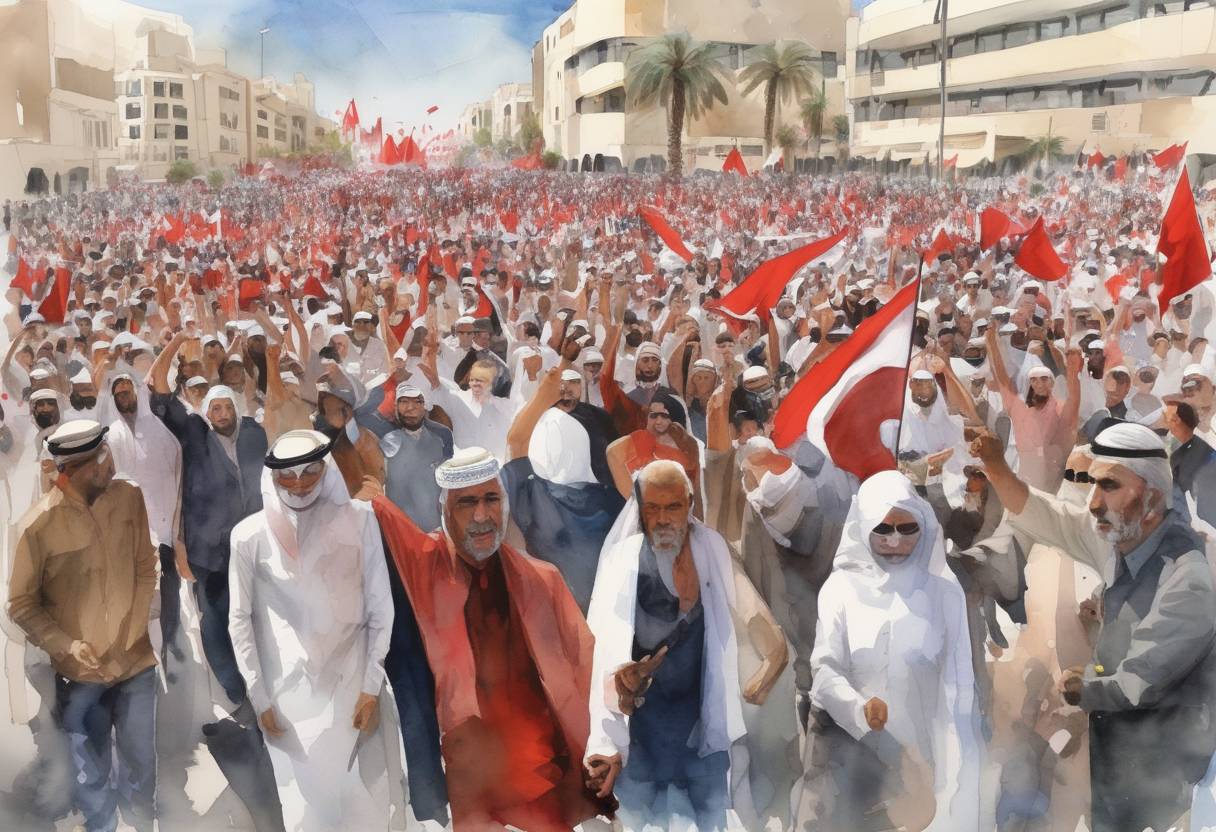
Bahrain Protests at Pearl Roundabout - February 16, 2011
On February 16, 2011, Bahrain witnessed a significant escalation in protests as part of the broader Arab Spring movement that swept across the Middle East and North Africa. The demonstrations were primarily centered at the Pearl Roundabout in the capital city of Manama. This date marked a critical moment in Bahrain’s political landscape, as citizens gathered to demand political reforms and greater freedoms.
Context and Background
- Arab Spring Influence: The protests in Bahrain were inspired by the successful uprisings in Tunisia and Egypt, where citizens had mobilized to demand democratic reforms and the end of autocratic rule.
- Bahrain’s Political Climate: Bahrain, a small island nation in the Persian Gulf, has a complex socio-political structure. The ruling Al Khalifa family, a Sunni monarchy, governs a population that is predominantly Shia. This sectarian divide has historically contributed to political tensions and calls for reform.
Key Events Leading Up to February 16
- Initial Protests: The protests began on February 14, 2011, when demonstrators took to the streets to commemorate the ninth anniversary of Bahrain’s National Action Charter, which promised political reforms that many felt were unfulfilled.
- Escalation: By February 16, the protests had grown significantly, with thousands of Bahrainis gathering at the Pearl Roundabout. The roundabout became a symbol of the protest movement, akin to Tahrir Square in Cairo.
February 16, 2011 - The Protests
- Demands: Protesters called for constitutional reforms, the release of political prisoners, an end to discrimination against the Shia majority, and the establishment of a more representative and accountable government.
- Government Response: The Bahraini government initially responded with a heavy hand, deploying security forces to disperse the crowds. This led to clashes and heightened tensions between the government and demonstrators.
Aftermath and Consequences
- Continued Protests: The protests continued for several weeks, with the Pearl Roundabout remaining a focal point until March 2011, when the government, with support from neighboring Gulf Cooperation Council (GCC) countries, launched a crackdown to clear the area.
- International Reaction: The events in Bahrain drew international attention, with human rights organizations condemning the government’s use of force and calling for dialogue and reform.
- Long-term Impact: The protests highlighted the deep-seated grievances within Bahraini society and the challenges of sectarian divisions. While some reforms were promised, many of the protesters’ demands remained unmet, leading to ongoing tensions in the years that followed.
The events of February 16, 2011, at the Pearl Roundabout remain a significant chapter in Bahrain’s history, reflecting the broader aspirations and challenges of the Arab Spring movement.