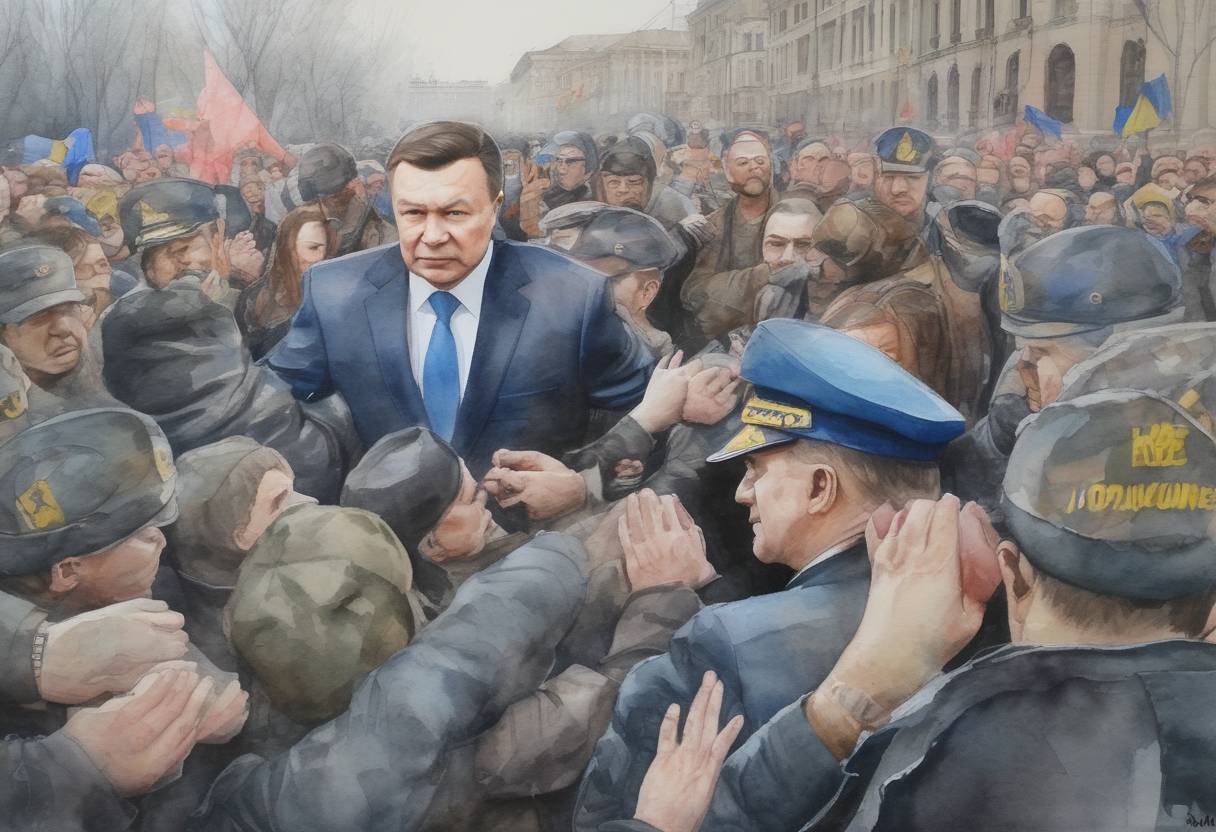
The Removal of Ukrainian President Viktor Yanukovych: February 22, 2014
On February 22, 2014, Ukrainian President Viktor Yanukovych was officially removed from office by the Ukrainian parliament, marking a pivotal moment in Ukraine’s political history. This event was the culmination of months of protests and civil unrest known as the Euromaidan movement, which had profound implications for Ukraine’s future and its relations with both Russia and the European Union.
Background: The Euromaidan Movement
The Euromaidan movement began in November 2013, when President Yanukovych abruptly decided to suspend the signing of an association agreement with the European Union, opting instead to strengthen ties with Russia. This decision sparked widespread protests in Kyiv’s Maidan Nezalezhnosti (Independence Square), as many Ukrainians favored closer integration with Europe and were frustrated with the pervasive corruption and economic mismanagement under Yanukovych’s administration.
Key Events Leading to February 22, 2014
November 2013: Protests began in Kyiv, quickly gaining momentum and spreading to other parts of Ukraine. Demonstrators called for Yanukovych’s resignation and demanded political reforms.
January 2014: The situation escalated as the government passed anti-protest laws, leading to violent clashes between protesters and security forces. The violence resulted in numerous casualties and heightened tensions.
February 18-20, 2014: The deadliest days of the protests occurred, with over 100 people killed in clashes between protesters and police. This period, known as the “Revolution of Dignity,” intensified international scrutiny and pressure on Yanukovych.
February 22, 2014: Yanukovych’s Removal
On February 22, 2014, the Ukrainian parliament (Verkhovna Rada) voted to remove Yanukovych from office, citing his abandonment of duties. The decision was supported by 328 out of 450 members of parliament. Yanukovych fled Kyiv and eventually sought refuge in Russia, claiming he was the victim of a coup.
Aftermath and Consequences
Interim Government: Following Yanukovych’s removal, an interim government was established, and Oleksandr Turchynov was appointed as acting president. New presidential elections were scheduled for May 2014.
Annexation of Crimea: In the wake of Yanukovych’s ousting, Russia annexed Crimea in March 2014, a move that was widely condemned by the international community and led to ongoing geopolitical tensions.
Conflict in Eastern Ukraine: Pro-Russian separatists in eastern Ukraine declared independence, leading to a conflict that continues to affect the region.
Shift in Foreign Policy: Ukraine’s political shift resulted in a stronger orientation towards the European Union and NATO, significantly altering its foreign policy trajectory.
The removal of Viktor Yanukovych was a watershed moment in Ukraine’s history, symbolizing a rejection of corruption and authoritarianism and a desire for democratic governance and European integration. The events of February 22, 2014, continue to influence Ukraine’s domestic and international politics.