The Reopening of the Leaning Tower of Pisa: December 16, 2001
2001 · Pisa, Italy
The Leaning Tower of Pisa reopened to the public after 11 years of stabilization work to prevent it from collapsing.
August 9, 1173
Construction of the Leaning Tower of Pisa began.
Pisa, Italy
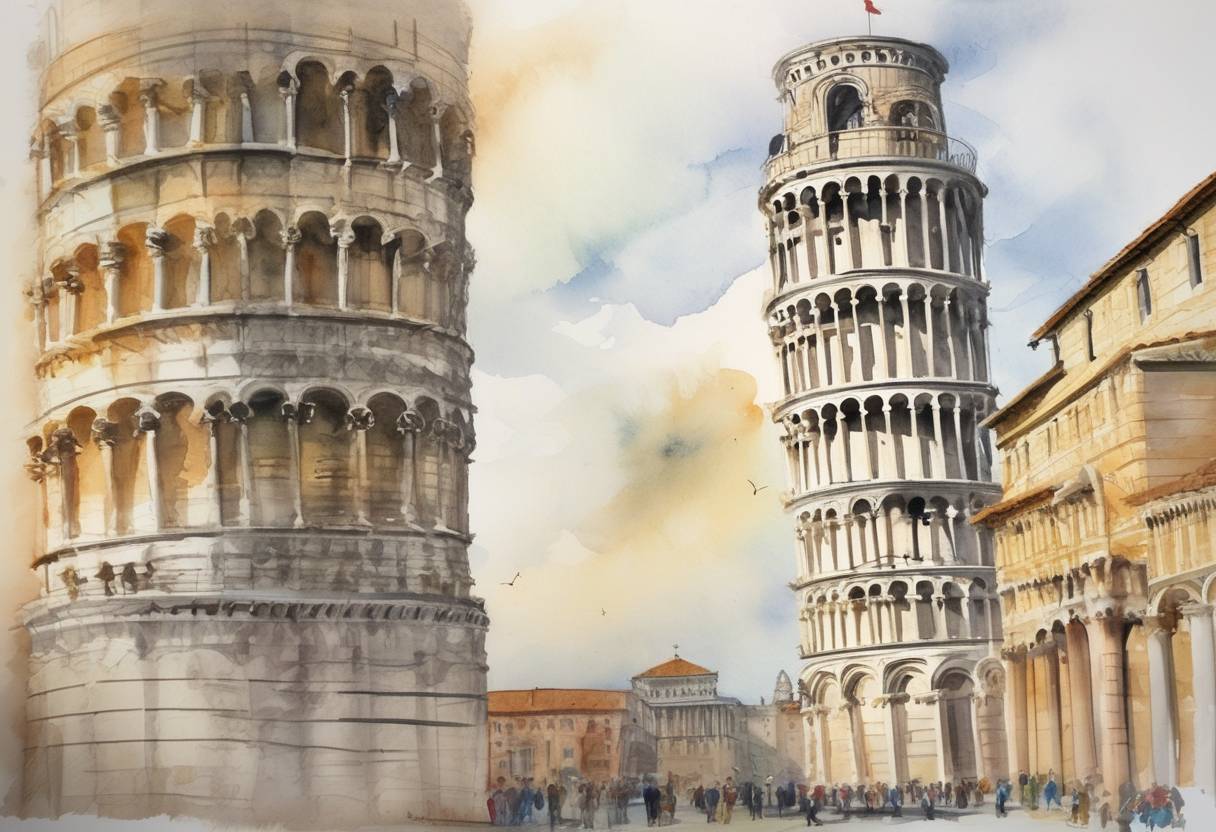
On August 9, 1173, construction commenced on one of the most iconic architectural structures in the world: the Leaning Tower of Pisa. This freestanding bell tower, part of the cathedral complex in Pisa, Italy, is renowned not only for its unintended tilt but also for its Romanesque beauty.
The Leaning Tower of Pisa is part of the Piazza dei Miracoli (Square of Miracles), which includes the Pisa Cathedral, the Baptistery, and the Camposanto Monumentale. The tower was intended to stand as a testament to the wealth and power of the maritime Republic of Pisa during the Middle Ages.
The construction of the Leaning Tower of Pisa occurred in three main phases over nearly two centuries:
First Phase (1173-1178): The initial construction began with the laying of the foundation and the building of the first three floors. It was during this phase that the tower began to lean due to an inadequate foundation on soft ground.
Second Phase (1272-1278): After a long hiatus, construction resumed under the direction of Giovanni di Simone. Efforts were made to compensate for the tilt by building the upper floors with one side taller than the other.
Final Phase (1319-1372): The tower was completed with the addition of the bell chamber. Tommaso di Andrea Pisano is credited with finishing the construction, adding the final touches to the structure.
The tilt of the tower began during the construction of the second floor due to the soft, unstable subsoil and inadequate foundation. Over the centuries, various efforts have been made to stabilize the structure and prevent further tilting.
The Leaning Tower of Pisa remains a testament to medieval engineering and a fascinating study in the challenges of construction on unstable ground. Its enduring legacy continues to captivate the world, making it a cherished landmark in architectural history.
Source: en.wikipedia.org