Consecration of Constantinople as the New Capital of the Roman Empire
330 · Constantinople, Roman Empire
Constantinople is consecrated as the new capital of the Roman Empire by Emperor Constantine the Great.
July 5, 0328
The official dedication of the Bridge of Constantine, a Roman bridge over the Danube River, took place. This bridge was constructed under the reign of Emperor Constantine the Great and served as a significant military and trade route.
Drobeta-Turnu Severin, Romania | Roman Empire
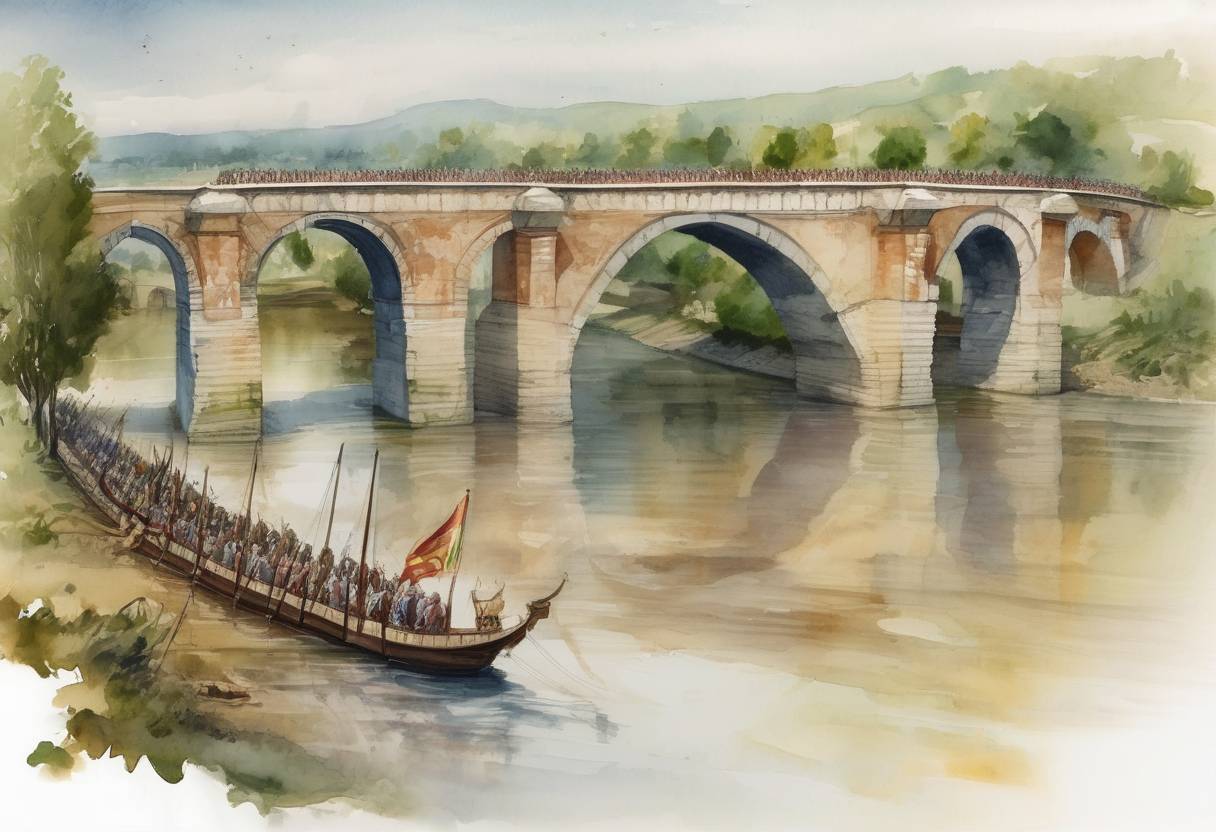
The Bridge of Constantine, officially dedicated on July 5, 328, was a significant architectural and engineering achievement of the Roman Empire. Constructed under the reign of Emperor Constantine the Great, this bridge spanned the Danube River, which was a crucial geographical and strategic frontier of the Roman Empire.
Emperor Constantine the Great: Reigning from 306 to 337 AD, Constantine was a pivotal figure in Roman history, known for his military prowess, administrative reforms, and the establishment of Constantinople as the new capital of the Roman Empire. His reign marked the transition of Rome towards Christianity and significant infrastructural developments.
Strategic Importance of the Danube: The Danube River served as a natural boundary between the Roman territories and various barbarian tribes. Control over this river was essential for the defense and expansion of the empire, as well as for facilitating trade and movement of troops.
Engineering Feat: The bridge was an impressive example of Roman engineering, utilizing advanced techniques and materials of the time. It was designed to withstand the strong currents of the Danube and to support the heavy traffic of military and trade activities.
Purpose: The bridge was primarily constructed to enhance military logistics, allowing for rapid deployment of Roman legions across the river. It also facilitated trade and communication between the provinces on either side of the Danube, strengthening economic ties and cultural exchange.
Dedication Ceremony: The official dedication on July 5, 328, was likely a grand event, reflecting the importance of the bridge to the Roman Empire. Such ceremonies typically involved religious rites, offerings to the gods, and public celebrations to mark the completion of significant infrastructure projects.
Military and Economic Impact: The bridge played a crucial role in maintaining Roman dominance in the region. It enabled efficient movement of troops and goods, contributing to the stability and prosperity of the empire’s northern frontier.
Legacy: While the bridge itself no longer stands, its construction is a testament to the Roman Empire’s engineering capabilities and strategic foresight. It symbolizes the empire’s efforts to integrate and control vast territories through infrastructure.
Cultural Influence: The bridge also facilitated cultural exchanges between Roman and barbarian societies, influencing the development of the regions along the Danube.
In summary, the dedication of the Bridge of Constantine on July 5, 328, marked a significant moment in Roman history, showcasing the empire’s engineering prowess and strategic acumen. It played a vital role in the military and economic activities of the Roman Empire, leaving a lasting impact on the regions it connected.
Source: en.wikipedia.org