Mother Teresa's Passing - September 5, 1997
1997 · Kolkata, India
Mother Teresa, the Nobel Peace Prize-winning Catholic nun known for her charitable work in India, passed away in Kolkata.
January 6, 1929
Mother Teresa arrived in Calcutta, India, to begin her work with the poor.
Calcutta, India | Missionaries of Charity
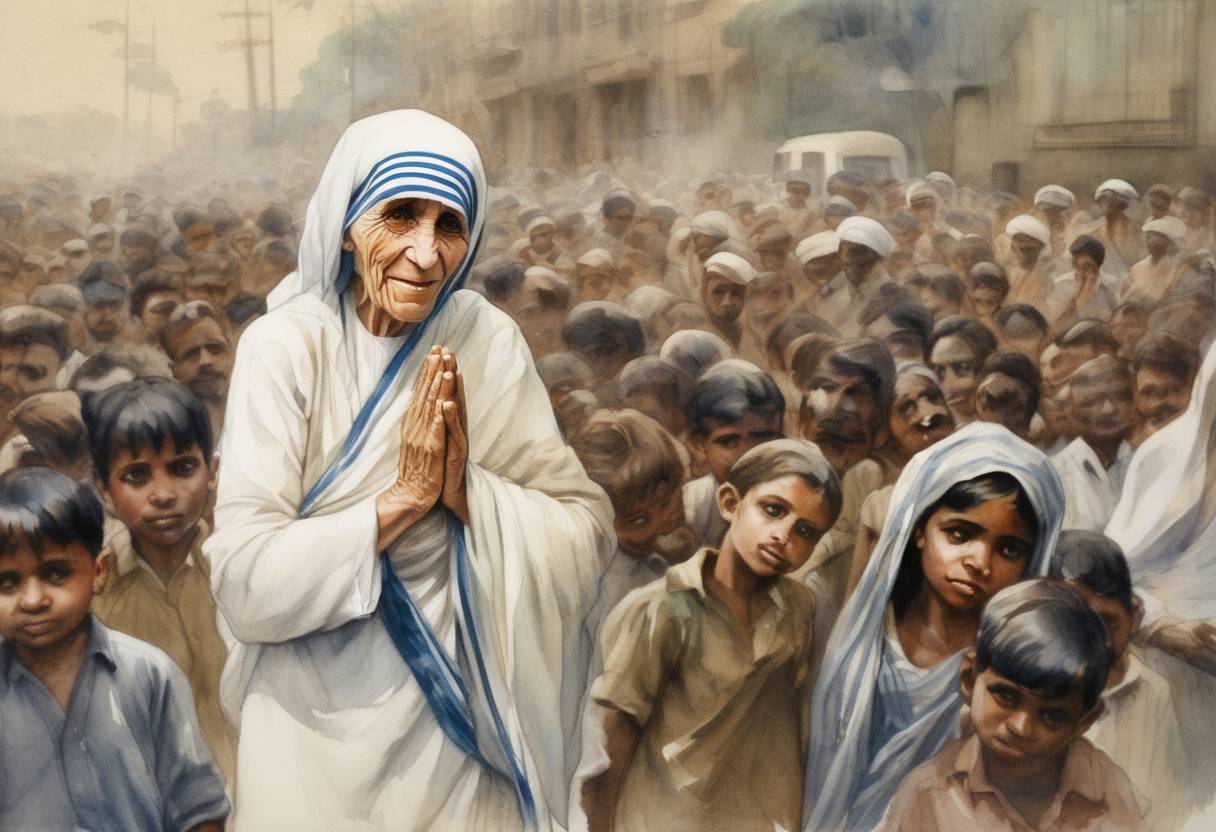
On January 6, 1929, a young nun named Agnes Gonxha Bojaxhiu, who would later become known worldwide as Mother Teresa, arrived in Calcutta (now Kolkata), India. This marked the beginning of her lifelong mission to serve the poorest of the poor, a journey that would eventually earn her international acclaim and the Nobel Peace Prize.
Early Life: Born on August 26, 1910, in Skopje, then part of the Ottoman Empire (now North Macedonia), Agnes was deeply religious from a young age. She joined the Sisters of Loreto, an Irish community of nuns with missions in India, at the age of 18.
Initial Training: Before arriving in India, she spent time in Dublin, Ireland, where she learned English, the language of instruction for the Sisters of Loreto. She then traveled to India, arriving in Calcutta in 1929.
First Impressions: Upon her arrival, Mother Teresa was struck by the stark poverty and suffering she witnessed in Calcutta. The city’s vibrant culture was juxtaposed with the dire conditions faced by many of its inhabitants.
Teaching Role: Initially, she was assigned to teach at St. Mary’s High School for Girls, a school run by the Loreto Sisters in the city. Here, she taught history and geography and eventually became the headmistress in 1944.
Turning Point: In 1946, during a train journey to the Loreto convent in Darjeeling, Mother Teresa experienced what she described as “the call within a call.” She felt a divine inspiration to leave the convent and live among the poor, dedicating her life to their service.
Missionaries of Charity: In 1950, after receiving permission from the Vatican, she founded the Missionaries of Charity, a religious congregation that would grow to include thousands of members worldwide, dedicated to serving “the hungry, the naked, the homeless, the crippled, the blind, the lepers, all those people who feel unwanted, unloved, uncared for throughout society.”
Global Impact: Mother Teresa’s work in Calcutta became a symbol of selfless service and compassion. Her efforts expanded globally, establishing homes for the sick and dying, orphanages, and leper houses in over 130 countries.
Recognition: She received numerous awards for her humanitarian work, including the Nobel Peace Prize in 1979. Despite facing criticism and controversy over her methods and the conditions of her facilities, her legacy as a figure of charity and kindness endures.
Canonization: Mother Teresa was canonized as a saint by the Roman Catholic Church on September 4, 2016, recognizing her profound impact on the world and her unwavering dedication to the poor.
Mother Teresa’s arrival in Calcutta on January 6, 1929, was the beginning of a transformative journey that would touch millions of lives and inspire countless others to follow in her footsteps of service and compassion.
Source: en.wikipedia.org