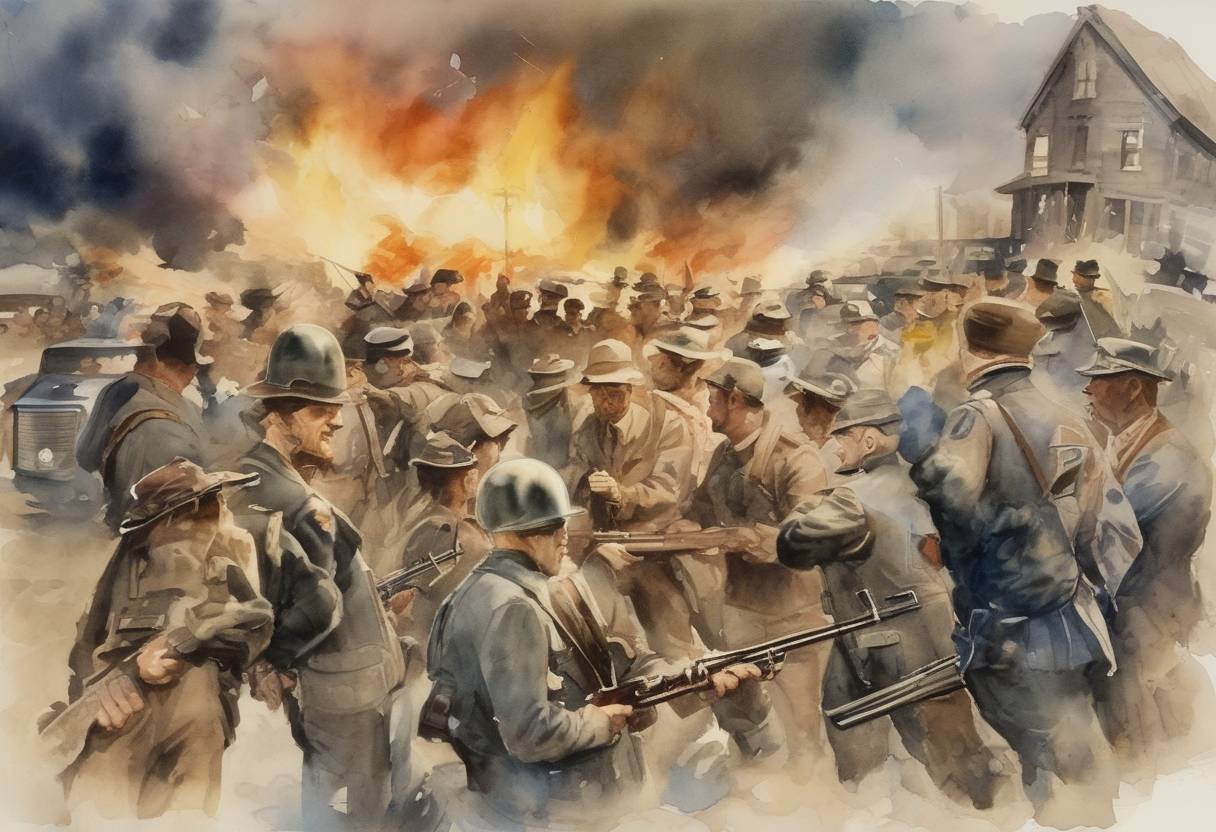
The Second Palmer Raid: January 2, 1920
The Second Palmer Raid, conducted on January 2, 1920, was a significant event in the United States’ post-World War I era, characterized by heightened fears of radicalism and anarchism. This event was part of a series of actions known as the Palmer Raids, named after U.S. Attorney General A. Mitchell Palmer, who orchestrated these operations.
Context and Background
The Palmer Raids occurred during the “Red Scare,” a period of intense fear of communism and radical leftist ideologies following the Russian Revolution of 1917. The United States, like many other countries, was experiencing social unrest, labor strikes, and a perceived threat from anarchist movements. The government, under Palmer’s direction, sought to suppress these elements, believing they posed a danger to national security.
The Raids
Objective: The raids aimed to capture, arrest, and deport suspected radicals, anarchists, and communists. The focus was on immigrants, who were often associated with radical political movements.
Execution: On January 2, 1920, federal agents, along with local law enforcement, conducted coordinated raids in over 30 cities across the United States. Thousands of individuals were arrested, many without warrants or due process.
Targets: The raids primarily targeted members of the Industrial Workers of the World (IWW), the Communist Party USA, and other leftist organizations. Many of those arrested were immigrants from Eastern Europe and Italy.
Consequences and Aftermath
Legal and Civil Rights Issues: The raids were widely criticized for their disregard of civil liberties. Many detainees were held without charge, and some were deported without fair trials. The American Civil Liberties Union (ACLU) and other organizations condemned the raids as unconstitutional.
Public Reaction: Initially, there was public support for the raids due to the prevailing fear of radicalism. However, as reports of abuses and violations emerged, public opinion began to shift.
Impact on Palmer: Although Palmer initially gained popularity, his reputation suffered as the legality and ethics of the raids were questioned. His predictions of a radical uprising on May Day 1920 failed to materialize, further diminishing his credibility.
Legacy: The Palmer Raids highlighted the tension between national security and civil liberties, a theme that would recur throughout American history. They also contributed to the decline of the first Red Scare, as public concern over civil rights abuses grew.
Broader Historical Significance
The Palmer Raids are a critical example of how fear and suspicion can lead to government overreach and the erosion of civil liberties. They serve as a reminder of the importance of balancing security measures with the protection of individual rights, a challenge that remains relevant in contemporary discussions about national security and immigration policy.