Kathryn D. Sullivan's Historic Spacewalk
1984 · Space, United States
Astronaut Kathryn D. Sullivan became the first American woman to perform a spacewalk during the Space Shuttle Challenger mission STS-41-G.
June 3, 1965
Ed White becomes the first American to walk in space during the Gemini 4 mission.
Space, United States | NASA
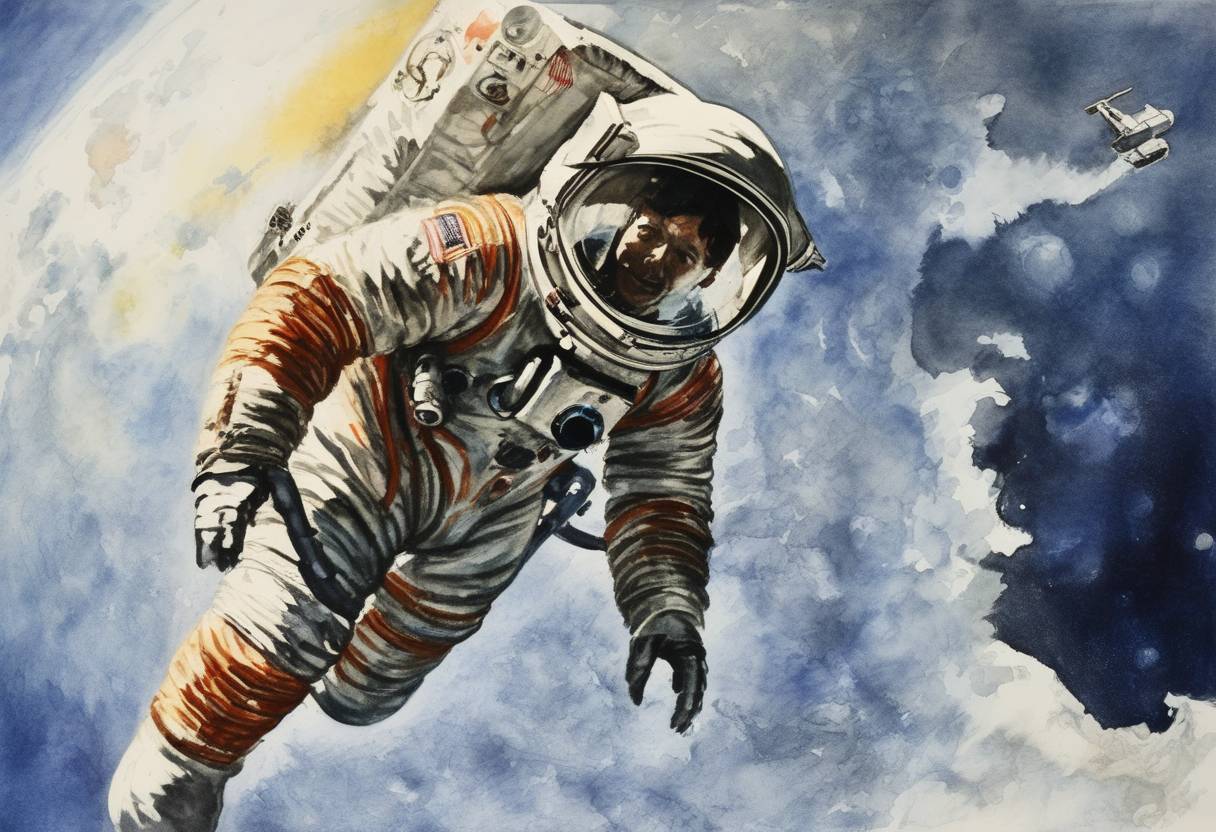
On June 3, 1965, astronaut Edward H. White II made history by becoming the first American to conduct a spacewalk, also known as an extravehicular activity (EVA), during NASA’s Gemini 4 mission. This milestone was a significant achievement in the United States’ space exploration efforts during the Cold War era, particularly in the context of the Space Race with the Soviet Union.
The Gemini program was NASA’s second human spaceflight program, following the Mercury program, and was designed to develop space travel techniques in support of the Apollo program, which aimed to land humans on the Moon. The Gemini 4 mission was the second crewed mission in the Gemini series, with astronauts James A. McDivitt and Edward H. White II aboard.
Ed White’s EVA began as the Gemini 4 spacecraft orbited Earth. He exited the spacecraft through the open hatch and was tethered to it with a 25-foot umbilical cord, which provided oxygen and communication. White used a handheld maneuvering unit, often referred to as a “zip gun,” to control his movements in the microgravity environment of space.
During the spacewalk, White expressed his awe and excitement, famously describing the experience as “the most natural feeling” and reluctant to return to the spacecraft. His EVA demonstrated the feasibility of human movement and work outside a spacecraft, which was crucial for future missions, including those that would involve assembling and repairing equipment in space.
Ed White’s spacewalk was a pivotal moment in the Space Race, showcasing American capabilities in space exploration and contributing to the development of techniques necessary for the Apollo missions. It also marked a significant step in human space exploration, proving that astronauts could perform tasks outside their spacecraft, which would be essential for future lunar and orbital missions.
The success of White’s EVA provided NASA with valuable data and experience, influencing the design and execution of subsequent spacewalks. Tragically, Ed White would later lose his life in the Apollo 1 accident in 1967, but his contributions to space exploration continue to be remembered and honored.
The Gemini 4 mission, lasting four days, was a success and helped pave the way for the eventual Moon landing in 1969. White’s spacewalk remains a celebrated achievement in the history of space exploration, symbolizing human ingenuity and the spirit of discovery.
Source: en.wikipedia.org