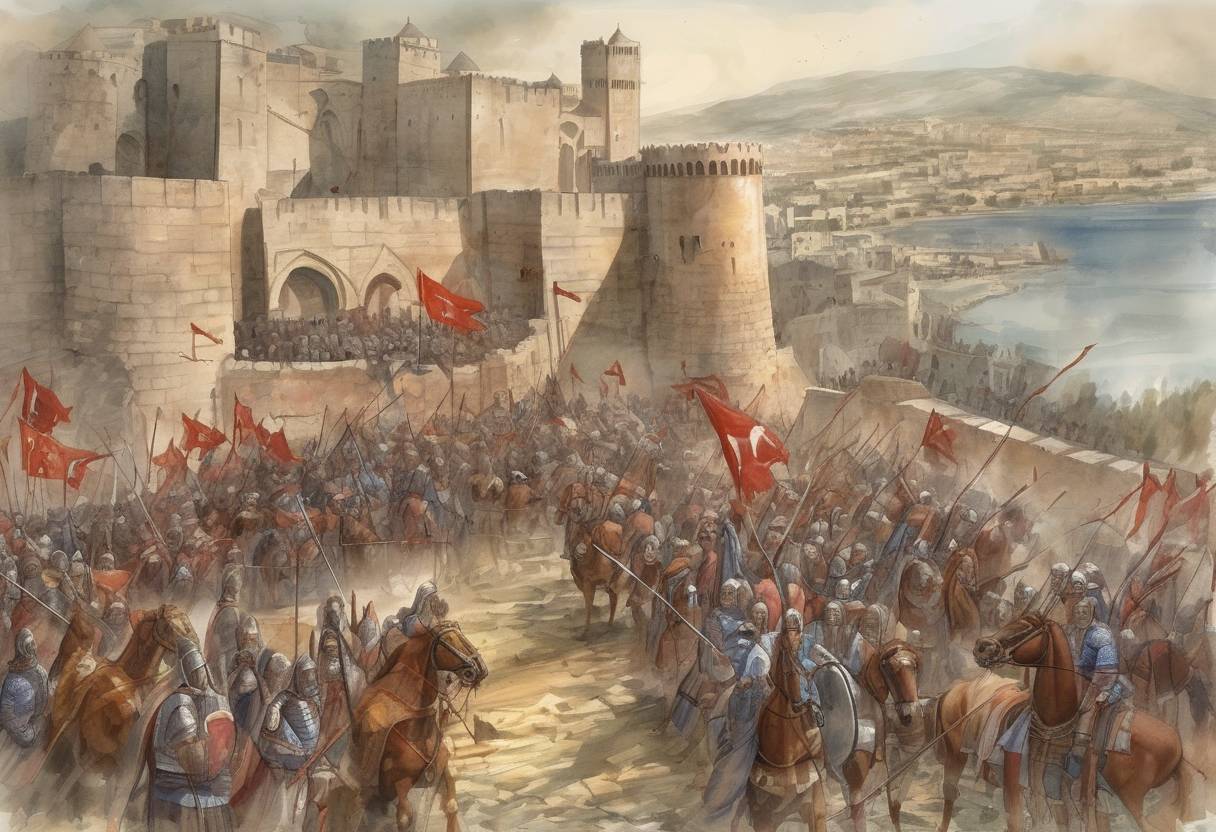
The Siege of Antioch: June 2, 1098
The Siege of Antioch was a pivotal event during the First Crusade, marking a significant victory for the Crusaders. This siege, which lasted from October 21, 1097, to June 2, 1098, ended with the Crusaders capturing the city from the Seljuk Turks, altering the course of the Crusade and impacting the region’s political landscape.
Context and Prelude
The First Crusade (1096-1099): Initiated by Pope Urban II in 1095, the First Crusade aimed to reclaim Jerusalem and other holy sites from Muslim control. It attracted thousands of European nobles, knights, and peasants, driven by religious fervor and the promise of spiritual and temporal rewards.
Strategic Importance of Antioch: Antioch, located in modern-day Turkey, was a key city due to its strategic position on the route to Jerusalem and its status as a major center of trade and culture. Its capture was crucial for the Crusaders to secure their supply lines and establish a foothold in the region.
The Siege
Initial Stages: The Crusaders, led by prominent figures such as Bohemond of Taranto, Raymond IV of Toulouse, and Godfrey of Bouillon, laid siege to Antioch in October 1097. The city was heavily fortified, and the defenders, led by the Seljuk governor Yaghi-Siyan, were well-prepared.
Challenges: The Crusaders faced numerous hardships, including harsh winter conditions, dwindling supplies, and internal disputes among their leaders. The siege dragged on for months, testing the resolve and endurance of the Crusading forces.
Breakthrough: The turning point came when Bohemond negotiated with a disgruntled Armenian guard named Firouz, who agreed to betray the city. On the night of June 2, 1098, Firouz opened a gate, allowing the Crusaders to enter and capture Antioch.
Aftermath and Significance
Capture of Antioch: The fall of Antioch was a major victory for the Crusaders, boosting their morale and solidifying their presence in the region. However, the victory was short-lived as they soon faced a counter-siege by a large Muslim relief army led by Kerbogha of Mosul.
The Holy Lance: During the subsequent siege by Kerbogha, the Crusaders reportedly discovered the Holy Lance, believed to be the spear that pierced Christ’s side. This discovery reinvigorated the Crusaders, who eventually defeated Kerbogha’s forces on June 28, 1098.
Impact on the Crusade: The capture of Antioch demonstrated the Crusaders’ resilience and strategic acumen. It paved the way for their continued advance towards Jerusalem, which they would eventually capture in 1099.
Establishment of the Principality of Antioch: Bohemond of Taranto claimed Antioch for himself, establishing the Principality of Antioch, one of the Crusader states that would endure for nearly two centuries.
The Siege of Antioch was a defining moment in the First Crusade, showcasing the complexities of medieval warfare, the interplay of religious motivations, and the geopolitical shifts that characterized this era.