Annulment of King Henry VIII's Marriage to Anne of Cleves
1540 · London, England
King Henry VIII of England annuls his marriage to his fourth wife, Anne of Cleves.
May 30, 1536
King Henry VIII of England married Jane Seymour, his third wife, just days after the execution of his second wife, Anne Boleyn. Jane Seymour would later give birth to Henry's only male heir, Edward VI.
London, England | English monarchy
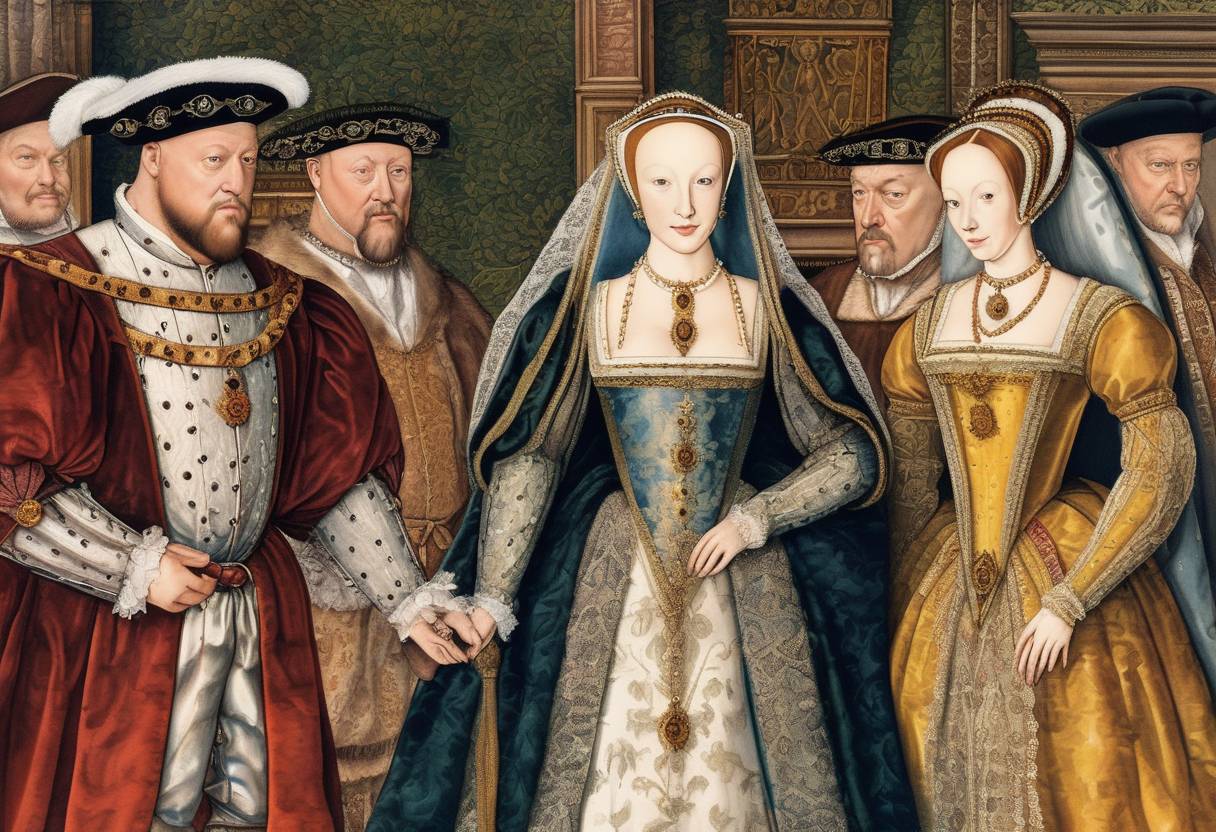
On May 30, 1536, King Henry VIII of England married Jane Seymour, marking his third marriage. This event occurred just 11 days after the execution of his second wife, Anne Boleyn, on charges of adultery, treason, and incest. The rapid transition from Anne’s execution to Henry’s marriage to Jane highlights the urgency with which Henry pursued a male heir, a central concern throughout his reign.
Henry VIII’s Marital History: Before Jane Seymour, Henry VIII was married to Catherine of Aragon and Anne Boleyn. His marriage to Catherine was annulled after she failed to produce a male heir, leading to England’s break from the Catholic Church. Anne Boleyn, who also failed to provide a male heir, was executed after a controversial trial.
Jane Seymour’s Background: Jane Seymour was a lady-in-waiting to both Catherine of Aragon and Anne Boleyn. She was noted for her gentle demeanor, which contrasted with Anne’s more assertive personality. Jane’s family, the Seymours, were of noble lineage, which made her a suitable match for the king.
Ceremony: The marriage between Henry and Jane was conducted privately at the Palace of Whitehall. The speed of the marriage was partly due to Henry’s desire to secure a legitimate male heir to ensure the Tudor dynasty’s continuation.
Political Implications: Jane’s marriage to Henry was politically significant. It helped stabilize Henry’s court after the tumultuous downfall of Anne Boleyn and aligned the king with the influential Seymour family.
Birth of Edward VI: Jane Seymour gave birth to Henry’s only legitimate male heir, Edward VI, on October 12, 1537. Unfortunately, Jane died shortly after childbirth due to postnatal complications on October 24, 1537. Her death deeply affected Henry, who considered her his “true” wife.
Legacy: Jane Seymour’s marriage to Henry VIII and the birth of Edward VI were pivotal in the Tudor succession. Edward’s short reign (1547-1553) was marked by significant religious reforms, continuing the Protestant transformation initiated by his father.
Historical Impact: Jane’s successful delivery of a male heir temporarily resolved the succession crisis that plagued Henry’s reign. Her marriage and subsequent motherhood underscored the intense personal and political pressures surrounding royal succession in Tudor England.
In summary, the marriage of Henry VIII and Jane Seymour was a critical juncture in English history, reflecting the king’s relentless pursuit of a male heir and the broader dynastic and religious shifts of the period.
Source: en.wikipedia.org