The Spanish Constitution of 1931
1931 · Madrid, Spain
The Spanish Constitution of 1931 is enacted by the Second Spanish Republic. It established freedom of opinion, religion, and press, and introduced democratic reforms.
April 14, 1931
The Spanish Cortes deposed King Alfonso XIII and proclaimed the Second Spanish Republic, marking the end of the monarchy and the beginning of a new political era in Spain.
Madrid, Spain | Spanish Cortes
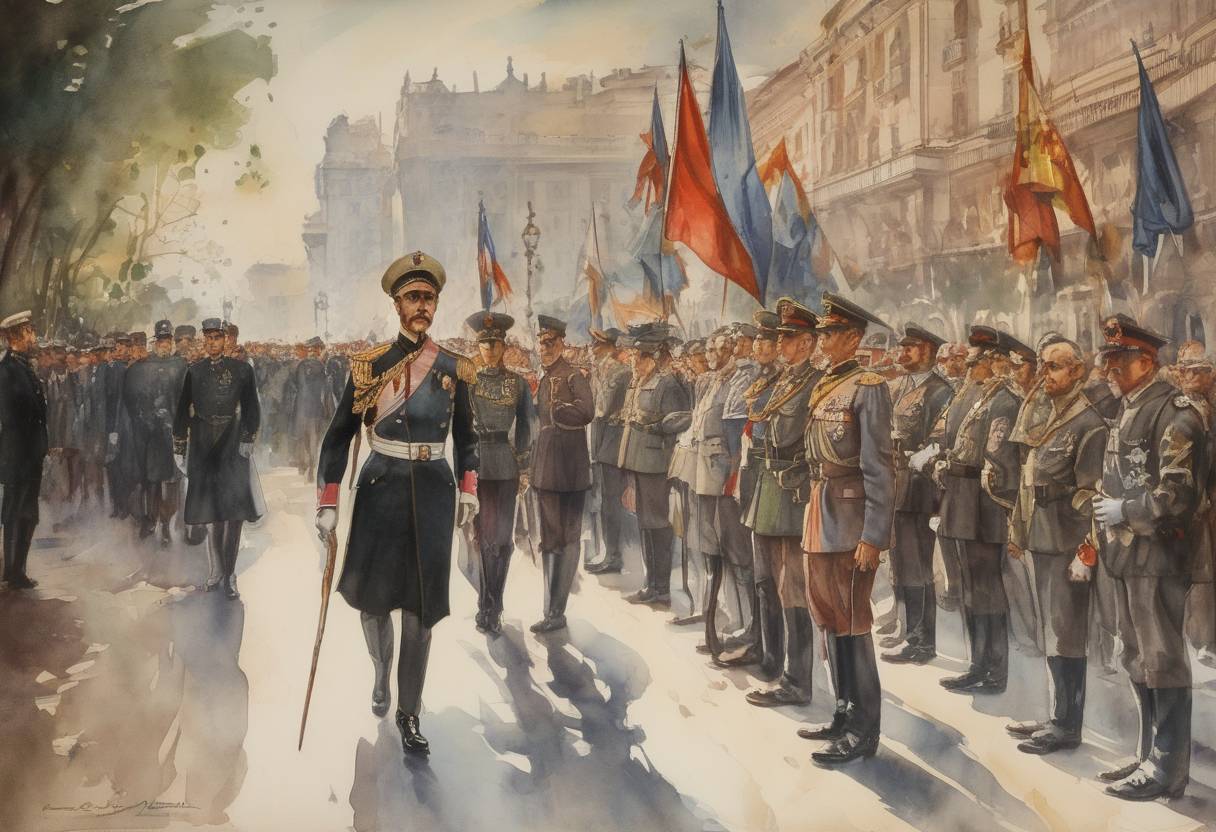
On April 14, 1931, a significant political transformation occurred in Spain with the proclamation of the Second Spanish Republic. This event marked the end of King Alfonso XIII’s reign and the beginning of a new republican era in Spanish history.
The early 20th century in Spain was characterized by political instability, social unrest, and economic challenges. The monarchy, under King Alfonso XIII, faced increasing criticism due to its association with military dictatorship and failure to address the country’s pressing issues. The dictatorship of Miguel Primo de Rivera (1923-1930), supported by the king, further alienated the monarchy from the public.
Following Primo de Rivera’s resignation in 1930, Spain experienced a period of political uncertainty. The Pact of San Sebastián, a meeting of republican leaders in August 1930, laid the groundwork for a transition to a republic. The municipal elections held on April 12, 1931, served as a de facto referendum on the monarchy. The results showed overwhelming support for republican candidates in urban areas, signaling a loss of confidence in the monarchy.
Proclamation of the Republic: On April 14, 1931, following the municipal elections, jubilant crowds took to the streets in major cities like Madrid and Barcelona, demanding the establishment of a republic. The Spanish Cortes (parliament) responded by deposing King Alfonso XIII and proclaiming the Second Spanish Republic.
King Alfonso XIII’s Departure: Recognizing the shift in public sentiment and the lack of support from the military, King Alfonso XIII chose to leave Spain to avoid potential bloodshed. He went into exile, first in France and later in Italy, without formally abdicating the throne.
Formation of a Provisional Government: A provisional government was quickly established, led by Niceto Alcalá-Zamora, a former monarchist who had turned republican. This government was tasked with drafting a new constitution and organizing elections to solidify the republic’s foundation.
The establishment of the Second Spanish Republic marked a significant shift in Spanish politics, aiming to implement progressive reforms and modernize the country. The new government focused on secularization, agrarian reform, and expanding civil liberties. However, the republic faced numerous challenges, including political polarization, economic difficulties, and social tensions.
The Second Spanish Republic lasted until 1939, when it was overthrown by Francisco Franco’s Nationalist forces during the Spanish Civil War. Despite its relatively short existence, the republic represented a critical period of experimentation with democratic governance in Spain and left a lasting impact on the nation’s history.
The events of April 14, 1931, remain a pivotal moment in Spanish history, symbolizing the people’s desire for change and the complex interplay of political forces that shaped the country’s 20th-century trajectory.
Source: en.wikipedia.org