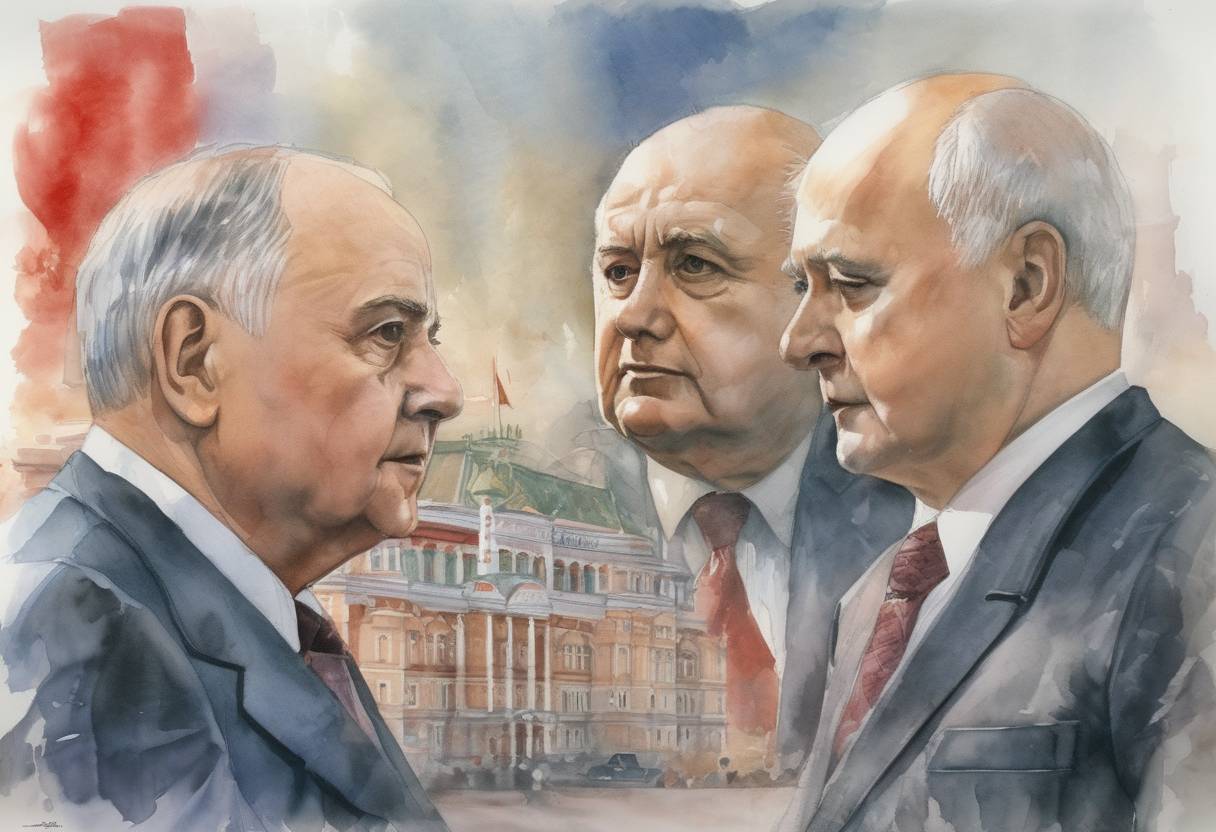
Mikhail Gorbachev Elected as the First President of the Soviet Union
On March 15, 1990, Mikhail Gorbachev was elected as the first President of the Soviet Union, marking a significant moment in the history of the USSR and the broader Cold War era. This event was a pivotal point in the political transformation of the Soviet Union, which was undergoing substantial changes under Gorbachev’s leadership.
Context Leading Up to the Election
Mikhail Gorbachev had been serving as the General Secretary of the Communist Party of the Soviet Union since 1985. During his tenure, he introduced a series of reforms known as glasnost (openness) and perestroika (restructuring), aimed at revitalizing the Soviet economy and making the government more transparent and accountable. These reforms were part of Gorbachev’s broader strategy to address the systemic issues plaguing the Soviet Union, including economic stagnation and political corruption.
The creation of the presidency was part of Gorbachev’s efforts to consolidate power and streamline the governance of the Soviet Union. Prior to this, the General Secretary of the Communist Party was the de facto leader of the country, but the new presidential role was intended to formalize executive authority.
The Election Process
The election of Gorbachev as President was conducted by the Congress of People’s Deputies, the highest legislative body in the Soviet Union at the time. Gorbachev was elected with a significant majority, receiving 1,329 out of 1,509 votes. This election was not a popular vote by the general public but rather a decision made by the legislative representatives.
Significance and Consequences
Gorbachev’s election as President was a crucial step in his reform agenda. It provided him with a stronger mandate to pursue his policies, which included reducing the Communist Party’s control over the government and introducing elements of democratic governance. However, these reforms also contributed to growing instability within the Soviet Union, as they emboldened nationalist movements and increased demands for greater autonomy among the Soviet republics.
The election of Gorbachev as President is often seen as a key moment in the eventual dissolution of the Soviet Union. His policies, while intended to strengthen the USSR, ultimately accelerated its fragmentation. By the end of 1991, the Soviet Union had dissolved, and Gorbachev resigned from his position, marking the end of an era.
Broader Historical Impact
Gorbachev’s presidency and his reformist policies had a profound impact on global politics. They contributed to the end of the Cold War, improved relations between the Soviet Union and the West, and paved the way for the emergence of new independent states in Eastern Europe and Central Asia. Gorbachev’s leadership is often credited with facilitating a relatively peaceful transition during a period of significant geopolitical change.
In summary, Mikhail Gorbachev’s election as the first President of the Soviet Union on March 15, 1990, was a landmark event that played a crucial role in the transformation and eventual dissolution of the Soviet state, with lasting implications for international relations and the global order.