1703 · London, England
The Great Storm of 1703, one of the most severe storms in British history, reached its peak, causing extensive damage and loss of life.
May 23, 1701
After being convicted of piracy and murder, Captain William Kidd was hanged in London.
London, England | British government
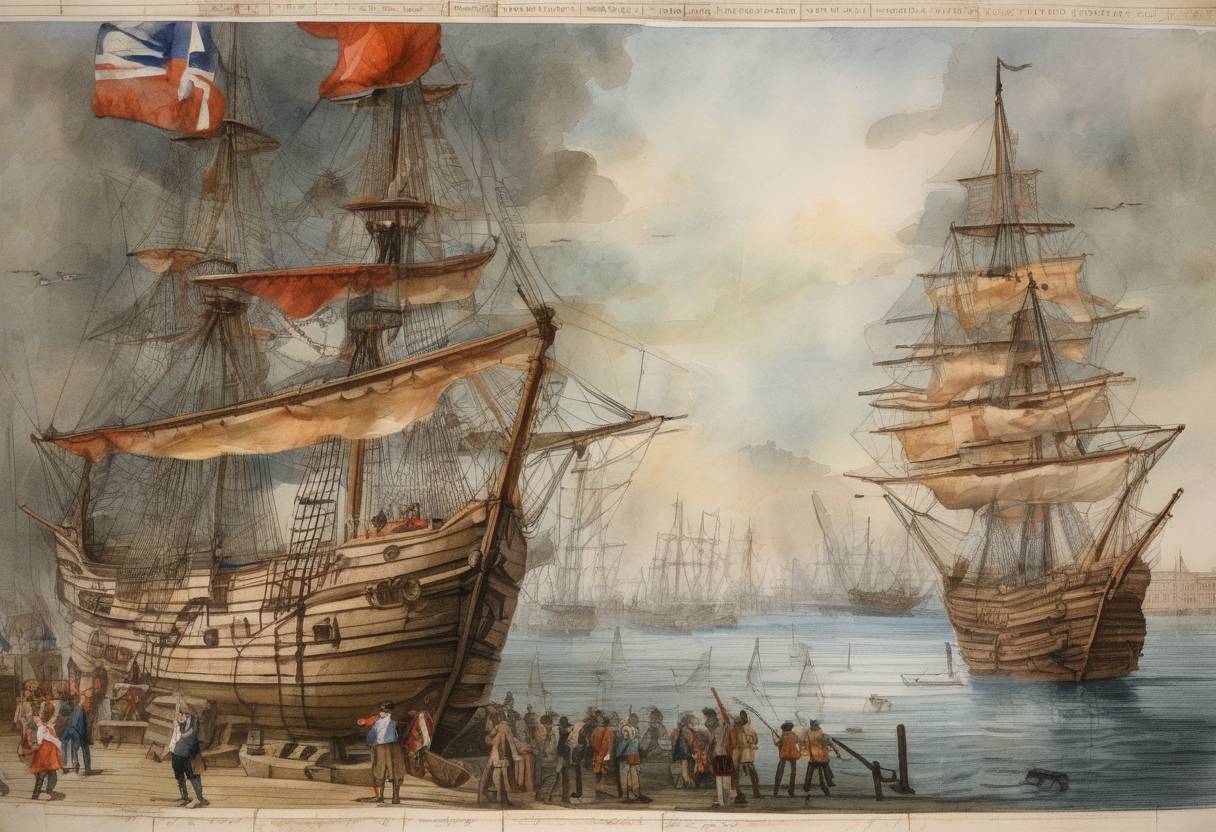
On May 23, 1701, Captain William Kidd, a Scottish sailor who became infamous as a pirate, was executed by hanging at Execution Dock in Wapping, London. His trial and subsequent execution marked the culmination of a dramatic and controversial career that has intrigued historians and the public alike.
William Kidd was born around 1645 in Dundee, Scotland. He initially gained a reputation as a respectable privateer, a private individual authorized by a government to attack foreign vessels during wartime. In 1695, Kidd was commissioned by the English government to hunt down pirates in the Indian Ocean, a mission that would ultimately lead to his downfall.
Kidd set sail in 1696 aboard the Adventure Galley, but his mission quickly went awry. Facing difficulties in capturing pirates and maintaining his crew, Kidd turned to piracy himself, allegedly attacking ships and seizing valuable cargo. The most infamous incident was the capture of the Quedagh Merchant, an Armenian ship laden with valuable goods, which Kidd claimed was a legitimate prize.
Upon his return to the Caribbean and then to New York, Kidd found himself a wanted man. Political changes in England had turned the tide against privateers, and Kidd’s actions were now deemed piracy. He was arrested in Boston in 1699 and sent to England for trial.
Kidd’s trial began in May 1701, and he faced charges of piracy and the murder of one of his crewmen, William Moore. The trial was highly publicized and politically charged, with Kidd’s defense hampered by the loss of crucial documents that might have supported his claims of innocence.
Despite his protests, Kidd was found guilty on all charges. On May 23, 1701, he was hanged at Execution Dock. The first attempt at execution failed when the rope broke, but Kidd was successfully hanged on the second attempt. His body was then gibbeted over the River Thames as a warning to other would-be pirates.
Captain Kidd’s story has become a part of pirate lore, often blurring the lines between fact and fiction. His trial highlighted the complexities of privateering and piracy during a time when the boundaries between legal and illegal maritime activities were often ambiguous. Kidd’s execution served as a stark reminder of the British government’s efforts to assert control over the seas and curb piracy.
In the centuries since his death, Kidd’s legacy has been the subject of numerous books, films, and legends, cementing his place in the annals of pirate history. His life and trial continue to be studied as a case of the shifting political and economic landscapes of the late 17th and early 18th centuries.
Source: en.wikipedia.org