Introduction of the Gregorian Calendar
1582 · Rome, Italy
The Gregorian calendar is introduced by Pope Gregory XIII, replacing the Julian calendar in Catholic countries, leading to the loss of 10 days to realign the calendar with the equinox.
January 1, 0045
The Julian calendar, introduced by Julius Caesar, took effect for the first time. It was a reform of the Roman calendar and became the predominant calendar in the Roman world and later in most of Europe.
Rome, Roman Empire | Roman government
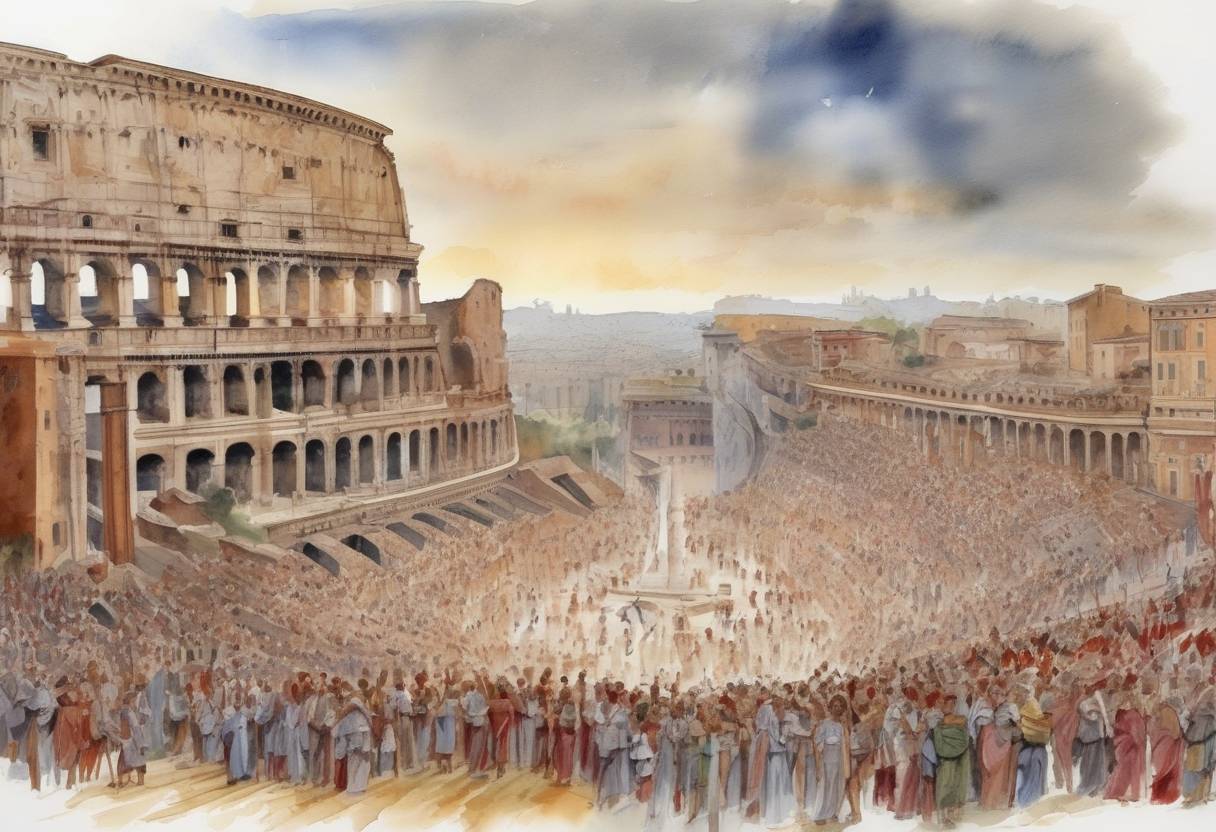
On January 1, 45 BCE, the Julian calendar was officially implemented as a reform of the Roman calendar under the directive of Julius Caesar. This significant change marked a pivotal moment in the history of timekeeping, as it established a more consistent and reliable calendar system that would dominate the Roman world and later much of Europe for centuries.
Before the Julian calendar, the Roman calendar was a lunar-based system that had become increasingly misaligned with the solar year. This misalignment was due to the frequent political manipulation of the calendar by Roman officials, who would add or omit days to extend their terms or shorten those of their rivals. As a result, the calendar was often out of sync with the seasons, causing confusion in agricultural and religious activities.
Julius Caesar, with the assistance of the Alexandrian astronomer Sosigenes, introduced the Julian calendar to address these issues. The reform included several key features:
The introduction of the Julian calendar required a significant adjustment period. To realign the calendar with the seasons, the year 46 BCE was extended to 445 days, known as the “Year of Confusion.” Once implemented, the Julian calendar provided a more stable and predictable framework for civil and religious life.
The calendar’s adoption spread throughout the Roman Empire and later into Europe, becoming the predominant system for over 1,600 years. It facilitated trade, communication, and cultural exchange by providing a uniform method of timekeeping.
Despite its improvements, the Julian calendar’s approximation of the solar year was slightly off, leading to a gradual drift of the calendar dates relative to the equinoxes. By the 16th century, this drift had accumulated to about 10 days. To correct this, Pope Gregory XIII introduced the Gregorian calendar in 1582, which refined the leap year system and adjusted the calendar dates.
The Julian calendar’s legacy remains significant, as it laid the groundwork for modern calendar systems and influenced the way societies organize time. Its introduction on January 1, 45 BCE, represents a landmark achievement in the history of timekeeping and calendar reform.
Source: en.wikipedia.org