1567 · Edinburgh, Scotland
Henry Stuart, Lord Darnley, the second husband of Mary, Queen of Scots, was found murdered at Kirk o' Field in Edinburgh under mysterious circumstances.
July 24, 1567
Mary, Queen of Scots, is forced to abdicate in favor of her one-year-old son, James VI.
Edinburgh, Scotland | Scottish Crown
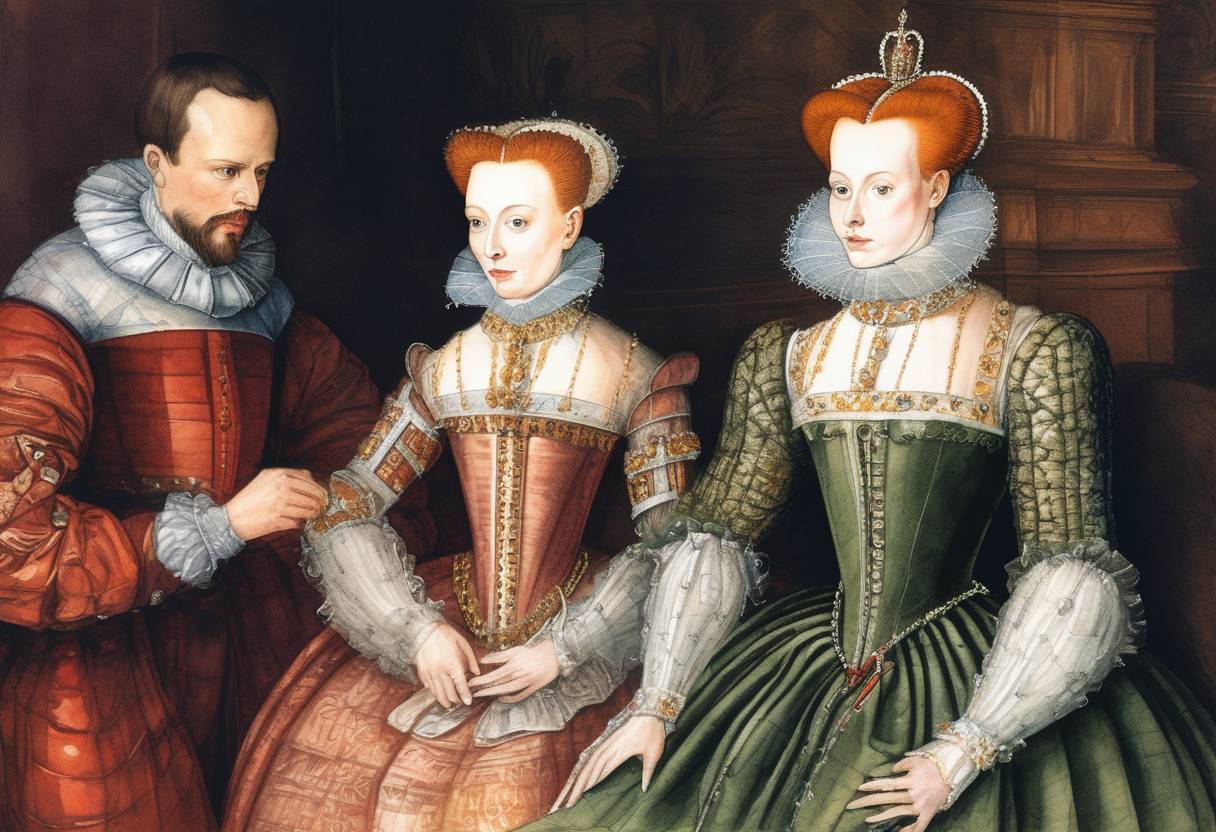
On July 24, 1567, Mary, Queen of Scots, was compelled to abdicate the throne in favor of her infant son, James VI. This pivotal event in Scottish history was the culmination of a series of tumultuous events that had plagued Mary’s reign and ultimately led to her downfall.
Mary Stuart, born in 1542, became Queen of Scots when she was just six days old, following the death of her father, King James V of Scotland. Her early life was marked by political intrigue and religious conflict, as Scotland was embroiled in the Protestant Reformation. Mary, a Catholic, was seen as a figurehead for Catholic interests in Scotland and beyond.
In 1565, Mary married her cousin, Henry Stuart, Lord Darnley, a union that was initially popular but soon became fraught with discord. Darnley’s arrogance and ambition alienated many of the Scottish nobility, and his involvement in the murder of Mary’s secretary, David Rizzio, further tarnished his reputation.
The situation deteriorated further with Darnley’s mysterious murder in February 1567. Suspicion fell on James Hepburn, 4th Earl of Bothwell, who was believed to have orchestrated the murder with or without Mary’s complicity. In a controversial move, Mary married Bothwell just three months later, a decision that outraged both the nobility and the public.
The marriage to Bothwell, coupled with the scandal surrounding Darnley’s death, led to a rebellion by the Scottish nobles. Mary was captured and imprisoned in Loch Leven Castle in June 1567. Under pressure and likely fearing for her life, Mary was forced to abdicate the throne on July 24, 1567, in favor of her one-year-old son, James VI.
Following her abdication, James VI was crowned King of Scots on July 29, 1567, with the Protestant regent, James Stewart, Earl of Moray, acting as regent. Mary managed to escape from Loch Leven in 1568 but was defeated at the Battle of Langside. She fled to England, seeking protection from her cousin, Queen Elizabeth I, only to be imprisoned for 19 years.
Mary’s abdication and subsequent imprisonment had significant implications for both Scotland and England. Her son, James VI, would eventually become James I of England, uniting the crowns of Scotland and England in 1603. Mary’s life and tragic end have since become the subject of much historical debate and romanticized literature, symbolizing the complex interplay of politics, religion, and personal ambition in the 16th century.
Mary’s forced abdication marked a turning point in Scottish history, as it effectively ended the Catholic monarchy in Scotland and solidified Protestant control. It also set the stage for the eventual unification of the Scottish and English crowns under her son, James VI and I, which would have lasting impacts on the British Isles.
Mary’s life and reign continue to captivate historians and the public alike, serving as a poignant reminder of the volatile nature of monarchical rule during the Renaissance period.
Source: www.britannica.com