Capture of Mullaitivu by Sri Lankan Government Forces
2009 · Mullaitivu, Sri Lanka
The Sri Lankan government announces the capture of Mullaitivu, the last stronghold of the Liberation Tigers of Tamil Eelam (LTTE).
May 18, 2009
The Sri Lankan Civil War officially ends as the government declares victory over the Liberation Tigers of Tamil Eelam (LTTE), following the death of LTTE leader Velupillai Prabhakaran.
Colombo, Sri Lanka | Sri Lankan Government
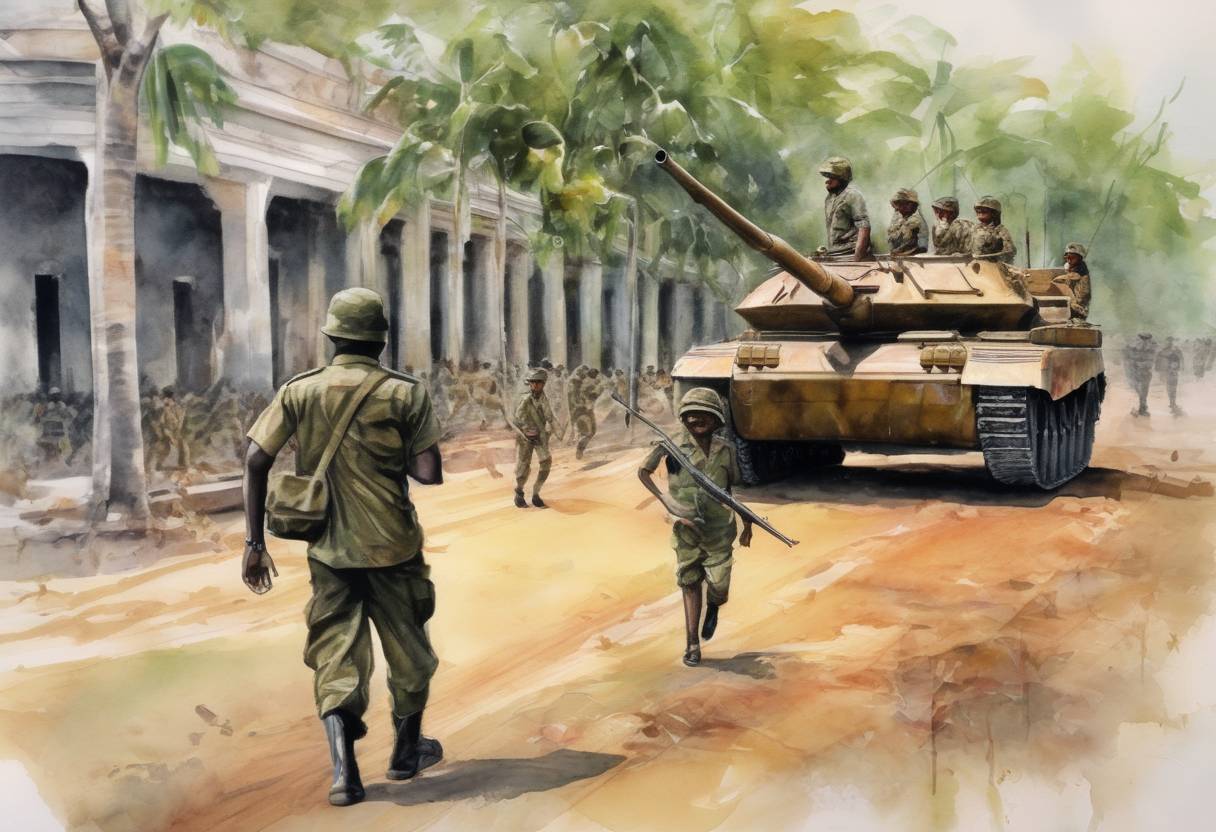
On May 18, 2009, the Sri Lankan government officially declared victory over the Liberation Tigers of Tamil Eelam (LTTE), marking the end of a brutal civil war that had lasted for nearly 26 years. This conflict, one of the longest-running civil wars in Asia, was characterized by its intense violence and significant humanitarian impact.
The roots of the Sri Lankan Civil War can be traced back to ethnic tensions between the majority Sinhalese and the minority Tamil populations. Following Sri Lanka’s independence from British colonial rule in 1948, these tensions were exacerbated by policies perceived as discriminatory towards Tamils, including the “Sinhala Only Act” of 1956, which made Sinhala the sole official language.
The LTTE, led by Velupillai Prabhakaran, was formed in 1976 with the aim of creating an independent Tamil state, Tamil Eelam, in the north and east of Sri Lanka. The conflict officially began in 1983, following a deadly ambush by the LTTE on Sri Lankan soldiers, which sparked widespread anti-Tamil riots.
The final phase of the war, often referred to as the “Eelam War IV,” began in 2006 when the Sri Lankan government launched a major military offensive against the LTTE. This phase saw intense fighting, with the government forces gradually reclaiming territory held by the LTTE.
By early 2009, the Sri Lankan military had cornered the LTTE in a small area in the northeastern part of the country. The conflict reached a climax in May 2009, with the Sri Lankan army launching a decisive assault on the remaining LTTE strongholds.
On May 18, 2009, Velupillai Prabhakaran, the leader of the LTTE, was killed by Sri Lankan forces. His death was a significant turning point, effectively dismantling the LTTE’s leadership and marking the end of organized resistance.
The end of the civil war was met with relief by many in Sri Lanka, as it brought an end to decades of violence that had claimed an estimated 80,000 to 100,000 lives. However, the aftermath of the conflict has been complex and challenging:
Humanitarian Concerns: The final stages of the war saw significant civilian casualties and displacement. Human rights organizations have raised concerns about alleged war crimes and human rights abuses by both the Sri Lankan military and the LTTE.
Reconciliation and Reconstruction: Post-war Sri Lanka has faced the challenge of rebuilding and reconciling a deeply divided society. Efforts have been made to address the grievances of the Tamil population, though progress has been slow and contentious.
International Reactions: The international community has been divided in its response, with some countries praising the end of the conflict and others criticizing the Sri Lankan government’s conduct during the final stages of the war.
The end of the Sri Lankan Civil War marked a significant moment in South Asian history. It highlighted the complexities of ethnic conflict and the challenges of post-conflict reconstruction and reconciliation. The war’s legacy continues to influence Sri Lanka’s political and social landscape, as the nation strives to heal and move forward from its turbulent past.
Source: www.bbc.com