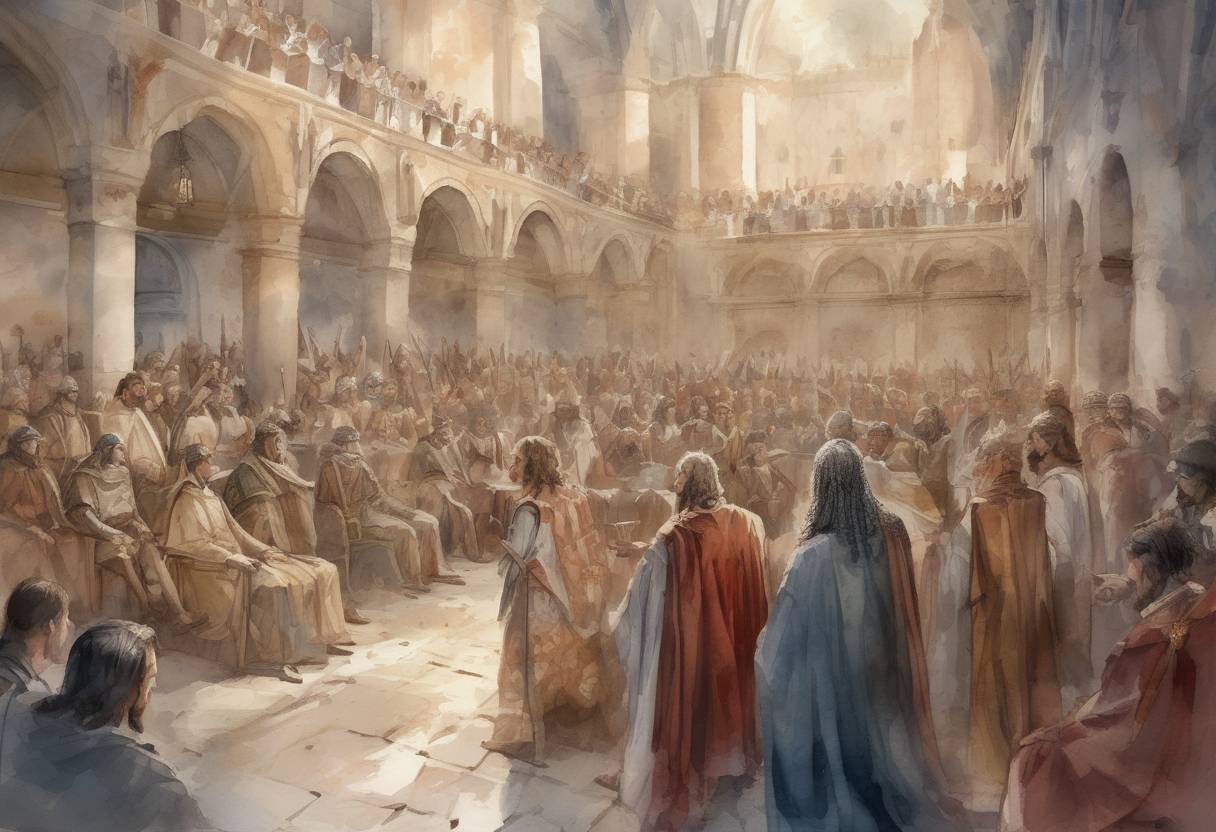
Twelfth Council of Toledo: January 9, 681
The Twelfth Council of Toledo, convened on January 9, 681, was a significant ecclesiastical assembly in the Visigothic Kingdom, initiated by King Erwig. This council was part of a series of church councils held in Toledo, which served as both religious and political assemblies, playing a crucial role in shaping the governance and religious life of the Visigothic realm.
Context and Background
Visigothic Kingdom: By the 7th century, the Visigothic Kingdom, located in what is now modern-day Spain and Portugal, was a prominent power in the Iberian Peninsula. The kingdom was characterized by its integration of Roman and Germanic traditions, with a strong emphasis on the Catholic faith following the conversion of the Visigothic King Reccared I from Arianism to Catholicism in 587.
King Erwig: Erwig ascended to the throne in 680, succeeding King Wamba. His reign was marked by efforts to consolidate power and address internal challenges, including legal reforms and religious unity.
Key Objectives of the Council
Legal Reforms: One of the primary objectives of the Twelfth Council was to reform the legal code of the Visigothic Kingdom. This included revising existing laws to ensure they were in alignment with Christian principles and addressing issues of governance and justice.
Religious Matters: The council also focused on religious issues, aiming to strengthen the Catholic Church’s influence and address any heretical movements. It sought to reinforce the unity between the church and the state, a hallmark of Visigothic rule.
Clerical Discipline: The council addressed matters of clerical discipline, ensuring that the clergy adhered to moral and ethical standards. This was part of a broader effort to maintain the integrity and authority of the church.
Outcomes and Significance
Legal Codification: The council resulted in the codification of laws that reinforced the Catholic Church’s role in governance. These laws were intended to create a more cohesive and stable legal framework within the kingdom.
Church-State Relations: The council further solidified the relationship between the church and the Visigothic monarchy, establishing precedents for the integration of religious and political authority.
Legacy: The Twelfth Council of Toledo is remembered as a pivotal moment in the history of the Visigothic Kingdom, reflecting the ongoing efforts to harmonize legal and religious practices. It exemplifies the role of church councils in medieval governance and their impact on shaping societal norms.
In summary, the Twelfth Council of Toledo was a landmark event that addressed critical issues of law and religion, reinforcing the Visigothic Kingdom’s commitment to Catholicism and its integration into the fabric of governance. This council exemplifies the dynamic interplay between religious and political spheres in medieval Europe.