Johannes Bugenhagen's Arrival in Wittenberg - July 1, 1523
1523 · Wittenberg, Holy Roman Empire
Johannes Bugenhagen, a close associate of Martin Luther, arrives in Wittenberg, where he becomes a key figure in the Protestant Reformation.
June 13, 1525
Martin Luther married Katharina von Bora, a former nun, in Wittenberg, an event that challenged the Catholic Church's celibacy rules and influenced Protestant practices.
Wittenberg, Holy Roman Empire | Protestant Reformation
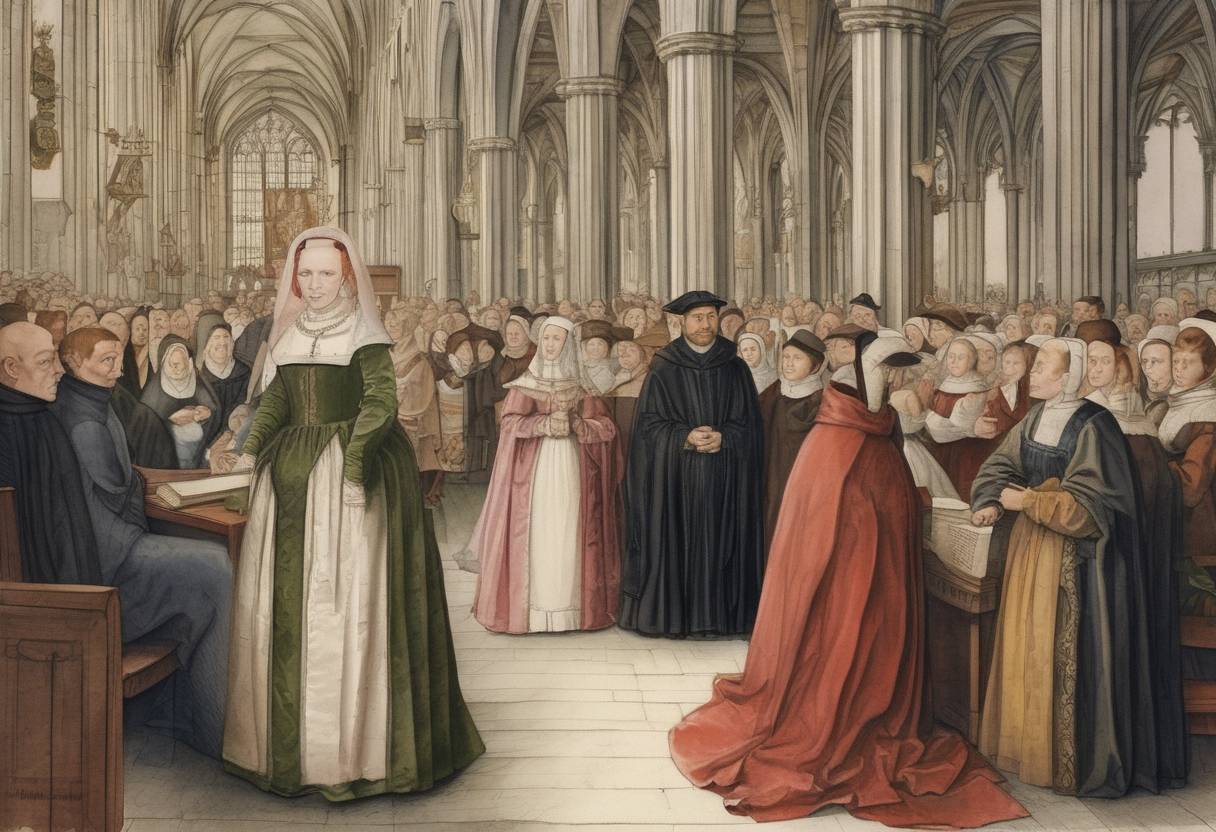
On June 13, 1525, a significant event in the history of the Protestant Reformation took place: Martin Luther, the seminal figure of the Reformation, married Katharina von Bora, a former nun. This marriage not only challenged the Catholic Church’s celibacy rules but also set a precedent for Protestant practices regarding clerical marriage.
Martin Luther was a German theologian and monk whose writings and actions were central to the Protestant Reformation. His 95 Theses, posted in 1517, criticized the Catholic Church’s practices, particularly the sale of indulgences, and sparked widespread religious reform.
Katharina von Bora was born into a noble family and entered a convent at a young age. Influenced by the Reformation, she and several other nuns fled the convent in 1523, seeking to embrace the new Protestant teachings that opposed monastic life and celibacy.
Luther’s marriage to Katharina was revolutionary for several reasons:
Challenge to Celibacy: The Catholic Church mandated celibacy for its clergy, viewing it as a higher spiritual state. Luther’s marriage directly opposed this doctrine, advocating that marriage was a natural and honorable state for all, including clergy.
Model for Protestant Clergy: By marrying, Luther set an example for Protestant clergy, who were now encouraged to marry and lead family lives, integrating their personal and spiritual lives.
Social and Theological Implications: The marriage underscored the Reformation’s emphasis on individual interpretation of the scriptures and personal relationship with God, free from the constraints of traditional Catholic doctrine.
The wedding took place in Wittenberg, a hub of Reformation activity. It was a modest affair, attended by a small group of friends and supporters. The union was both a personal and public statement of Luther’s theological beliefs.
Luther and Katharina’s marriage was reportedly a happy and productive partnership. Katharina managed their household and finances, allowing Luther to focus on his theological work. They had six children together, and their home became a center for intellectual and theological discussion.
The marriage had a lasting impact on Protestantism, normalizing the practice of clerical marriage and influencing Protestant views on family and gender roles. It also highlighted the Reformation’s challenge to established religious and social norms.
Martin Luther’s marriage to Katharina von Bora was a pivotal moment in the history of the Reformation. It not only defied Catholic Church doctrines but also helped shape the emerging Protestant ethos, emphasizing the importance of family life and the rejection of clerical celibacy. This event remains a symbol of the broader religious and cultural shifts that characterized the Reformation era.
Source: en.wikipedia.org