Deposition of Emperor Haile Selassie I - September 12, 1974
1974 · Addis Ababa, Ethiopia
Emperor Haile Selassie I of Ethiopia was deposed in a coup d'état, ending his reign and leading to the establishment of a Marxist-Leninist government.
July 15, 1910
Emperor Haile Selassie I of Ethiopia is born, who would later become a significant figure in Ethiopian history and a symbol of African independence and unity.
Ejersa Goro, Ethiopia | Ethiopian Empire
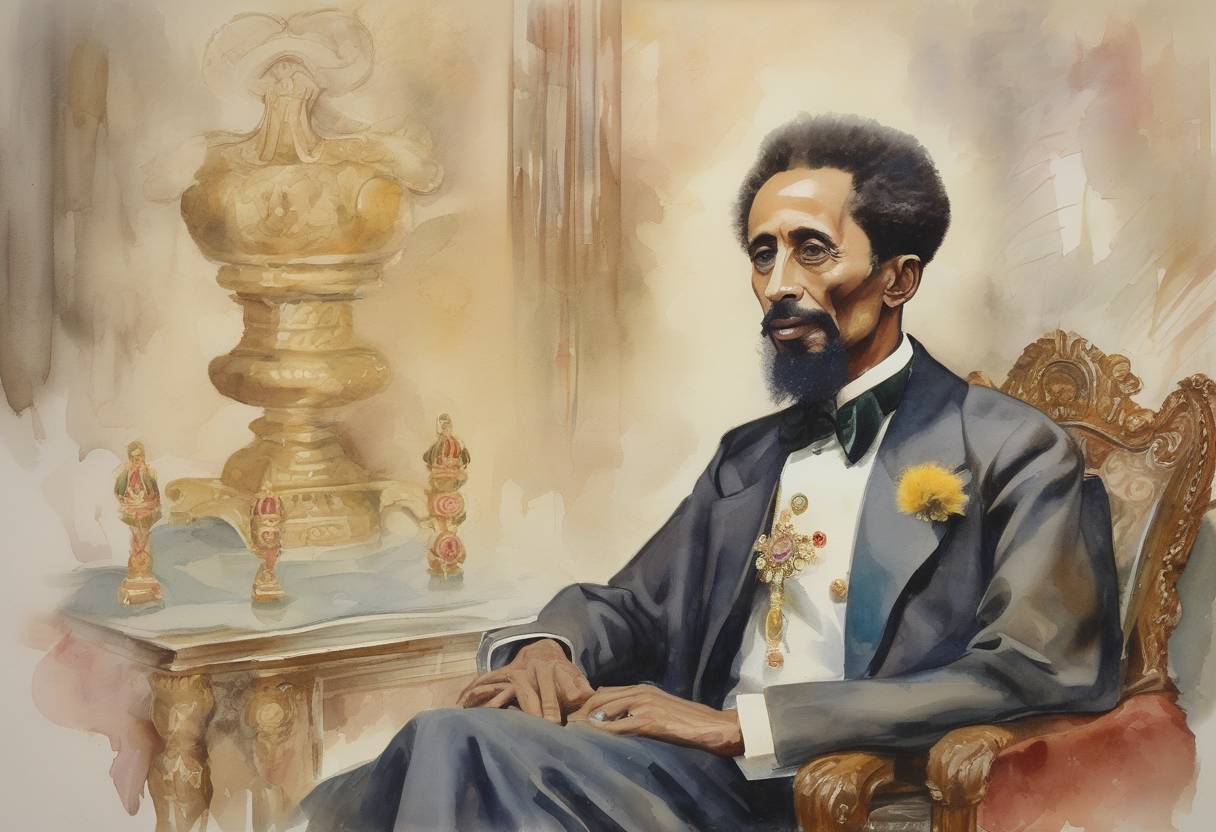
Emperor Haile Selassie I, originally named Tafari Makonnen, was born on July 23, 1892, in the village of Ejersa Goro in the Harar province of Ethiopia. His birth date is often mistakenly cited as July 15, 1910, but historical records confirm the 1892 date. He was born into the Ethiopian aristocracy, the son of Ras Makonnen, a trusted general of Emperor Menelik II, and Woizero Yeshimebet Ali.
Haile Selassie’s ascent to power was marked by his appointment as the governor of Sidamo in 1907 and later Harar in 1910. His political acumen and diplomatic skills were evident early on, and he became a key figure in Ethiopian politics. In 1916, following the deposition of Empress Zewditu, he was named Ras Tafari Makonnen and became the heir apparent and regent.
Haile Selassie was crowned Emperor of Ethiopia on November 2, 1930. His reign was characterized by efforts to modernize Ethiopia, including the introduction of a new constitution in 1931, which aimed to centralize power and modernize the nation’s political structure. He also worked to improve education, infrastructure, and the military.
In 1935, Italy, under Mussolini, invaded Ethiopia, leading to the Second Italo-Ethiopian War. Despite fierce resistance, Ethiopia was occupied by Italian forces in 1936, and Haile Selassie was forced into exile in Britain. During his exile, he addressed the League of Nations, famously appealing for international support against Italian aggression, a speech that highlighted the failures of the League and underscored the need for collective security.
Haile Selassie returned to Ethiopia in 1941 after the British and Ethiopian forces liberated the country. His post-war reign focused on further modernization and development. He played a pivotal role in the establishment of the Organization of African Unity (OAU) in 1963, promoting African unity and independence.
Haile Selassie’s reign ended in 1974 when he was deposed in a coup by the Derg, a Marxist-Leninist military junta. He died under mysterious circumstances in 1975 while under house arrest. Despite his controversial later years, Haile Selassie remains a symbol of African independence and unity. He is also revered as a messianic figure in the Rastafarian movement, which regards him as a symbol of African identity and resistance.
Haile Selassie’s legacy is multifaceted. He is remembered for his efforts to modernize Ethiopia and his role in promoting African unity. His leadership during the Italian invasion and his subsequent appeal to the League of Nations highlighted the challenges of international diplomacy and collective security in the interwar period. His influence extends beyond Ethiopia, impacting global movements for independence and civil rights.
Source: en.wikipedia.org