First Long-Distance Radio Message from the Eiffel Tower - January 12, 1908
1908 · Paris, France
A long-distance radio message is sent from the Eiffel Tower for the first time.
May 6, 1889
The Exposition Universelle opened in Paris, France, marking the completion of the Eiffel Tower and showcasing technological advancements of the era.
Paris, France | French government
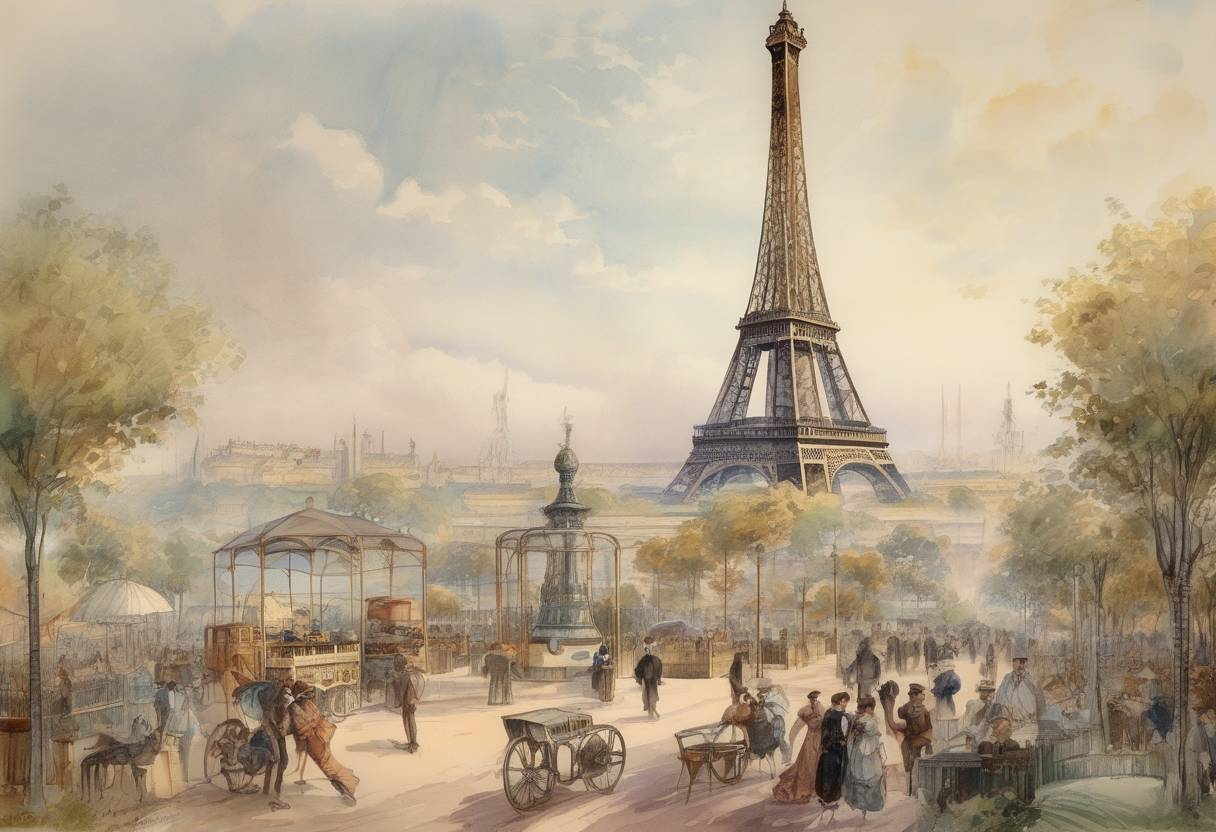
The Exposition Universelle, held in Paris, France, officially opened on May 6, 1889. This world’s fair was organized to celebrate the centennial of the French Revolution and to showcase the technological and cultural advancements of the era. It was a significant event that attracted millions of visitors from around the globe and left a lasting impact on both Paris and the world.
One of the most iconic features of the 1889 Exposition Universelle was the unveiling of the Eiffel Tower. Designed by the engineer Gustave Eiffel, the tower was constructed as the entrance arch to the exposition. Standing at 300 meters (984 feet), it was the tallest man-made structure in the world at the time. Despite initial criticism from some Parisians who considered it an eyesore, the Eiffel Tower quickly became a symbol of modern engineering and innovation.
The exposition was a grand display of technological progress and cultural exchange. It featured:
Electricity Pavilion: Demonstrating the potential of electric power, which was still a relatively new technology. The pavilion included electric lights and appliances, showcasing the future of urban living.
Machinery Hall: Housing a vast array of industrial machines and inventions, highlighting advancements in manufacturing and engineering.
Colonial Exhibits: Reflecting the era’s colonial interests, these exhibits displayed the cultures and resources of various colonies under European control.
Art and Culture: The exposition also celebrated the arts, with numerous exhibits of paintings, sculptures, and performances from around the world.
The Exposition Universelle of 1889 was more than just a showcase of technological marvels; it was a reflection of the optimism and progress of the late 19th century. It demonstrated the possibilities of industrialization and the interconnectedness of the world through trade and cultural exchange. The event also reinforced Paris’s status as a center of art, culture, and innovation.
The Eiffel Tower, initially intended to be dismantled after the exposition, was preserved due to its popularity and utility as a radio transmission tower. Today, it remains one of the most recognizable landmarks in the world and a testament to the spirit of innovation that characterized the 1889 exposition.
The Exposition Universelle set a precedent for future world’s fairs, influencing the design and scope of international exhibitions that followed. It highlighted the importance of global collaboration and the sharing of knowledge, laying the groundwork for the technological advancements of the 20th century.
Source: en.wikipedia.org