The Formal Declaration of the People's Democratic Republic of Algeria
1962 · Algiers, Algeria
The People's Democratic Republic of Algeria is formally declared. Ferhat Abbas is appointed as the President of Algeria.
July 3, 1962
The French President Charles de Gaulle declared Algeria independent from France, ending the Algerian War of Independence.
Algiers, Algeria | French government
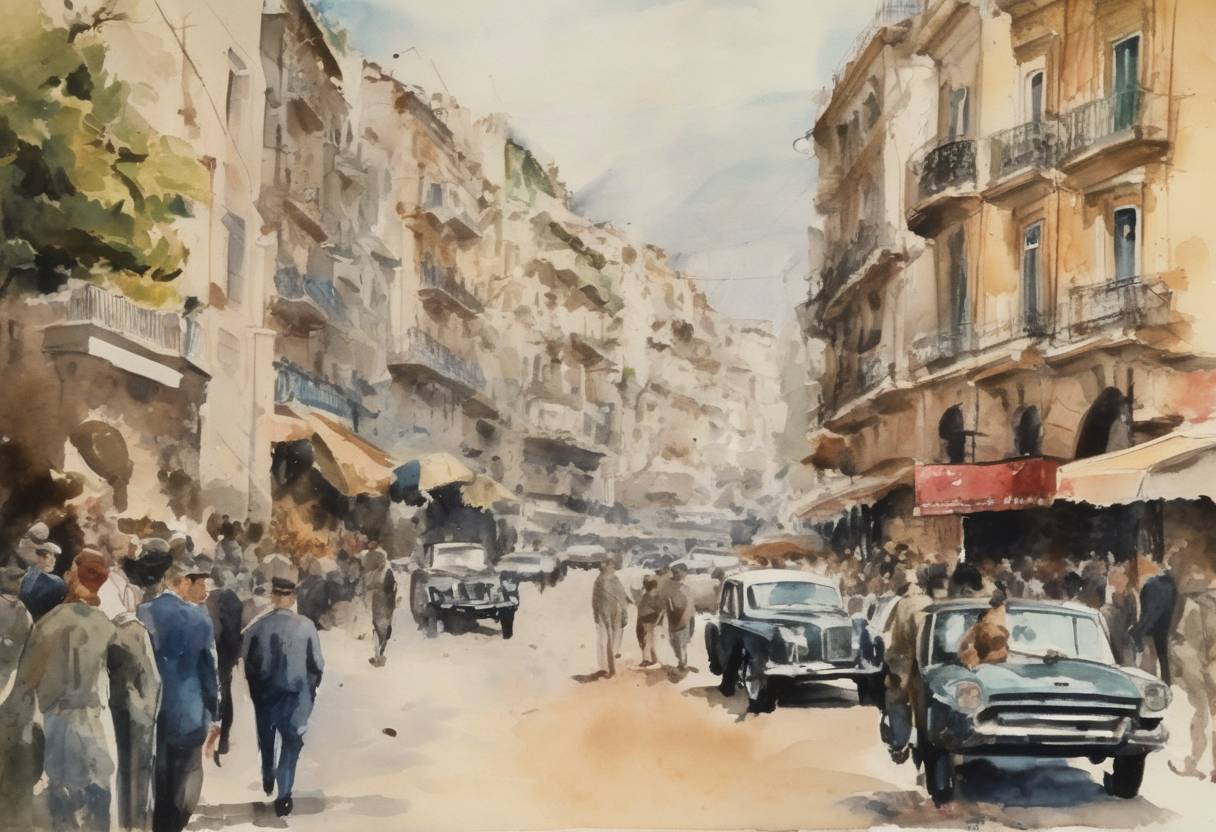
On July 3, 1962, French President Charles de Gaulle formally declared Algeria independent from France, marking the end of the Algerian War of Independence. This momentous event concluded a brutal and protracted conflict that had lasted for nearly eight years, fundamentally altering the political landscape of both Algeria and France.
The roots of the Algerian War of Independence can be traced back to the colonial era. Algeria had been under French control since 1830, and by the mid-20th century, the desire for independence had grown significantly among the Algerian population. The National Liberation Front (FLN), founded in 1954, spearheaded the struggle for independence, employing guerrilla warfare tactics against French forces.
The war officially began on November 1, 1954, when the FLN launched a series of coordinated attacks against French military and civilian targets. The conflict was characterized by its intensity and brutality, with widespread violence and atrocities committed by both sides. The war also had significant political repercussions in France, leading to deep divisions within French society and government.
Charles de Gaulle, who returned to power in France in 1958 during the Algerian crisis, played a pivotal role in the eventual resolution of the conflict. Initially, de Gaulle sought to maintain French control over Algeria but gradually shifted towards supporting self-determination for the Algerian people. This shift was influenced by the untenable nature of the conflict and the changing political climate in France.
Negotiations between the French government and the FLN culminated in the signing of the Évian Accords on March 18, 1962. These agreements laid the groundwork for a ceasefire and outlined the terms for Algerian independence. A referendum held in Algeria on July 1, 1962, saw an overwhelming majority of Algerians voting in favor of independence.
On July 3, 1962, de Gaulle officially recognized Algeria’s independence. This declaration marked the end of 132 years of French colonial rule and the beginning of a new era for Algeria. The formal proclamation of independence was celebrated on July 5, 1962, which is now commemorated as Algeria’s Independence Day.
The end of the Algerian War of Independence had profound implications. For Algeria, it meant the establishment of a sovereign nation, though the country faced significant challenges in rebuilding and addressing internal divisions. For France, the war’s conclusion marked the end of its colonial empire in North Africa and prompted a reevaluation of its colonial policies.
The Algerian War of Independence remains a significant chapter in the history of decolonization, symbolizing the struggle for self-determination and the complex legacy of colonialism.
Source: en.wikipedia.org