1984 · Washington, D.C., United States
Marvin Pinsky patented the official pedestrian traffic light system, enhancing urban safety measures across the globe.
July 8, 1969
The U.S. Patent Office issues a patent for the game Twister, which becomes a popular party game.
Washington, D.C., United States | U.S. Patent Office
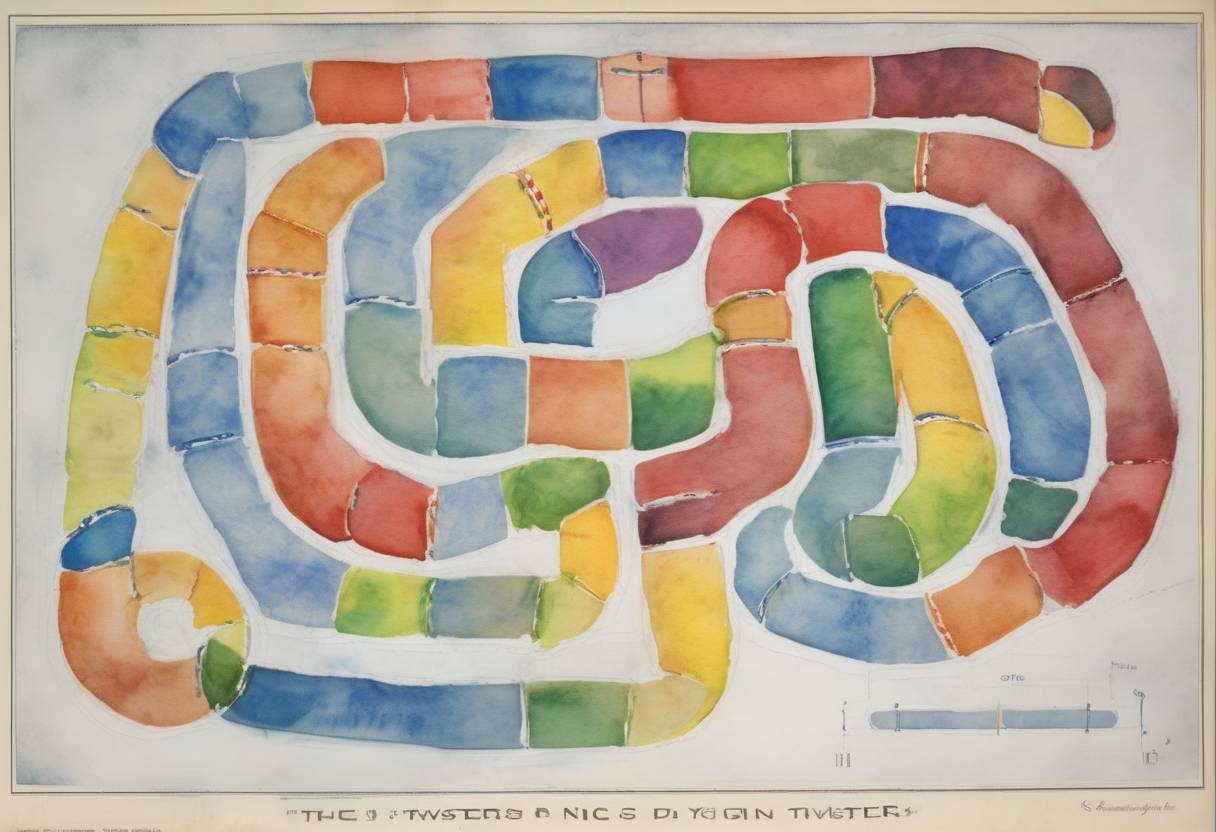
On July 8, 1969, the U.S. Patent Office issued a patent for the game Twister, marking a significant moment in the history of American party games. Twister, known for its unique combination of physical activity and social interaction, quickly became a cultural phenomenon.
Twister was originally conceived by Charles Foley and Neil Rabens in 1964. The game was initially called “Pretzel” and was designed to be a fun, interactive game that required players to place their hands and feet on colored circles on a large plastic mat, guided by the spin of a wheel. The objective was to avoid falling over while maintaining contact with the mat, often resulting in humorous and awkward positions.
The patent for Twister, issued on July 8, 1969, was a formal recognition of the game’s unique design and mechanics. The patent helped solidify Twister’s place in the toy industry and protected its creators’ intellectual property rights.
Twister’s impact extended beyond just being a game; it became a symbol of the changing social norms of the 1960s. The game encouraged physical closeness and interaction, reflecting the era’s evolving attitudes towards personal space and social interaction.
The issuance of the patent for Twister on July 8, 1969, was a pivotal moment that ensured the game’s continued success and influence. Twister remains a beloved game, celebrated for its ability to bring people together in a fun and interactive way. Its legacy endures as a testament to the creativity and innovation of its creators, Charles Foley and Neil Rabens.
Source: en.wikipedia.org