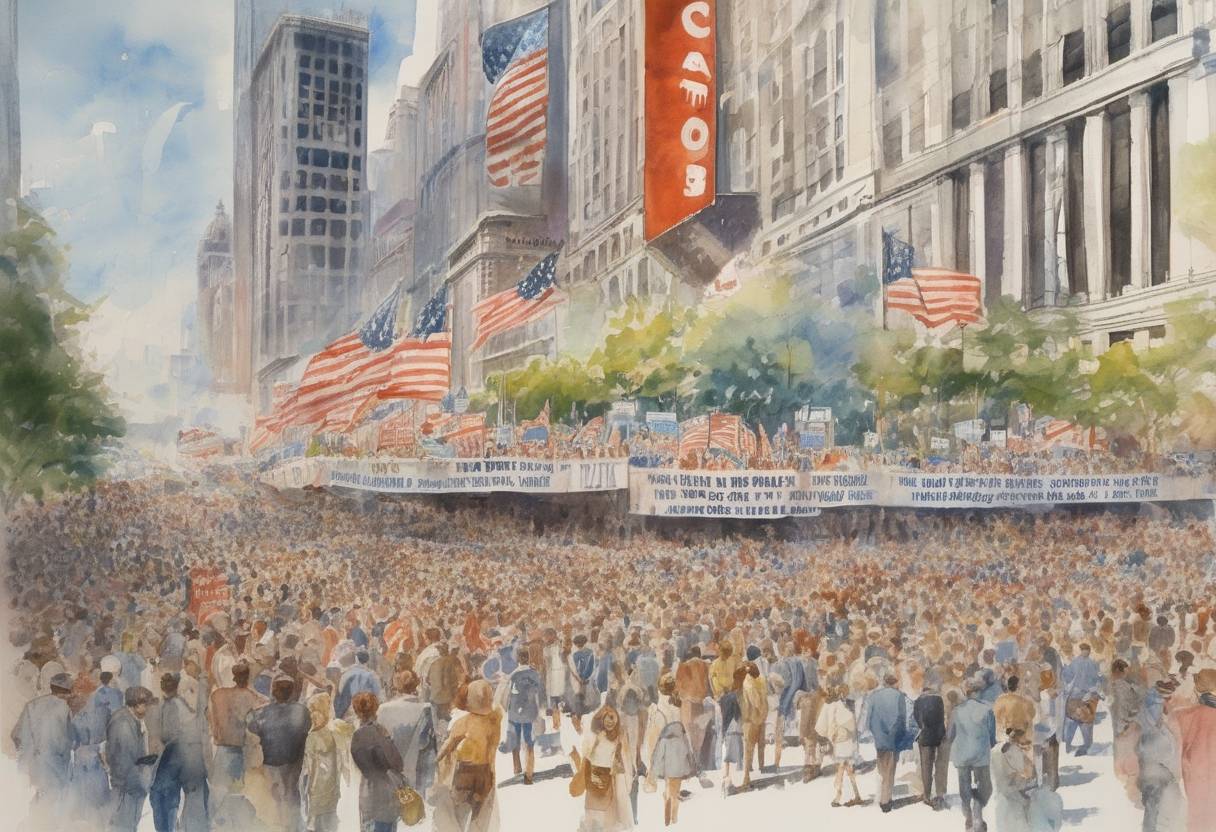
The Democratic National Convention Opens in Chicago - August 28, 1968
On August 28, 1968, the Democratic National Convention (DNC) opened in Chicago, Illinois, amidst a backdrop of significant political and social turmoil in the United States. This event became a pivotal moment in American history, marked by intense anti-Vietnam War protests and a highly charged political atmosphere.
Context Leading Up to the Convention
The late 1960s were a period of profound change and unrest in the United States. The Vietnam War had become increasingly unpopular, with growing numbers of Americans opposing U.S. involvement. The civil rights movement was also at its peak, demanding equality and justice for African Americans. Additionally, the assassinations of Martin Luther King Jr. in April 1968 and Senator Robert F. Kennedy in June 1968 had further exacerbated national tensions.
Key Events at the Convention
Protests and Demonstrations: As the DNC convened, thousands of demonstrators gathered in Chicago to protest the Vietnam War and advocate for peace. The protests were organized by various groups, including the National Mobilization Committee to End the War in Vietnam (MOBE) and the Youth International Party (Yippies).
Police Response: The Chicago police, under the direction of Mayor Richard J. Daley, responded to the protests with significant force. The situation escalated into violent clashes between police and demonstrators, with widespread reports of police brutality. The confrontations were broadcast on national television, shocking viewers and drawing widespread condemnation.
Inside the Convention: Inside the convention hall, the Democratic Party was deeply divided. The main contenders for the presidential nomination were Vice President Hubert Humphrey, who supported President Lyndon B. Johnson’s Vietnam policies, and Senator Eugene McCarthy, who ran on an anti-war platform. Ultimately, Humphrey secured the nomination, but the process highlighted the party’s internal conflicts.
Aftermath and Consequences
Public Perception: The violent clashes and chaotic scenes in Chicago significantly impacted public perception of the Democratic Party and the political establishment. The events were later described as a “police riot” by the National Commission on the Causes and Prevention of Violence.
Election Impact: The turmoil at the DNC contributed to a sense of disillusionment among many voters. In the November 1968 presidential election, Republican candidate Richard Nixon capitalized on the desire for “law and order” and won the presidency.
Legacy: The 1968 DNC and the associated protests became emblematic of the broader societal upheavals of the 1960s. They underscored the deep divisions within American society over issues such as the Vietnam War, civil rights, and the role of government.
The events in Chicago in August 1968 remain a significant chapter in American history, illustrating the power of protest and the complexities of political change during a turbulent era.