USS Triton's Submerged Circumnavigation: May 10, 1960
1960 · New London, United States
The nuclear submarine USS Triton completes the first submerged circumnavigation of the globe.
September 24, 1960
The USS Enterprise, the world's first nuclear-powered aircraft carrier, was launched in Newport News, Virginia.
Newport News, United States | United States Navy
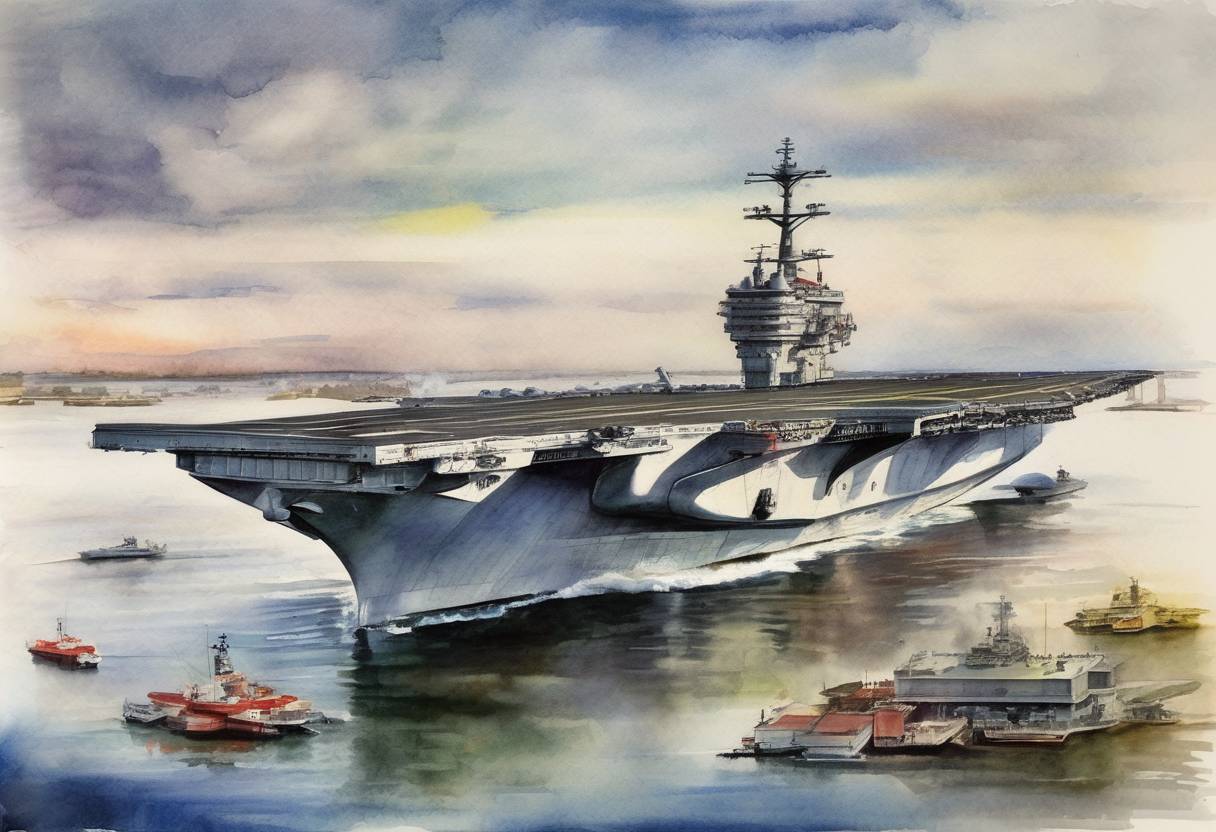
On September 24, 1960, the USS Enterprise (CVN-65), the world’s first nuclear-powered aircraft carrier, was launched at Newport News Shipbuilding in Newport News, Virginia. This event marked a significant milestone in naval engineering and military history, showcasing the United States’ technological advancements during the Cold War era.
The USS Enterprise was part of a broader initiative by the United States Navy to integrate nuclear propulsion into its fleet, a move aimed at enhancing the operational capabilities of naval vessels. Nuclear power offered several advantages over traditional fossil fuel-powered ships, including greater range, endurance, and speed, as well as reduced logistical support requirements.
Nuclear Propulsion: The Enterprise was powered by eight Westinghouse A2W nuclear reactors, which allowed it to operate for extended periods without refueling. This capability was particularly advantageous for long deployments and strategic missions.
Size and Capacity: At the time of its launch, the USS Enterprise was the largest ship ever built, measuring 1,123 feet in length. It could carry over 90 aircraft and had a crew complement of approximately 4,600 personnel.
Innovations: The carrier featured a distinctive design with a unique island structure and an angled flight deck, which improved aircraft launch and recovery operations.
The launch of the USS Enterprise represented a pivotal moment in naval warfare and strategy. As the first nuclear-powered aircraft carrier, it set a precedent for future naval vessels and underscored the strategic importance of nuclear technology in military applications.
Cold War Context: The Enterprise’s capabilities were particularly significant during the Cold War, as it provided the United States with a powerful tool for power projection and deterrence.
Operational History: Throughout its service, the USS Enterprise participated in numerous significant military operations, including the Cuban Missile Crisis, the Vietnam War, and various Middle Eastern conflicts. It served as a vital component of the U.S. Navy’s carrier strike groups until its decommissioning in 2012.
The USS Enterprise’s successful integration of nuclear propulsion paved the way for subsequent classes of nuclear-powered aircraft carriers, such as the Nimitz-class and the Gerald R. Ford-class. Its legacy continues to influence naval architecture and strategy, highlighting the enduring impact of its innovative design and capabilities.
The ship’s decommissioning in 2012 marked the end of an era, but its contributions to naval history and its role in advancing nuclear propulsion technology remain significant. The USS Enterprise’s name and legacy are set to continue with the planned construction of a new carrier, the USS Enterprise (CVN-80), ensuring that its storied history lives on in the U.S. Navy.
Source: www.history.navy.mil