Charles de Gaulle Designated President of the Provisional Government
1944 · Paris, France
The popular leader of the Free French Forces, Charles de Gaulle, was designated President of the Provisional Government of the French Republic.
August 25, 1944
Paris is liberated by the Allies during World War II.
Paris, France | Allied forces
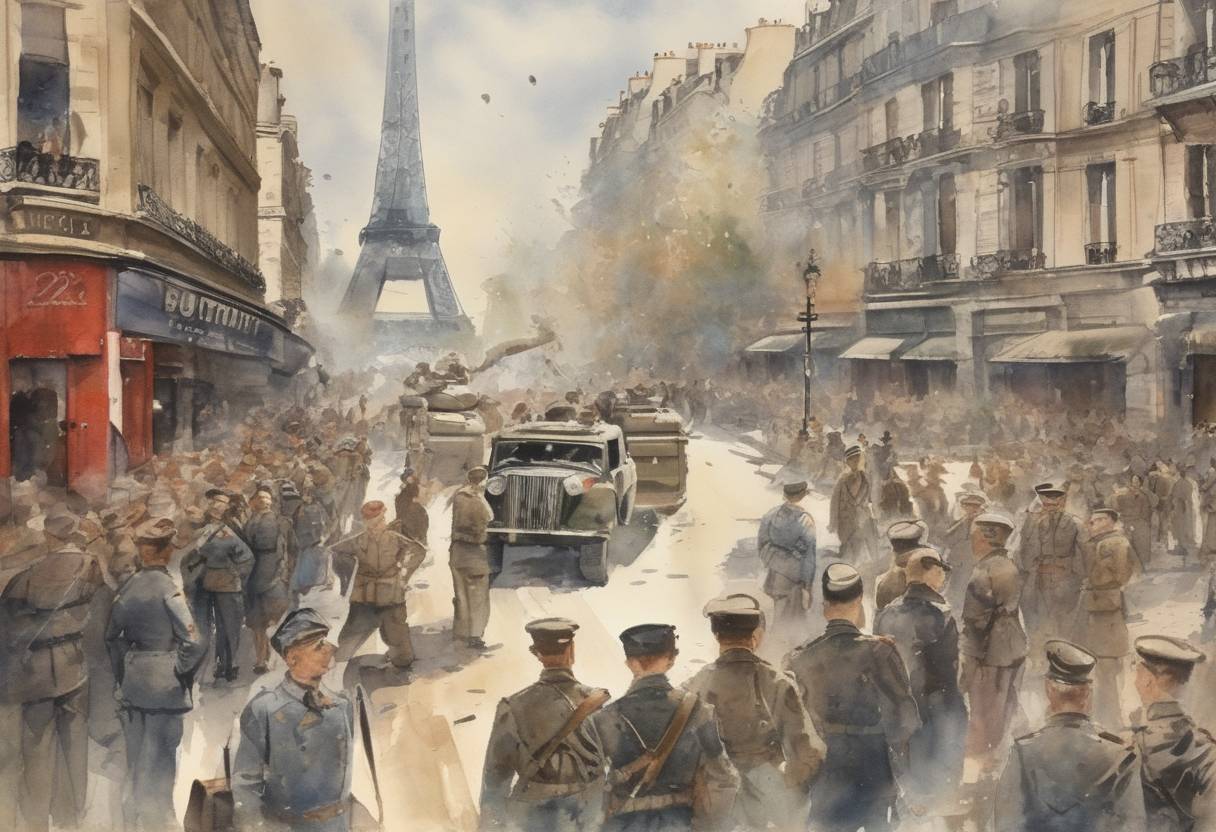
The liberation of Paris on August 25, 1944, marked a pivotal moment in World War II, symbolizing the end of four years of Nazi occupation in the French capital. This event was part of the broader Allied campaign to liberate Western Europe following the successful D-Day landings in Normandy on June 6, 1944.
Nazi Occupation: Paris had been under German occupation since June 1940, following France’s defeat and the subsequent armistice with Nazi Germany. The occupation was characterized by harsh restrictions, economic exploitation, and the persecution of Jews and resistance members.
Allied Advances: After the Normandy landings, Allied forces, including American, British, and Canadian troops, pushed through France, liberating towns and cities as they advanced towards Paris.
French Resistance: The French Resistance played a crucial role in the liberation efforts. In August 1944, as Allied forces approached, the resistance in Paris intensified its activities, organizing strikes and uprisings against the German occupiers.
August 19, 1944: The Parisian resistance, led by the French Forces of the Interior (FFI), initiated an uprising against the German garrison in Paris. Barricades were erected, and skirmishes with German forces ensued.
General Charles de Gaulle: The leader of the Free French Forces, de Gaulle insisted that French troops should be the first to enter Paris, emphasizing the importance of French participation in the liberation to restore national pride and sovereignty.
Allied Decision: Initially, the Allied command, led by General Dwight D. Eisenhower, was hesitant to divert forces to Paris, considering it strategically less important than other military objectives. However, the risk of a humanitarian crisis and the symbolic value of Paris prompted a change in plans.
August 24, 1944: The French 2nd Armored Division, commanded by General Philippe Leclerc, entered the outskirts of Paris. By the evening, they had reached the city center, greeted by jubilant Parisians.
August 25, 1944: The German military governor of Paris, General Dietrich von Choltitz, surrendered to the French forces. He defied Hitler’s orders to destroy the city, choosing instead to preserve its historical and cultural heritage.
De Gaulle’s Arrival: On August 26, Charles de Gaulle made a triumphant entry into Paris, leading a parade down the Champs-Élysées, where he delivered a speech affirming France’s liberation and independence.
Symbolic Victory: The liberation of Paris was a significant morale booster for the Allies and the French people. It symbolized the collapse of Nazi control in Western Europe and the resurgence of French national identity.
Strategic Impact: The liberation allowed the Allies to secure a vital logistical hub, facilitating further operations in northern France and Belgium.
Political Consequences: De Gaulle’s leadership during the liberation solidified his position as the head of the provisional government, paving the way for the re-establishment of the French Republic.
The liberation of Paris remains a celebrated moment in French history, commemorated annually as a testament to the resilience and courage of those who fought for freedom during World War II.
Source: en.wikipedia.org