The Battle of Thermopylae: Conclusion and Historical Context
Overview
The Battle of Thermopylae, a pivotal engagement during the Greco-Persian Wars, concluded with the defeat of the Greek city-states by the Persian forces under King Xerxes I. Although the battle itself took place over three days in August 480 BCE, the date you mentioned, August 27, 479 BCE, does not correspond to the conclusion of this battle but rather to the broader context of the Greco-Persian Wars, which included subsequent battles such as Plataea and Mycale in 479 BCE.
Context Leading to the Battle
Persian Expansion: The Greco-Persian Wars were a series of conflicts between the Persian Empire and Greek city-states that began in 499 BCE. The Persian Empire, under Darius I and later his son Xerxes I, sought to expand its influence over Greece.
Greek Resistance: In response to Persian aggression, a coalition of Greek city-states, including Athens and Sparta, formed to resist Persian expansion. The Greeks were determined to defend their autonomy and way of life.
The Battle of Thermopylae (480 BCE)
Strategic Location: Thermopylae, a narrow pass in central Greece, was chosen by the Greeks as a strategic defensive position to halt the advancing Persian army. The geography of the pass limited the numerical advantage of the Persian forces.
Greek Forces: Led by King Leonidas I of Sparta, the Greek forces consisted of approximately 7,000 men, including the famous 300 Spartans, who were renowned for their military prowess and discipline.
Persian Forces: The Persian army, commanded by Xerxes I, was vast, with estimates ranging from 100,000 to 300,000 soldiers. This formidable force included infantry, cavalry, and naval support.
Key Events of the Battle
Initial Defense: For two days, the Greeks successfully held the pass, inflicting significant casualties on the Persian forces. The narrow terrain neutralized the Persian numerical advantage.
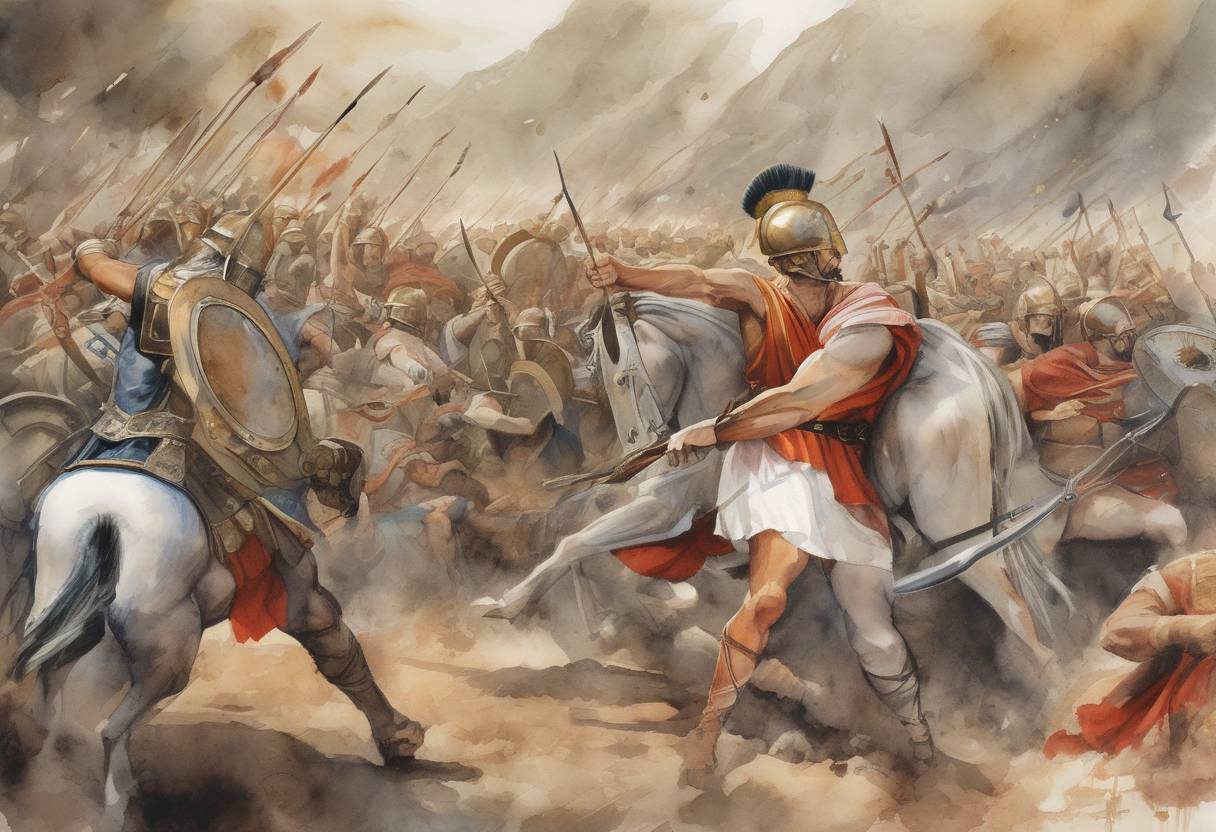
Betrayal and Final Stand: On the third day, a local Greek named Ephialtes betrayed the defenders by revealing a mountain path that allowed the Persians to outflank the Greek position. Realizing the inevitability of defeat, Leonidas and his men made a valiant last stand, fighting to the death.
Aftermath and Historical Significance
Tactical Defeat, Strategic Victory: Although the Greeks were defeated at Thermopylae, their resistance provided valuable time for the Greek city-states to prepare for further Persian advances. The battle became a symbol of courage and sacrifice against overwhelming odds.
Subsequent Battles: The Greek forces regrouped and achieved decisive victories at the Battles of Salamis (480 BCE) and Plataea (479 BCE), ultimately leading to the withdrawal of Persian forces from Greece.
Legacy: The Battle of Thermopylae has been immortalized in history and popular culture as an example of heroic resistance. It underscored the importance of unity among the Greek city-states and demonstrated the effectiveness of strategic defense against a larger foe.
In conclusion, while the Battle of Thermopylae ended in a tactical defeat for the Greeks, it played a crucial role in the eventual Greek victory in the Greco-Persian Wars, highlighting themes of bravery, strategy, and the defense of freedom.