John Smith Elected Council President of Jamestown, Virginia - September 10, 1608
1608 · Jamestown, Virginia, USA
John Smith was elected council president of Jamestown, Virginia, the first permanent English settlement in America.
September 19, 1676
Jamestown, the first permanent English settlement in America, was burned to the ground during Bacon's Rebellion, a revolt led by Nathaniel Bacon against the colonial government in Virginia.
Jamestown, United States | Bacon's Rebellion
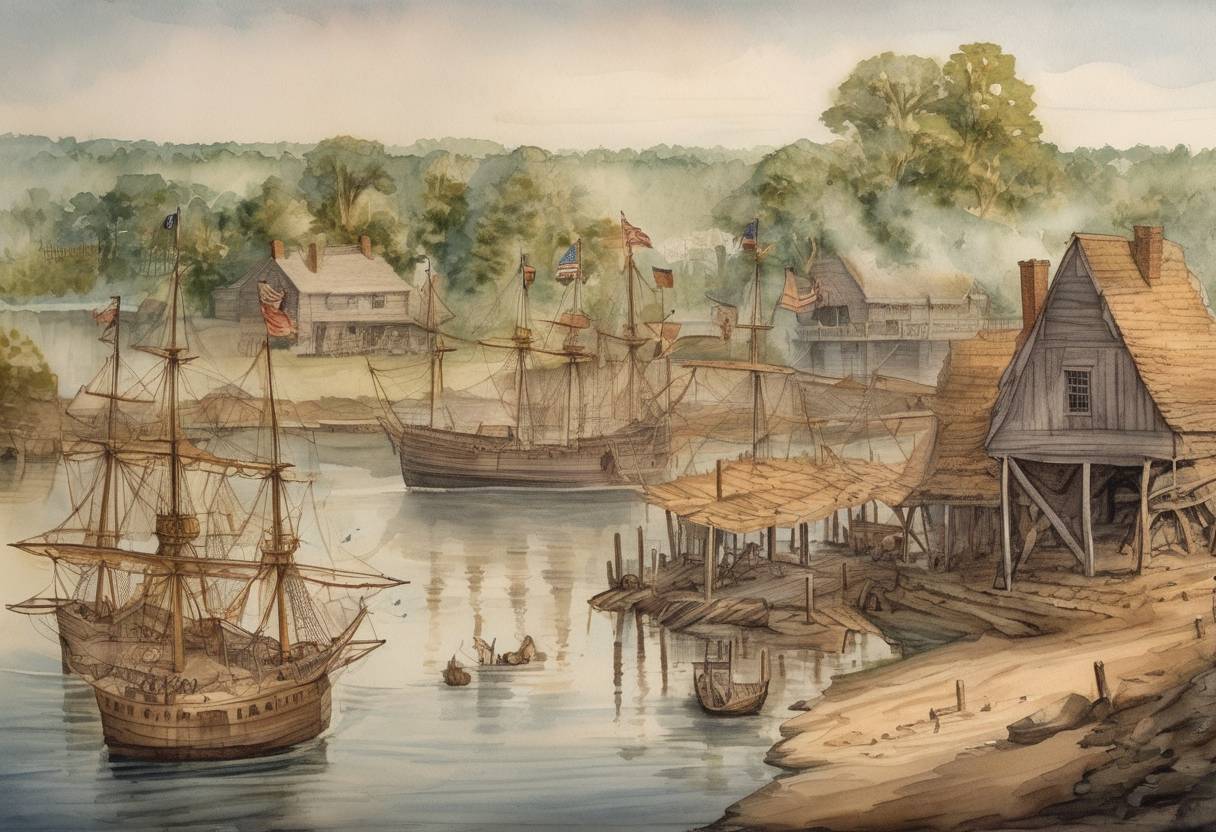
On September 19, 1676, Jamestown, the first permanent English settlement in America, was set ablaze during a tumultuous period known as Bacon’s Rebellion. This event marked a significant moment in colonial American history, highlighting tensions between frontier settlers and the colonial government in Virginia.
Bacon’s Rebellion was rooted in several underlying issues:
Economic Hardships: Many settlers faced economic difficulties due to falling tobacco prices, rising taxes, and competition with Native American tribes for land.
Native American Relations: Frontier settlers were frustrated with the colonial government’s perceived lack of protection against Native American raids. Governor William Berkeley’s policies favored maintaining peaceful relations with Native tribes, which many settlers opposed.
Political Discontent: The colonial government was seen as corrupt and unresponsive to the needs of the settlers, leading to widespread dissatisfaction.
Nathaniel Bacon, a wealthy planter, emerged as a leader for the discontented settlers. Despite being a relative newcomer to Virginia, Bacon capitalized on the settlers’ grievances and organized a militia to confront Native American tribes, defying Governor Berkeley’s orders.
Initial Conflicts: Bacon’s forces initially targeted Native American tribes, but tensions quickly escalated between Bacon and the colonial government.
Declaration of the People: In July 1676, Bacon issued the “Declaration of the People,” accusing Governor Berkeley of corruption and failing to protect the colonists.
March on Jamestown: Bacon’s forces marched on Jamestown, the colonial capital, demanding reforms. When negotiations failed, Bacon’s men set fire to the settlement on September 19, 1676, effectively destroying the town.
Bacon’s Death: Nathaniel Bacon died of dysentery in October 1676, leading to the collapse of the rebellion.
Reprisals and Reforms: Governor Berkeley regained control and executed several of Bacon’s followers. However, the rebellion exposed the need for reforms, leading to changes in colonial policies, including a shift towards a more aggressive stance against Native American tribes and a reevaluation of colonial governance.
Bacon’s Rebellion is considered a precursor to later colonial uprisings and highlighted the complexities of colonial governance, frontier expansion, and Native American relations. It underscored the growing divide between the wealthy elite and the poorer settlers, setting the stage for future conflicts in colonial America.
The burning of Jamestown during Bacon’s Rebellion remains a pivotal moment in American history, illustrating the volatile dynamics of early colonial society and the enduring struggle for power and representation.
Source: en.wikipedia.org