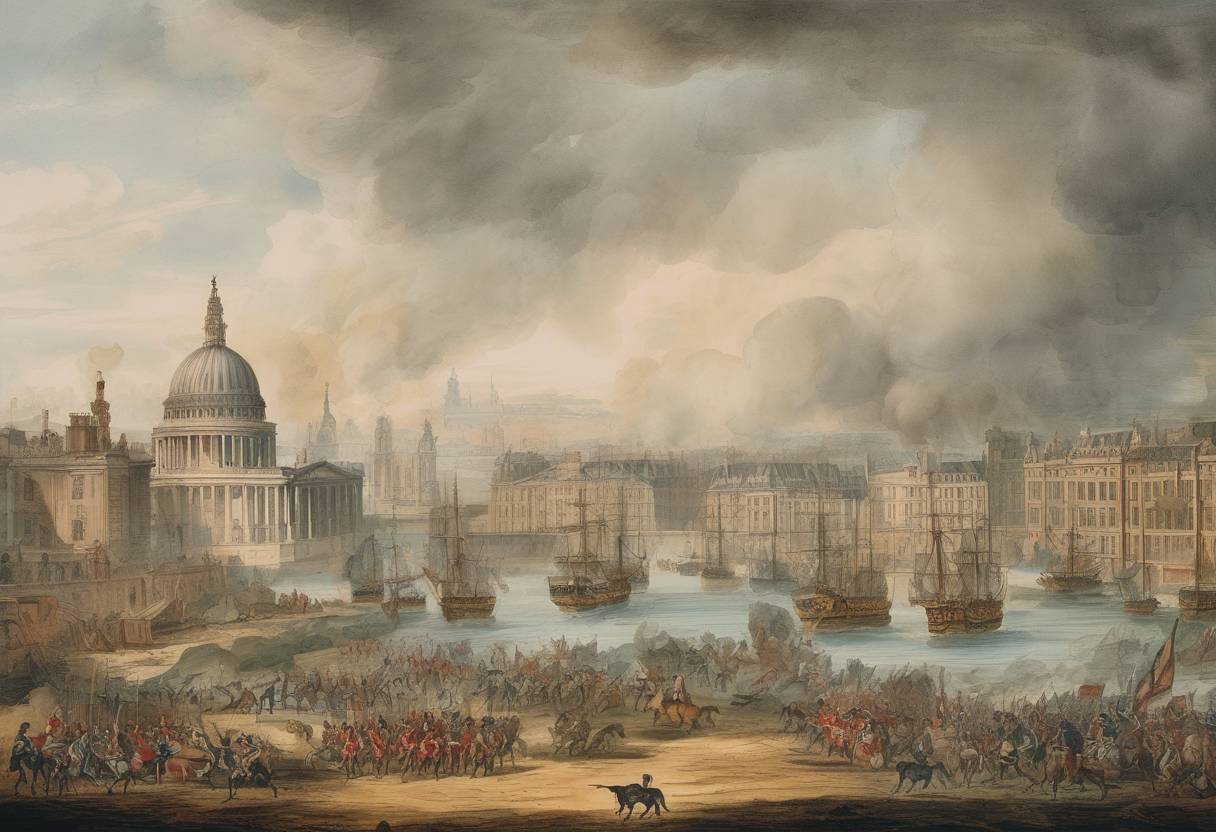
Great Britain Declares War on Spain: January 4, 1762
On January 4, 1762, Great Britain officially declared war on Spain, marking a significant expansion of the already widespread conflict known as the Seven Years’ War. This declaration was a pivotal moment in the war, which had begun in 1756 and involved most of the great powers of the time.
Context and Background
The Seven Years’ War was a global conflict that pitted major European powers against each other, with battles occurring in Europe, North America, South America, Africa, and Asia. The war is often considered the first “world war” due to its extensive geographical reach.
Key Players
- Great Britain: Initially allied with Prussia, Britain was primarily engaged in colonial conflicts against France, particularly in North America and India.
- Spain: Although initially neutral, Spain was drawn into the conflict due to its familial ties with France through the Bourbon Family Compact, a series of agreements between the Bourbon monarchies of France and Spain.
Leading Up to the Declaration
- Bourbon Family Compact: In 1761, France and Spain signed the Third Family Compact, which was a mutual defense agreement. This pact effectively aligned Spain with France against Britain.
- British Concerns: Britain was wary of Spain’s potential to disrupt its colonial and maritime interests. The British government, led by Prime Minister John Stuart, 3rd Earl of Bute, sought to preemptively strike against Spain to prevent it from joining forces with France.
The Declaration of War
On January 4, 1762, Britain declared war on Spain. This decision was influenced by several factors:
- Strategic Interests: Britain aimed to weaken Spanish influence in the Americas and secure its own colonial holdings.
- Naval Supremacy: The British navy sought to dominate the seas, and a war with Spain provided an opportunity to capture valuable Spanish territories and trade routes.
Consequences and Aftermath
- The Capture of Havana: One of the most significant outcomes of the war was the British capture of Havana, Cuba, in August 1762. This was a major blow to Spanish colonial power.
- Treaty of Paris (1763): The war concluded with the Treaty of Paris in 1763. Spain ceded Florida to Britain in exchange for the return of Havana and Manila, which had also been captured by the British.
- Shift in Colonial Power: The treaty significantly altered the balance of colonial power, with Britain emerging as the dominant colonial empire.
Broader Historical Significance
The expansion of the Seven Years’ War to include Spain had lasting impacts on global geopolitics. It reshaped colonial territories and set the stage for future conflicts, including the American Revolutionary War. The war also highlighted the interconnectedness of European and colonial politics, foreshadowing the complex alliances and rivalries that would characterize international relations in the centuries to come.
In summary, the declaration of war on Spain by Great Britain on January 4, 1762, was a strategic move that expanded the scope of the Seven Years’ War and had profound implications for the global balance of power.