The End of the Cassini Mission: September 13, 2017
2017 · Saturn, N/A
The Cassini spacecraft, a joint mission by NASA, ESA, and ASI, ended its 20-year mission by plunging into Saturn's atmosphere, providing valuable data until the very end.
September 15, 2017
The Cassini spacecraft, a collaboration between NASA, ESA, and the Italian Space Agency, ended its mission by plunging into Saturn's atmosphere after 13 years of exploration.
Saturn, N/A | NASA
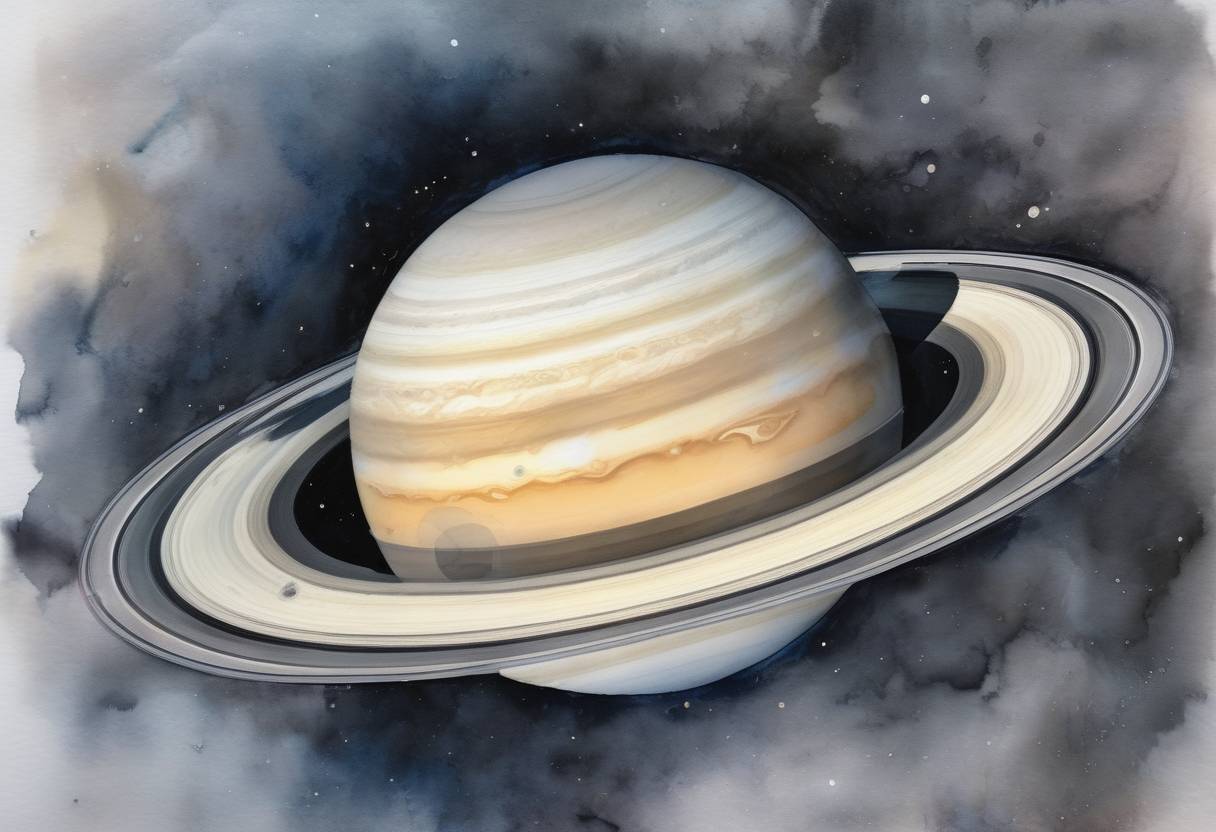
On September 15, 2017, the Cassini spacecraft concluded its remarkable mission by plunging into Saturn’s atmosphere, marking the end of a 13-year exploration of the Saturnian system. This event was the culmination of a collaborative effort between NASA, the European Space Agency (ESA), and the Italian Space Agency (ASI).
Cassini was launched on October 15, 1997, from Cape Canaveral, Florida. The mission was named after the Italian-French astronomer Giovanni Domenico Cassini, who discovered several of Saturn’s moons and the gap in its rings known as the Cassini Division. The spacecraft’s journey to Saturn took nearly seven years, utilizing gravity assists from Venus, Earth, and Jupiter to reach its destination.
Cassini’s primary mission objectives included studying Saturn’s rings, its magnetosphere, and its moons, particularly Titan and Enceladus. Some of the mission’s most significant achievements include:
Titan Exploration: Cassini deployed the Huygens probe, built by ESA, which successfully landed on Titan, Saturn’s largest moon, in January 2005. This was the first landing on a moon in the outer solar system, providing unprecedented data about Titan’s surface and atmosphere.
Enceladus Discoveries: Cassini discovered geysers of water ice and organic molecules erupting from Enceladus, suggesting the presence of a subsurface ocean and the potential for microbial life.
Saturn’s Rings and Atmosphere: The spacecraft provided detailed images and data on the structure and composition of Saturn’s rings and atmosphere, enhancing our understanding of their dynamics and evolution.
In its final phase, known as the “Grand Finale,” Cassini performed a series of daring orbits that took it between Saturn and its innermost ring. This phase provided unique data on Saturn’s gravity and magnetic fields, as well as the mass of its rings.
The decision to end the mission by sending Cassini into Saturn’s atmosphere was made to prevent any potential contamination of Saturn’s moons, which could harbor conditions suitable for life. As Cassini descended into the planet, it transmitted data back to Earth until it was destroyed by the intense pressure and heat of Saturn’s atmosphere.
Cassini’s mission transformed our understanding of the Saturnian system and provided insights that will guide future exploration. The data collected continues to be analyzed, offering new discoveries and inspiring future missions to the outer planets.
The Cassini mission stands as a testament to international collaboration in space exploration, demonstrating the power of shared scientific goals and technological innovation. Its legacy endures in the wealth of knowledge it provided and the inspiration it continues to offer to scientists and space enthusiasts worldwide.
Source: www.nasa.gov