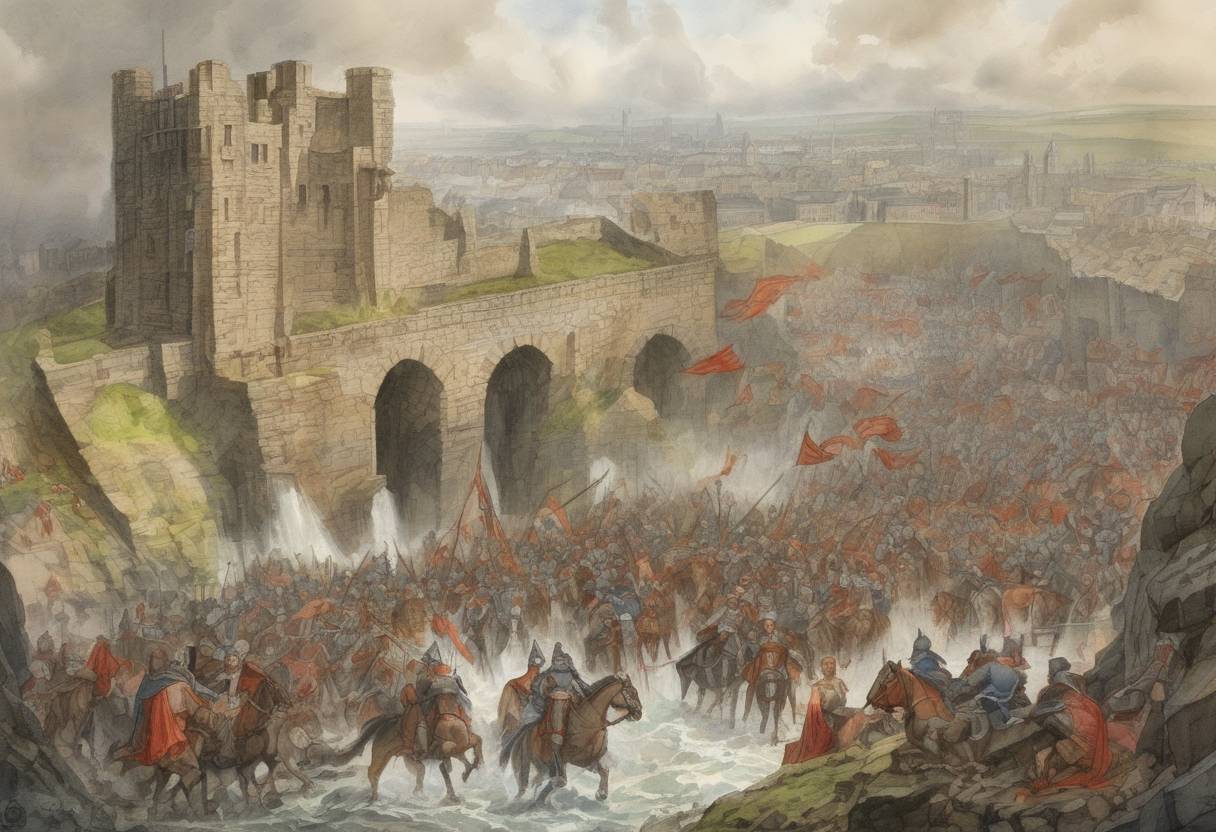
The Fall of the Kingdom of Dublin to Norman Invaders on September 21, 1170
On September 21, 1170, a significant event unfolded in Irish history: the fall of the Kingdom of Dublin to Norman invaders. This event marked a pivotal moment in the Norman conquest of Ireland, which had profound implications for the island’s political landscape.
Historical Context
The Kingdom of Dublin was a Norse-Gaelic kingdom established by Viking settlers in the 9th century. By the 12th century, it had become a significant trading hub and a center of power in Ireland. However, the political landscape of Ireland during this period was fragmented, with numerous petty kingdoms and shifting alliances.
The Normans, originally of Viking descent themselves, had established a powerful presence in England following the Norman Conquest of 1066. By the mid-12th century, they were looking to expand their influence further.
Key Events Leading to the Fall
The invasion of Ireland by the Normans was initiated by Dermot MacMurrough, the deposed King of Leinster. In 1166, MacMurrough was ousted by a coalition of Irish kings led by Turlough O’Connor, the High King of Ireland. Seeking to reclaim his throne, MacMurrough sought assistance from King Henry II of England.
In 1169, the first wave of Norman knights, led by Richard de Clare, known as Strongbow, landed in Ireland. Their initial campaigns were successful, and they quickly gained a foothold in the southeast of the island.
The Capture of Dublin
By 1170, the Normans, bolstered by reinforcements, turned their attention to Dublin. On September 21, 1170, Strongbow and his forces launched an assault on the city. The attack was swift and decisive, leading to the capture of Dublin. The fall of the city marked a significant victory for the Normans and a turning point in their conquest of Ireland.
Aftermath and Consequences
The capture of Dublin had several important consequences:
Norman Expansion: The fall of Dublin facilitated further Norman expansion into Ireland. It provided a strategic base for launching additional military campaigns and consolidating control over the surrounding regions.
Political Changes: The conquest led to significant changes in the political landscape of Ireland. The Normans introduced feudal structures and established a new ruling class, which altered the traditional Gaelic order.
Cultural Impact: The Norman presence in Ireland brought about cultural exchanges and influences, particularly in architecture, language, and governance.
English Influence: The success of the Norman invasion laid the groundwork for increased English influence in Ireland, which would have lasting implications for the island’s history.
Broader Historical Significance
The fall of the Kingdom of Dublin to Norman invaders was a crucial step in the larger Norman conquest of Ireland. It marked the beginning of centuries of English involvement in Irish affairs, setting the stage for future conflicts and shaping the historical trajectory of both nations.
This event is a testament to the complex interplay of local and external forces in medieval Ireland and highlights the enduring impact of the Norman legacy on Irish history.