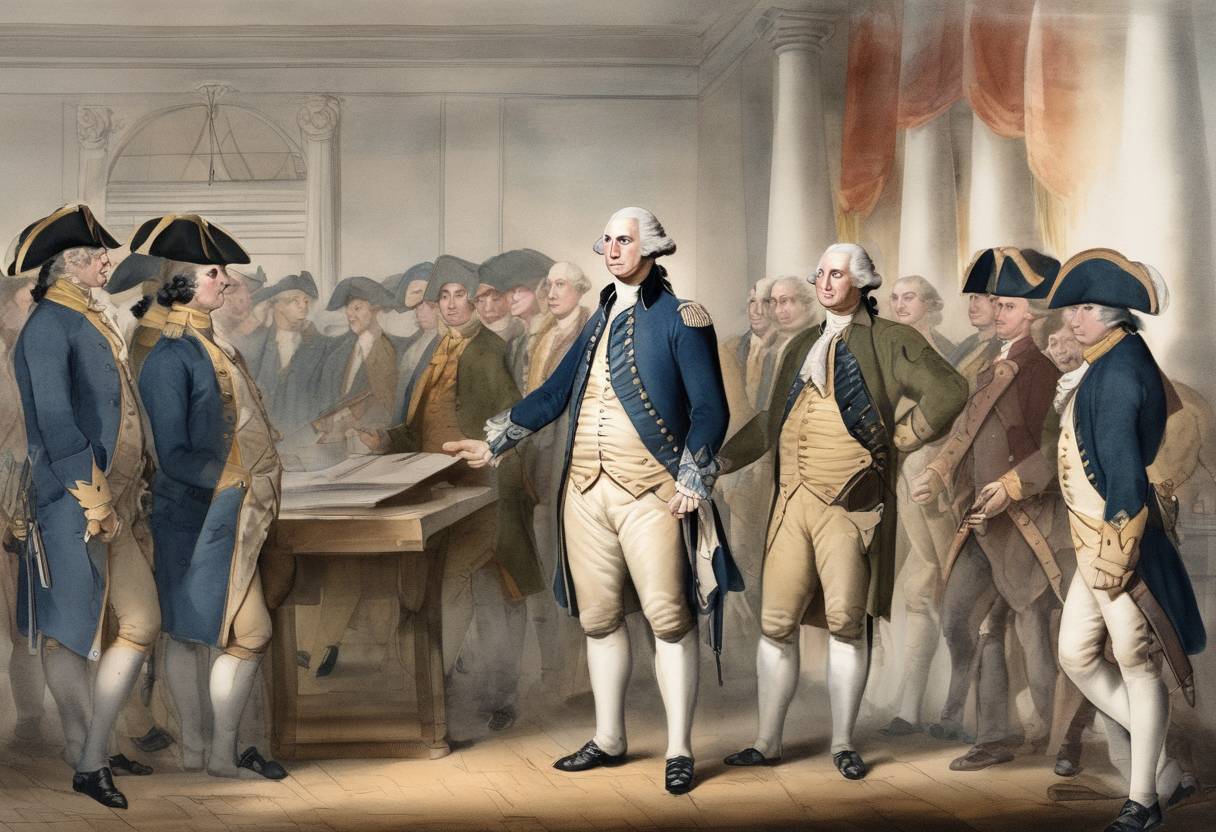
George Washington Resigns as Commander-in-Chief
On December 23, 1783, George Washington resigned his commission as commander-in-chief of the Continental Army, marking a pivotal moment in American history. This event took place at the Maryland State House in Annapolis, symbolizing the end of Washington’s military service in the American Revolutionary War and his return to civilian life.
Context and Background
- American Revolutionary War: The war, which began in 1775, was a conflict between the Thirteen American Colonies and Great Britain. It concluded with the signing of the Treaty of Paris in 1783, which recognized American independence.
- Washington’s Leadership: George Washington was appointed as the commander-in-chief of the Continental Army by the Second Continental Congress in 1775. His leadership was instrumental in securing American victory, despite numerous challenges such as limited resources and a lack of formal military training among his troops.
The Resignation Ceremony
- Location: The ceremony took place in the Senate Chamber of the Maryland State House, which served as the temporary capital of the United States at the time.
- Significance: Washington’s resignation was a profound act of humility and respect for civilian governance. By voluntarily relinquishing power, he set a precedent for the peaceful transfer of authority, reinforcing the principles of democracy and republicanism.
- Speech: In his address to Congress, Washington expressed gratitude for the opportunity to serve and commended the perseverance and bravery of his soldiers. He also emphasized his commitment to returning to private life.
Aftermath and Historical Significance
- Return to Mount Vernon: Following his resignation, Washington returned to his plantation at Mount Vernon, Virginia, intending to resume his life as a private citizen.
- Legacy: Washington’s resignation reinforced the notion of civilian control over the military, a cornerstone of American democracy. His actions were lauded both domestically and internationally, enhancing his reputation as a leader dedicated to the principles of liberty and governance.
- Future Leadership: Despite his desire for retirement, Washington was later called upon to serve as the first President of the United States in 1789, where he continued to shape the young nation.
Washington’s resignation remains a defining moment in American history, exemplifying the values of leadership, humility, and dedication to the public good.