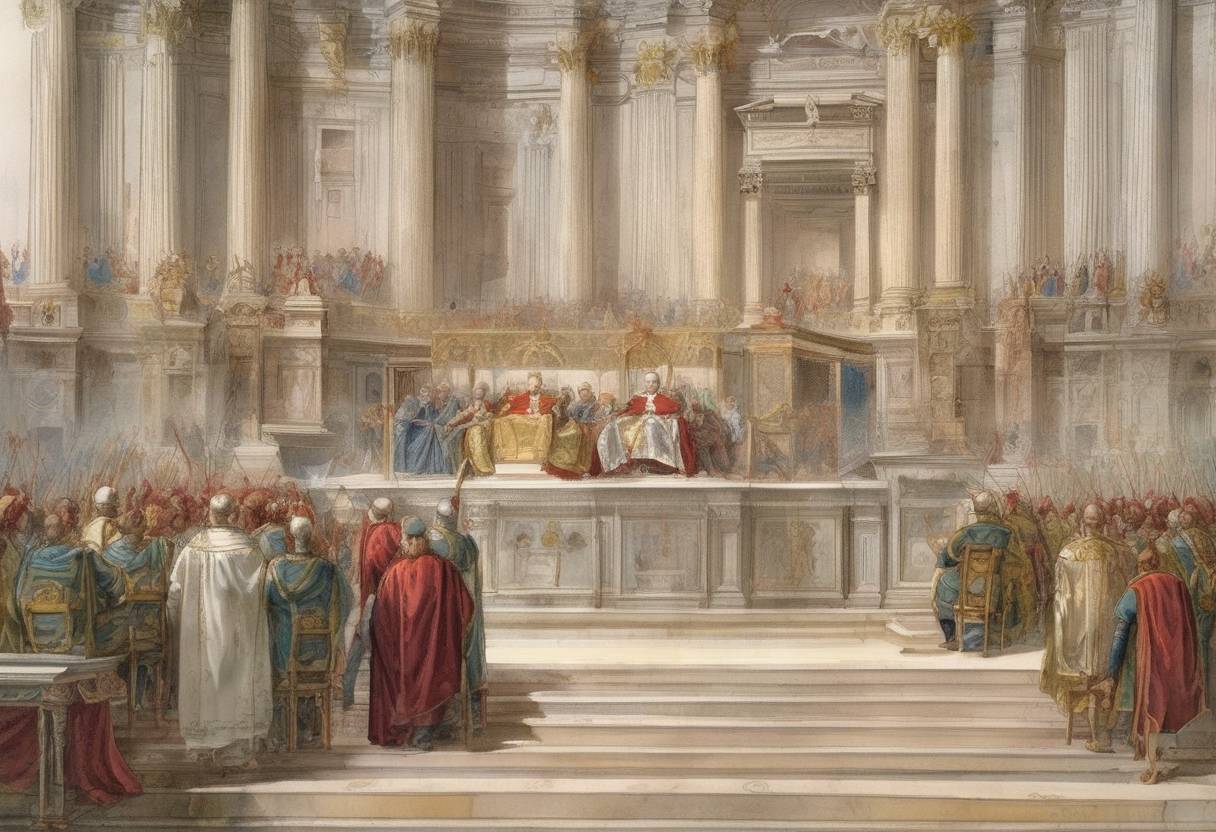
The Third Lateran Council: Conclusion on November 1, 1179
The Third Lateran Council, convened by Pope Alexander III, concluded on November 1, 1179. This ecumenical council was a significant event in the history of the Catholic Church, addressing critical issues such as the election of popes and the condemnation of simony. Here is a detailed account of the council and its historical context:
Context and Background
- Papal Schism: The Third Lateran Council was convened in the aftermath of a prolonged schism within the Catholic Church. The schism began in 1159 following the disputed papal election between Pope Alexander III and Antipope Victor IV, leading to a division within the Church.
- Resolution of Schism: By 1178, Pope Alexander III had successfully resolved the schism, with the majority of the Church recognizing his papacy. The council was called to address the issues that had contributed to the schism and to reform Church practices.
Key Issues Addressed
Election of Popes:
- The council established new rules for the election of popes to prevent future schisms. It decreed that a two-thirds majority of the College of Cardinals was required to elect a new pope, a rule that remains in effect today.
- This measure aimed to ensure greater unity and reduce the likelihood of contested elections.
Condemnation of Simony:
- Simony, the buying or selling of ecclesiastical privileges, was a significant problem within the Church. The council condemned this practice, reinforcing the Church’s stance against corruption and emphasizing the need for spiritual integrity.
Clerical Discipline:
- The council addressed issues of clerical discipline, including the enforcement of celibacy among clergy and the prohibition of clergy from participating in secular activities that could lead to conflicts of interest.
Protection of Church Property:
- Measures were introduced to protect Church property from secular encroachment, ensuring that ecclesiastical lands and resources were used for their intended spiritual purposes.
Significance and Aftermath
- Reform and Unity: The Third Lateran Council was instrumental in reforming the Church’s governance and practices, contributing to greater unity and stability within the Catholic Church.
- Long-term Impact: The decisions made at the council, particularly regarding papal elections, had a lasting impact on the Church’s structure and governance, influencing the way popes are elected to this day.
- Foundation for Future Councils: The council set a precedent for future ecumenical councils, establishing a framework for addressing internal Church issues and promoting reform.
In conclusion, the Third Lateran Council was a pivotal moment in the history of the Catholic Church, addressing critical issues that had led to division and setting the stage for future reforms. Its decisions had enduring effects on the governance and integrity of the Church.