The 1906 San Francisco Earthquake
1906 · San Francisco, United States
The 1906 San Francisco earthquake struck the coast of Northern California, causing widespread destruction and resulting in the deaths of an estimated 3,000 people.
March 14, 1910
Lakeview Gusher, the largest U.S. oil well gusher, begins in Kern County, California, eventually releasing 9 million barrels of crude oil.
Kern County, United States | Union Oil Company
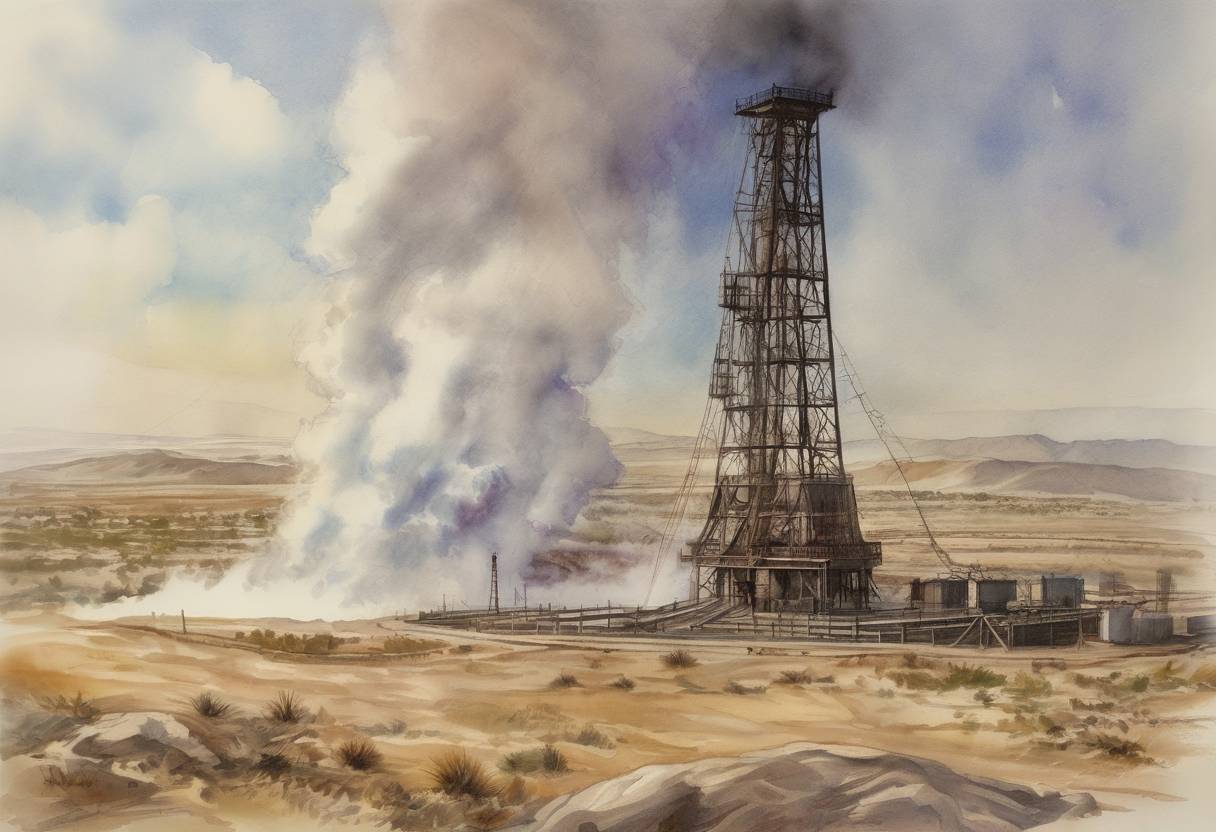
On March 14, 1910, the Lakeview Gusher, the largest oil well gusher in U.S. history, began in Kern County, California. This event marked a significant moment in the early 20th-century oil industry, showcasing both the potential and the challenges of oil extraction during that era.
The early 1900s were a period of rapid industrial growth in the United States, with oil becoming an increasingly vital resource. Kern County, located in the southern part of California’s Central Valley, was a burgeoning area for oil exploration due to its rich petroleum deposits. The Lakeview Oil Company, in partnership with the Union Oil Company, was drilling in the area with the hope of tapping into these resources.
On March 14, 1910, while drilling at the Lakeview No. 1 well, the crew unexpectedly struck a high-pressure oil reservoir. The result was a massive blowout, with oil erupting uncontrollably from the well. The gusher spewed oil at an estimated rate of 18,000 barrels per day at its peak, eventually releasing approximately 9 million barrels of crude oil over an 18-month period.
The Lakeview Gusher presented significant challenges. At the time, technology and techniques for controlling such blowouts were limited. Efforts to cap the well were initially unsuccessful, and the oil continued to flow freely, creating a large oil lake and causing environmental damage to the surrounding area.
The Lakeview Gusher eventually subsided in September 1911, but not before leaving a lasting impact on the oil industry and the environment. The event highlighted the need for improved drilling technology and safety measures, leading to advancements in well control techniques.
Economically, the gusher contributed to the growth of the California oil industry, solidifying the state’s position as a major oil producer. However, it also served as a stark reminder of the environmental risks associated with oil extraction.
The Lakeview Gusher remains a significant event in the history of the U.S. oil industry. It exemplifies the challenges of early oil exploration and the balance between resource extraction and environmental stewardship. The lessons learned from this event have influenced oil drilling practices and regulatory measures in the decades that followed.
In summary, the Lakeview Gusher was not only a remarkable natural phenomenon but also a pivotal moment in the development of the oil industry, with lasting implications for both economic growth and environmental policy.
Source: en.wikipedia.org