Assassination of Benazir Bhutto
2007 · Rawalpindi, Pakistan
Benazir Bhutto, former Prime Minister of Pakistan, was assassinated in a combined shooting and bombing attack during a political rally in Rawalpindi.
April 4, 1979
Pakistan's former Prime Minister Zulfikar Ali Bhutto is executed after being deposed in a military coup led by General Muhammad Zia-ul-Haq.
Rawalpindi, Pakistan | Pakistani Government
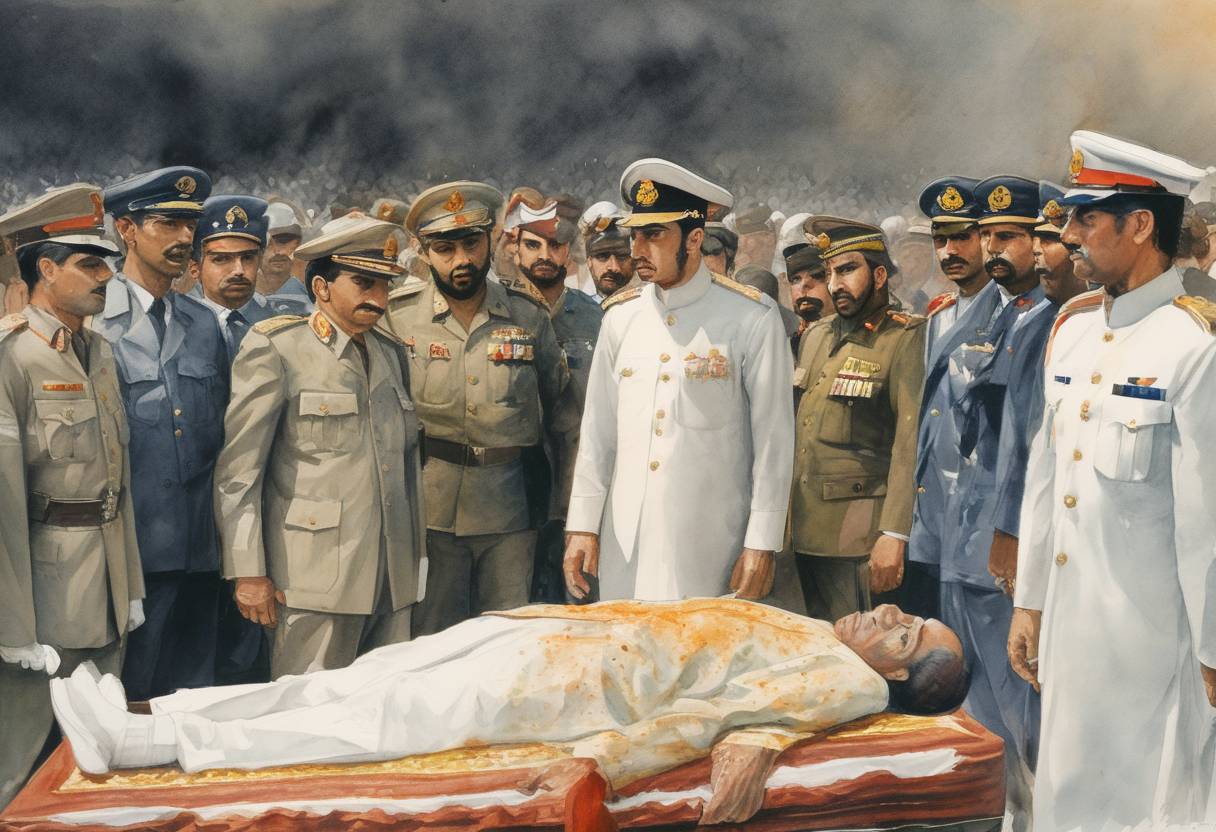
On April 4, 1979, Zulfikar Ali Bhutto, the former Prime Minister and President of Pakistan, was executed following a controversial trial and conviction for conspiracy to commit murder. This event marked a significant turning point in Pakistan’s political history and had lasting implications for the country’s governance and legal system.
Zulfikar Ali Bhutto was a prominent political figure in Pakistan, serving as the country’s President from 1971 to 1973 and as Prime Minister from 1973 until his ousting in 1977. He was the founder of the Pakistan People’s Party (PPP) and played a crucial role in shaping Pakistan’s political landscape during the 1970s. Bhutto’s tenure was marked by significant reforms, including the nationalization of key industries and efforts to strengthen Pakistan’s nuclear program.
In July 1977, Bhutto’s government was overthrown in a military coup led by General Muhammad Zia-ul-Haq. The coup was justified by allegations of widespread electoral fraud in the 1977 general elections and growing civil unrest. Following the coup, Zia-ul-Haq assumed power, declaring martial law and promising to hold new elections, which were repeatedly postponed.
Bhutto was arrested in September 1977 and charged with conspiring to murder a political opponent, Nawab Mohammad Ahmad Khan Kasuri, in 1974. The trial, held in the Lahore High Court, was fraught with controversy. Critics argued that the proceedings were politically motivated and lacked due process. Despite international appeals for clemency and widespread protests, Bhutto was found guilty and sentenced to death in March 1978.
The Supreme Court of Pakistan upheld the death sentence in February 1979, despite dissenting opinions from some justices. On April 4, 1979, Zulfikar Ali Bhutto was executed by hanging at Rawalpindi Central Jail.
Bhutto’s execution had profound implications for Pakistan:
Political Repression: The execution solidified General Zia-ul-Haq’s control over Pakistan, leading to an extended period of military rule characterized by political repression and the Islamization of the state.
Legacy and Controversy: Bhutto’s death remains a contentious issue in Pakistan’s history. His supporters view him as a martyr who fell victim to a politically motivated judicial process, while his detractors criticize his authoritarian tendencies during his time in power.
Impact on the PPP: The execution galvanized Bhutto’s supporters and strengthened the resolve of the Pakistan People’s Party, which continued to play a significant role in Pakistan’s politics under the leadership of his daughter, Benazir Bhutto.
Judicial and Political Reforms: The trial and execution highlighted the need for judicial reforms and raised questions about the independence of Pakistan’s judiciary, issues that continue to resonate in the country’s political discourse.
Zulfikar Ali Bhutto’s execution remains a pivotal moment in Pakistan’s history, symbolizing the complex interplay of power, justice, and political ambition in the nation’s development.
Source: www.britannica.com